Dutch minister sees ‘win-win’ farm ties as India visit follows May strategic pact

&imwidth=600&imheight=450&format=webp&quality=medium "Dutch minister sees ‘win-win’ farm ties as India visit follows May strategic pact")
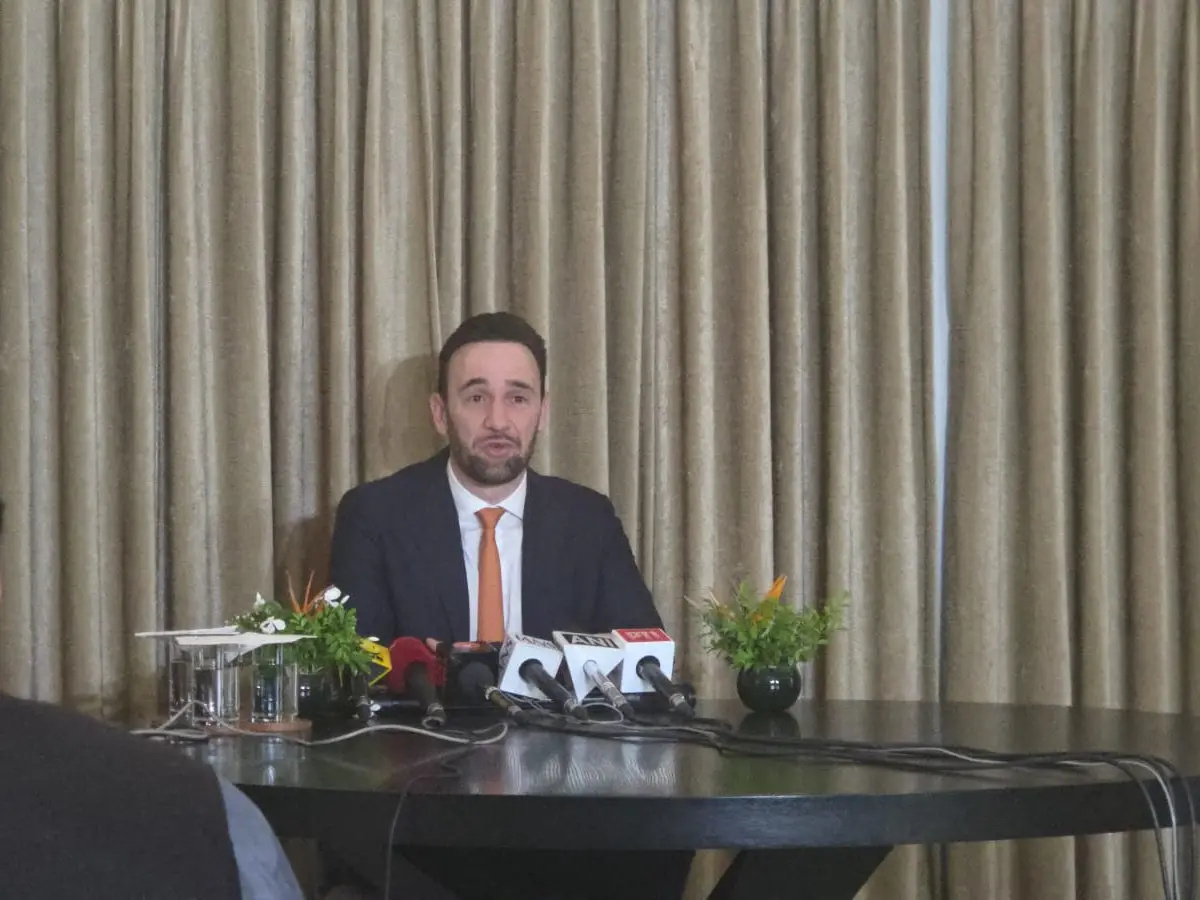
Silvio Erkens, the Dutch minister for food security, fisheries and horticulture, is visiting India
The India-EU FTA negotiations were concluded earlier this year; Dutch and Indian leaders have repeatedly backed an early signing. More than 350 Dutch firms already operate in India in potatoes, seeds, poultry, dairy and horticulture.
New Delhi: The Netherlands’ first cabinet-level visit to India since the two countries elevated ties to a strategic partnership in May has opened with talks on agriculture, seeds and trust-building ahead of an expected India-EU trade deal later this year.
Silvio Erkens, minister for food security, fisheries and horticulture, described his meetings in Delhi with Indian counterparts as “very constructive and very positive”. The trip, which continues to Mumbai and Bengaluru with a business delegation, is the first by a Dutch agriculture minister since 2018 and the first government visit since Prime Minister Narendra Modi and Dutch Prime Minister Rob Jetten announced the partnership in The Hague in May.
“There is the ambition to make the strategic partnership that Honourable Prime Minister Mr Modi and our prime minister signed in May this year [work],” Erkens told WION’s Sidhant Sibal. “We discussed future areas of cooperation, and I had quite a positive feeling of the conclusions that we drew.”
Asked how a free trade agreement expected to be signed in December could lift both economies, particularly in agriculture, where both sides cast themselves as heavyweights, he pointed to two tracks. The first was “cooperation indeed on innovation and knowledge sharing”.
“I think it could benefit both our sectors because I think we’re quite complementary on that,” he said. The second was reducing non-tariff barriers. “Reducing those means increasing trust in each other, and regular interactions between our departments, between our government agencies, will lead to that trust that we need.”
Trending Stories
)
)
)
)
)
)
)
)
)
)
)
)
)
)
)
)
)
)
)
)
)
)
)
)
)
)
)
)
)
)
)
)
)
)
&im=FitAndFill=(700,400))
)
)
)
)
The India-EU FTA negotiations were concluded earlier this year; Dutch and Indian leaders have repeatedly backed an early signing. More than 350 Dutch firms already operate in India in potatoes, seeds, poultry, dairy and horticulture. Erkens is travelling with 18 companies focused on seeds, crop protection, logistics and technology.
On seed cooperation and possible technology transfer to raise Indian productivity, he framed the talks as mutual, not one-way.
“We’re looking at cooperation that could be win-win from both sides. Indeed, the Netherlands has a lot of technology and know-how to offer… and at the same time, the Indian market will be quite important for us as well to diversify also our production of seeds,” he said. “The discussions are ongoing on that, and we also agreed with the Indian government that our governments will talk both bilaterally on that.”
Bengaluru is a hub for India’s hybrid vegetable seed industry; Mumbai’s programme includes a seed-sector meeting. Officials on both sides have already signed horticulture and food-safety understandings, including work on clean plant centres and dairy training.