&imwidth=800&imheight=600&format=webp&quality=medium "Bharat OS, Bharat Tube, Hindustani Flow, Swadeshi network: You MUST READ this entrepreneur's post amid US H-1B visa backstabbing and Trump tariffs")
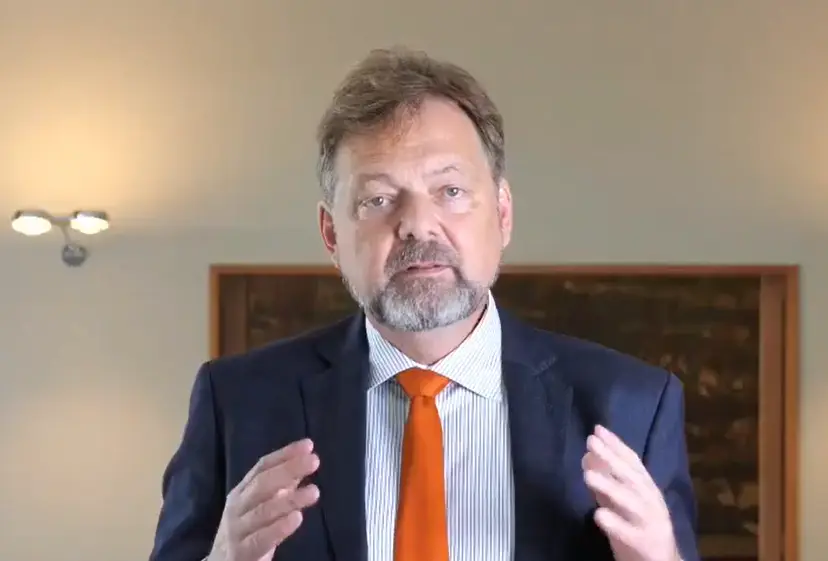
Sometimes, it takes an insult to spark innovation. India and its tech workforce are at such an inflexion point, with the unjustified H-1B visa fee hike proposal and Trump tariffs meant to break the back of key sectors of the Indian economy. A US-based entrepreneur made a social media post that should make every policymaker in India sit up and take note. Balaji Vishwanathan's bold proposals are not yet in existence, but are uniquely innovative. What can be done by India, for India, to emerge as a global technology hub? Based on Vishwanathan’s post, here is an expanded vision document that includes what he calls BharatOS mandate, SSRI and swadeshi social networks.
Can the Reserve Bank of India help the nation build tech sovereignty?
The LinkedIn post said it’s time for the Indian tech sector to reinvent itself to utilise the returning expats “in a GI Joe kind of programme” as well as build its long-term tech sovereignty.

It suggested that India’s central bank, the Reserve Bank of India, send ‘₹12 trillion surplus’ to build India’s full tech stack from the ground up. While this amount is not rooted in reality, the RBI does transfer a surplus, or “dividend,” to the central government. For instance, in FY 2023-24, the RBI approved a transfer of ₹2.1 trillion to the Union Government, and in FY 2024-25, a record surplus transfer of ₹2.69 trillion was approved. The post raises a key question: Can this surplus transfer of RBI be used to help India’s tech sovereignty?
BharatOS: Can India ‘fork’ Android (AOSP) and make it the default for all devices sold in India?
Trending Stories
)
US-Iran War: Trump ready to bomb Tehran, deploys B-1 bomber, envoys flee city
)
The Royals enter the Doctor Who universe: King Charles and Queen Camilla beam into Commonwealth Games in TARDIS
)
Russia-Ukraine War: Russia puts its biggest warship Admiral Nakhimov back in action
)
Union minister Ravneet Bittu resigns from cabinet; President Murmu accepts resignation
)
India to test fire three Kusha long-range surface-to-air missiles | Gravitas
)
Delhi NEET protests: How Bluetooth mesh apps kept communication alive without internet
)
Israel mulls national drone ban after Iran claims to have tripled drone production | Gravitas
)
Dharmendra Pradhan's daughter deactivates IG, LinkedIn as protesters demand her father's resignation, target her university page
)
He predicted COVID-19 and 2008 economic crisis, was labeled fearmonger. Now he has another dire warning
&im=FitAndFill=(700,400))
Jennifer Winget and William Ishmael's dreamy UK intimate wedding: See inside photos
)
'Unlike his father': US intelligence flags Iran's new leader's ‘nuclear ambitions’
)
Scientists decode rare metal that allows China's radar satellite to spy over Asia Pacific
)
'Trust Trump, he understands Saudi psychology': Stephen Miller defends surprise Israel condition in US-Saudi nuclear deal
)
Why more than 75,000 people watched a record Qantas flight on Flightradar24 Friday?
)
Russian strike on Kyiv drone expo kills 10, injures around 100. This is what we know
)
NEET Protests riddled with misinformation? Delhi Police blocks 480 Pakistan-based handles spreading 'fake news' since Operation Sindoor
)
Russia-Ukraine War: Russia unleashes 28000 tonne nuclear giant ship
)
Accidental overdose: UK inquest rules out foul play in Saudi Prince’s London death
)
Trump’s $100,000 H-1B visa fee stays blocked after appeals court ruling. All you need to know
)
Karim Khan ousted as ICC prosecutor over alleged sexual offence case. Details inside
)
All 28 Indian crew members safe after LPG tanker attacked in Iranian waters: Indian Embassy in Tehran
)
'George Soros playbook': Understanding the foreign funding network around Sonam Wangchuk
)
‘If they had nuclear weapon, there might not be a Middle East today’: Trump’s fresh jibe at Iran
&im=FitAndFill=(700,400))
New Friday OTT releases (July 24, 2026): Musafir Cafe, Adarsh Baal Vidyalaya, Pallichattambi- Watch these 6 titles on Netflix, Prime Video and more
&im=FitAndFill=(700,400))
Why the S-400 fires its missiles straight up into the air
)
Mysterious rope leads plumber to find gold worth Rs 23 crore in old Vienna villa
)
US imposes new sanctions against Iranian billionaire Babak Zanjani for enabling regime
)
Iran flew IRGC men, advisers and military gear to Yemen, bolstered Houthis for Red Sea blockade: Sources
&im=FitAndFill=(700,400))
Why US fighter jets use seamless bubble canopies compared to Russian jets
)
'Shame on a country that...': Sonam Wangchuk slams haters, rejects 'deal' claims after ending 26 day fast | WATCH
)
Pakistan army chief used private oil venture to keep Iran attacks off Saudi Arabia: Report
)
‘Stole the show’: Young man’s uncanny imitation of Trump leaves internet stunned | WATCH
&im=FitAndFill=(700,400))
Why the specialized paint on an S-400 costs thousands of dollars per truck
)
US-Iran war | CENTCOM: 12 military targets across seven Iranian provinces hit
A key suggestion made in the post is the forking of AOSP, or the Android Open Source Project. AOSP is the publicly available and modifiable source code for the Android operating system, developed and maintained by Google. Developers and device manufacturers can customise the code — also known as forking — to create their own Android-based products, such as custom mobile devices.
The post raises a crucial question: Can India develop an AOSP-based operating system for all devices, like TVs, phones and laptops?
Vishwanathan wants such an OS to be made a public good like UPI — India’s ubiquitous digital payments architecture. He urged using the HarmonyOS playbook, referring to the proprietary operating system developed by Chinese tech giant Huawei from the ground up.
Vishwanathan suggested that local device manufacturers using BharatOS should get subsidies, while those clinging to Android/iOS should pay heavy duties. “Let the iPhone 17 crowd pay luxury prices,” he added in the post.
A ₹100 billion fund for developers and a Desi code depository,to get away from Google Play Store and GitHub
The post suggested an architecture backed by a ₹100 billion fund for developers, to help migrate out of the Google Play Store, with built-in UPI/Aadhaar integration. The post also mooted the idea of a Sovereign Source Repository of India, or SSRI, to replace dependency on the software development hosting platform GitHub.
It calls for building a “massive Open Source foundation” that supports Indian languages and problems better, operating under Indian law with no DMCA takedowns or Western IP restrictions. (DMCA is the Digital Millennium Copyright Act, and IP stands for Intellectual Property.)
The post suggested that government contracts should mandate SSRI usage, and that startups should get tax breaks for hosting critical code in SSRI.
Hindustani Flow and Swadeshi Network: Time for ‘Desi’ Artificial Intelligence models
The post also suggested what Vishwanathan called ‘Hindustani Flow.’ The idea is to make AI “Indian,” to address the content shortage in Indian languages.
The Swadeshi Network, mentioned in the post, envisions social media, video, and streaming platforms that Vishwanathan termed ‘BharatConnect, BharatVideo, and BharatTube.’
It also asked for a creator fund of ₹1.5 billion to make top influencers to migrate to Indian platforms.
Also read: Trump proposes to scrap H-1B lottery system, proposes visa process favouring better-paid workers
“Start it like AIR/Doordarshan kind of model with public-funded top-notch content [like we did in the 1980s–90s],” said the post. “Eventually, the private sector can take it and fly it.” AIR, or All India Radio, and Doordarshan are India’s public broadcasters for radio and TV.
The post highlighted that India has the capital, labour that includes returning high-tech talent, and a market of 1.4 billion users.
“Time to stop weak-minded responses and completely rebuild our tech foundation. This isn’t about fighting America — it’s about building an India that doesn’t need anyone’s permission to innovate,” it concluded.