
&imwidth=800&imheight=600&format=webp&quality=medium "Trump administration’s $100,000 H-1 B visa fee: What it means and what it doesn’t")
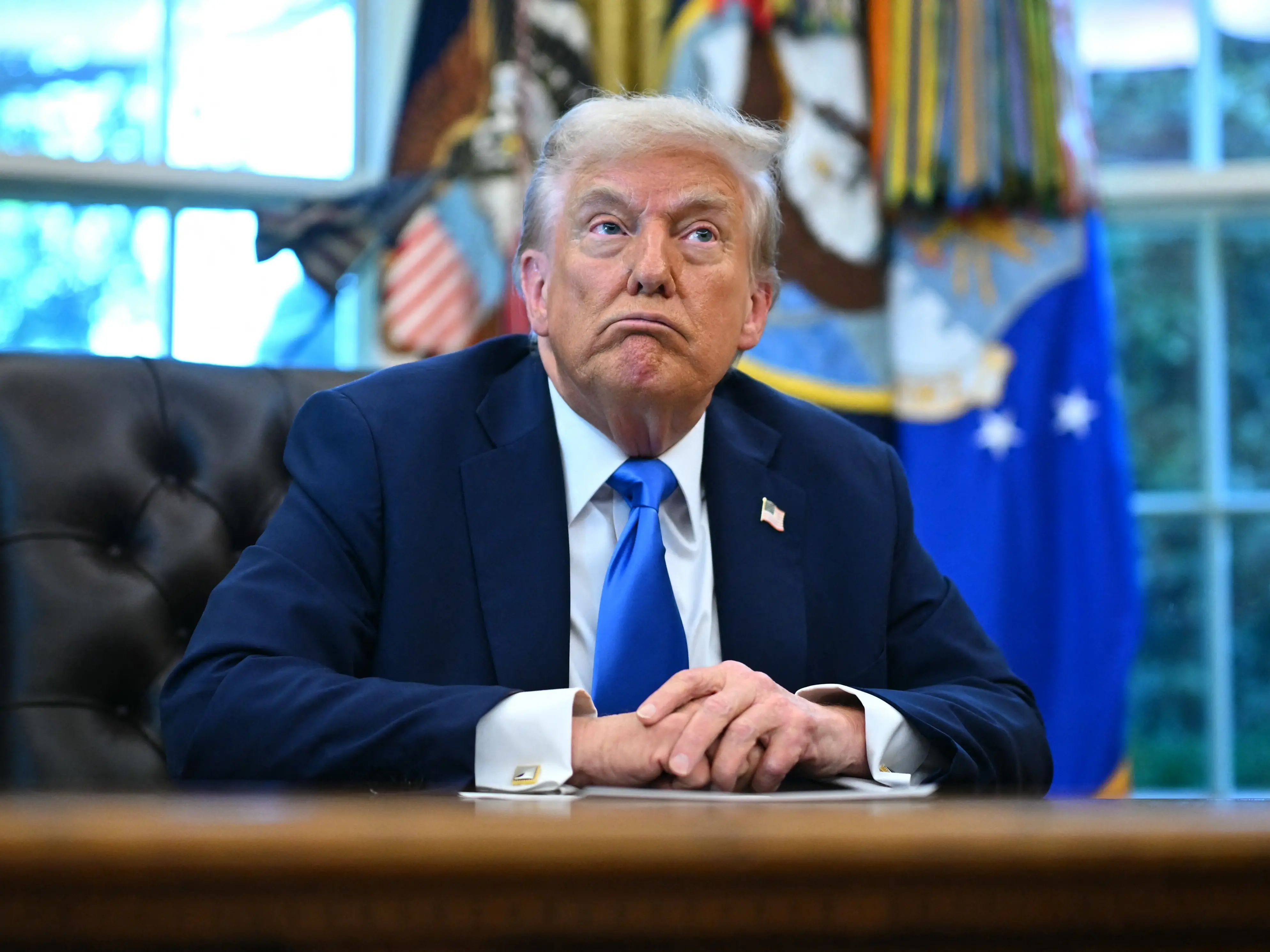
President Donald Trump’s latest move on immigration has set off alarm bells in the global tech community, particularly in India, which supplies the majority of H-1B visa holders in the United States. On September 19, 2025 Trump signed a proclamation requiring a $100,000 fee for new H-1B petitions filed from outside the United States, a dramatic change in how future applications will be handled.
At first, the announcement generated panic. Would current H-1B holders be locked out of the US? Would renewals suddenly cost six figures? The White House has since clarified key details, which WION now lays out in full.
The rule

The proclamation, “Restriction on Entry of Certain Alien Nonimmigrant Workers,” states that petitions for H-1B workers outside the U.S. must include a $100,000 payment or risk denial.
The rule takes effect at 12:01 am EDT on September 21, 2025.
White House response
Trending Stories
)
Trump says Russia has ‘lost control’ of its diesel industry, calls for end to ‘ridiculous, never-ending’ war
)
Asian Games: Indian women's hockey team thrash Indonesia 17-1, blasts 36 goals in 2 matches
)
Putin's United Russia party wins 355 seats in Duma election; 4 other parties cross threshold to enter parliament
)
Delhi Air pollution: Strict crackdown on waste burning
)
'I never imagined…': Bihar-born Japan cricketer Abhishek Anand on historic India clash
)
‘0% chance’: Nvidia CEO Jensen Huang dismisses AI extinction fears by 2030
)
Samay Raina-Mukesh Chhabra controversy explained: What happened over girlfriend joke on India's Got Latent?
)
Trump's helipad event overshadowed by audio failure as major TV networks suspend pool coverage
)
Russia-Ukraine war: Russian strikes knock out three of Ukraine's largest steel plants
)
Four decades after leaving Kolkata, the Birlas may be coming back for more
)
Glitch in the matrix caught on camera: Woman vanishes after talking to reporter
)
IIT Bombay tensions ease after three-hour open house; director’s assurances pacify students
)
Samsung raises Galaxy S26 prices by Rs 20,000: Here’s what each model now costs
)
J&K Assembly Session begins amid chaos: BJP, ruling alliance clash as statehood demand dominates
)
Bessent meets China’s He Lifeng to prepare for Trump-Xi summit
)
8,000 bees worth over $20,000 stolen from hives in Queensland
)
US and China vie for AI dominance as calls grow for regulation | Gravitas
)
The Verdict | The Mecca Agreement is under scrutiny as Houthis attack Saudis
)
Saudi Arabia exits China-led mBridge digital currency platform amid Saudi-Houthi conflict
)
'Lot of things to learn from experienced players': Jayasuriya backs Rohit, Virat for 2027 ODI World Cup
)
Taylor Swift has a 'proud wife' moment as Travis Kelce scores first touchdown of season: 'That’s my husband!'
)
Chancellor Friedrich Merz vows to stay on as exit polls signal major poll setback
)
North Korea's nuclear tests triggered 1,399 earthquakes: Earth is still shaking | Gravitas
)
Mahabharat actor Saurav Gurjar arrested in Hyderabad, sent to 14-day judicial custody in sexual exploitation case
&im=FitAndFill=(700,400))
New OTT releases this week (September 21-27, 2026): Shaque: Trust No One, Hunkkaar, Don’t Be Shy- 5 new titles coming to Netflix, Prime Video and more
)
From ‘communist’ to ‘great mayor’: Trump praises Mamdani after New York meeting, discusses immigration and housing
)
WATCH | Mysterious lights over Tehran caught on video. Drone, aircraft or something else?
)
White House TV pool halts Trump coverage after CNN barred from UNGA events
)
Iranian airlines to shut worldwide on Sept 23, Bessent warns of US banking ban
)
China expels top generals Zhang Youxia, Liu Zhenli over ‘disloyalty’, corruption
)
Pilot recreates Mona Lisa in sky over Oklahoma and Arkansas in four-hour flight: VIDEO
)
Fitna Al-Khawarij: Decoding biggest security threat to Pakistan | Gravitas
)
Jailer 2: Vidya Balan joins Rajinikanth's upcoming film as Kantha | Watch
)
Microsoft executive called AI training the ‘largest theft of labour in human history’
)
Medieval books contain traces of a 3,700-year-old virus that recently killed 500,000 animals
)
40-foot waves crash into cruise ship in dangerous stretch near Antarctica. Watch
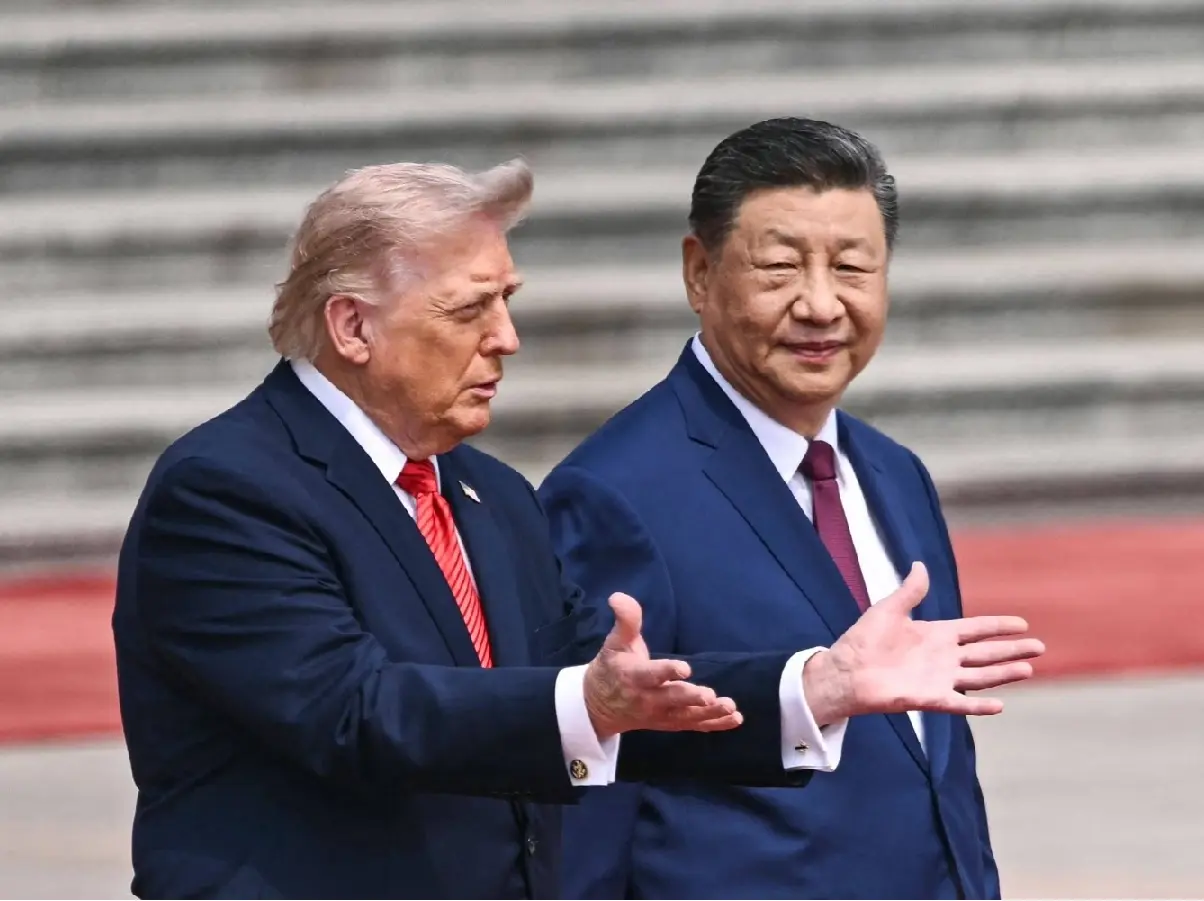)
Explainer: Why rare-earth export licences and Board of Trade are US priorities ahead of Trump-Xi summit
)
BTS fans mock iHeartRadio’s day 2 turnout after short set controversy
)
The Scandal: Why so scandalous? Ji Chang Wook leaves you gasping for air
Taylor Rogers, White House spokeswoman, tells WION: “President Trump promised to put American workers first, and this commonsense action does just that by discouraging companies from spamming the system and driving down wages. It also gives certainty to American businesses who actually want to bring high-skilled workers to our great country but have been trampled on by abuses of the system.”
White House Press Secretary Karoline Leavitt also posted a clarification on X, writing that: “This is NOT an annual fee. It’s a one-time fee that applies only to the petition.”
“Those who already hold H-1B visas and are currently outside of the country right now will NOT be charged $100,000 to re-enter.”
“H-1B visa holders can leave and re-enter the country as they normally would. Whatever ability they have to do that is not impacted.”
“This applies only to new visas, not renewals, and not current visa holders. It will first apply in the next upcoming lottery cycle.
Who is affected and who is not?
- New Applicants: Anyone entering the next H-1B lottery cycle will face the $100,000 petition fee.
- Current Visa Holders: If you already have an H-1B, whether in the US or abroad, you are exempt. Re-entry rules remain unchanged.
- Renewals and Extensions: Not affected. Employers can renew status for existing workers without paying the new fee.
- 2025 Lottery Winners: Explicitly exempt. Those who already secured visas this year will not face retroactive costs.
Why the change?
The Trump administration argues that the H-1B system has been abused by large outsourcing firms that flood the lottery with applications, then hire workers at lower wages. By raising the cost of entry, the White House hopes to:
- Deter mass filings by firms that overwhelm the system.
- Level the playing field for smaller US companies seeking specialised talent.
- Boost wages for both American and foreign workers by curbing low-cost hiring.
Supporters see this as a way to protect the integrity of the program. Critics warn it could reduce the supply of skilled workers, slow innovation, and make U.S. firms less competitive globally.
Why was there confusion?
The proclamation’s wording referred broadly to “aliens outside the United States.” It was not clear whether this included people who already held valid visas but were travelling abroad. Immigration lawyers urged caution, with some advising clients not to leave the US until more guidance was issued. The White House has now confirmed that existing visa holders are not affected. The fee applies only to future petitions, not to renewals, extensions, or re-entries.
Impact on Indian H-1B Applicants & Holders
India accounts for nearly 70 per cent of H-1B approvals. That makes this policy especially significant for IT companies and professionals who depend on the visa pathway. Large outsourcing firms may feel the steepest impact, as mass filings become cost-prohibitive. Also, individual applicants may face fewer opportunities if firms cut back sponsorships. Meanwhile, US employers seeking niche skills may benefit from less crowded lotteries, improving their odds of securing talent.
Legal questions
Immigration experts are already debating whether the president has the authority to impose such a fee without congressional approval. Normally, visa fees are set by law or regulation, not presidential proclamation. Lawsuits could argue that the move violates the Administrative Procedure Act. Courts may examine whether the fee is effectively a tax that only Congress can authorise. However, until challenged in court, the rule remains in force.
The political context
For Trump, this is both policy and politics. He can argue that he is protecting American workers from foreign competition, delivering on a campaign promise to reform the H-1B system, and demonstrating toughness on immigration in the run-up to new domestic and international negotiations.
For critics, it may be another example of executive overreach that could undermine America’s leadership in technology and innovation.
What comes next
- USCIS Guidance: Agencies are expected to release instructions on how the $100,000 payment must be submitted.
- Upcoming Lottery Cycle: The first real test will be the FY2027 filings in early 2026.
- Business Decisions: US and Indian firms will need to decide whether to absorb the new cost or change their hiring strategies.
- Court Battles: Legal challenges could delay or overturn the policy.
Conclusion
The $100,000 fee marks one of the most sweeping changes to the H-1B program in decades. By targeting new applications, the Trump administration is signalling that the era of mass low-cost filings is over. For American companies, the question is whether the higher price tag will still allow them access to the skills they need.
