&imwidth=800&imheight=600&format=webp&quality=medium "America faces largest mass resignation of federal workers: Who will be affected, which services to be hit, and why it matters")
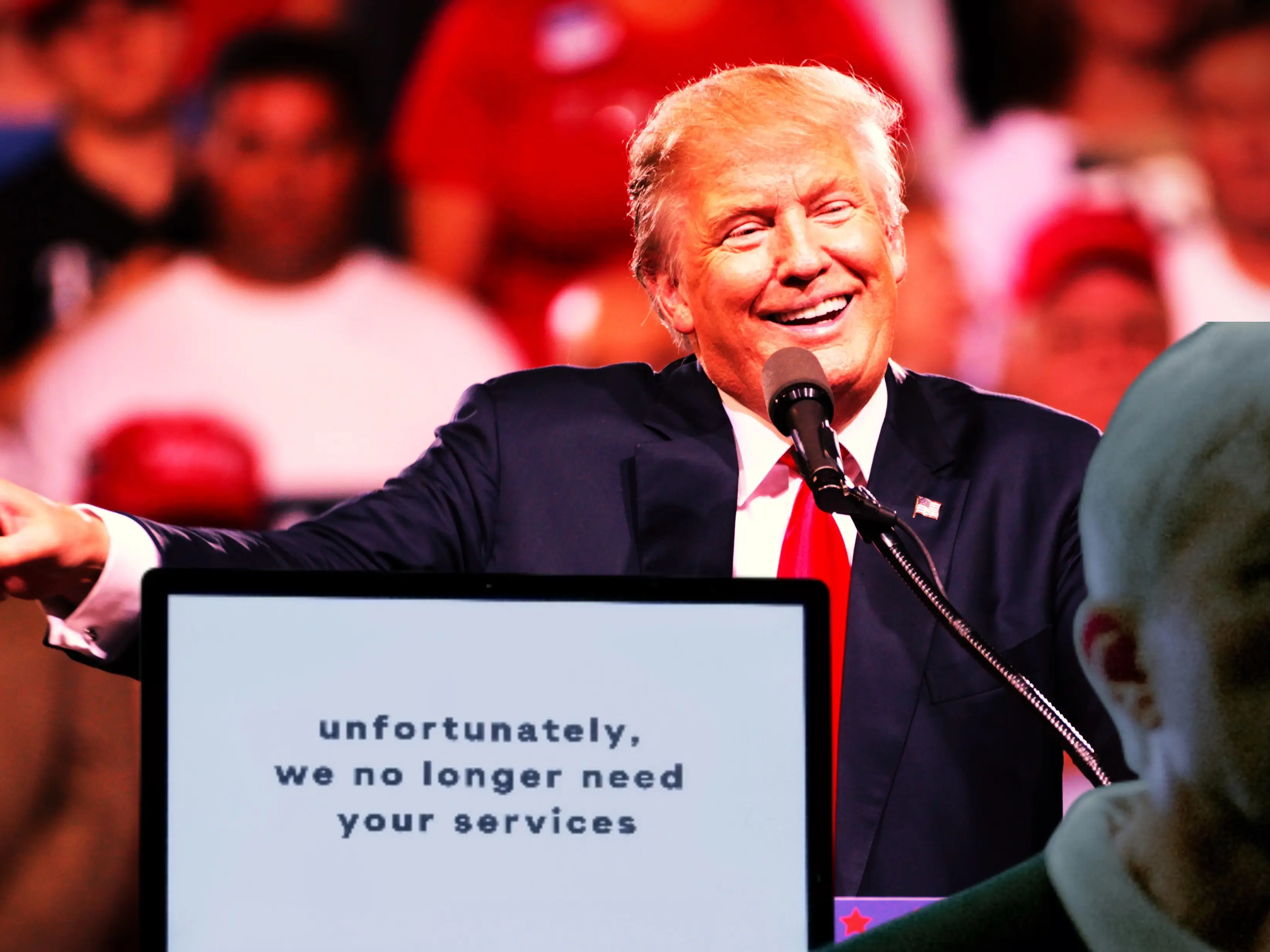
From Tuesday (Sep 30) some 100,000 federal workers are set to exit in what is being called the largest mass resignation in American government history. By the end of the year, this number is projected to reach 300,000, making it the most significant single-year reduction in the civilian federal workforce since World War II. By comparison, around 100,000 civilian jobs were cut between 1945 and 1946. During the 1990s, the Clinton administration's “reinventing government” initiative eliminated some 250,000 positions, but that process took five years. The current wave of exits is occurring within just one calendar year under the direction of President Donald Trump.
A potential government shutdown looms on 30 September. Agencies have been ordered to prepare for additional layoffs, particularly targeting non-essential roles. Here is what you should know:
How is the mass exodus being made possible by the Trump administration?

This wave of resignations is not driven by recession but by direct executive action from the Trump administration. The approach was upheld by the United States Supreme Court, even though it bypassed several long-standing protections for federal employees. Supporters describe the effort as a necessary reset or efficiency reform, while critics call it a destabilising and potentially unlawful dismantling of the civil service.
Also read: Shutdown looms as Republicans slam Democrats ahead of crucial White House meeting with Trump
How is the mass resignation happening?
Trending Stories
)
Bomb scare in New York amid UNGA: Suspicious suitcase found near UN headquarters
)
IND vs JPN, one-off T20I: Japan captain Kendel on pushing India to the brink - ‘It was special’
)
Anne Hathaway to run in supporting race for Nolan's epic
)
Elephants hide behind trees, stage surprise attack on poachers targeting rhinos in South Africa
)
Trump revives India-Middle East-Europe economic corridor as India emerges central to West Asia’s future: What is it?
)
Major League Soccer referee sacked for sexist comment about female match referee
)
US and China vie for AI dominance as calls grow for regulation | Gravitas
)
81st UN General Assembly: Burnham announces UK-US AI defence tie-up
)
WION Iconic Tourism Summit and Iconic Awards 2026: India's travel economy leaders gather in Delhi
)
Explainer: Why rare-earth export licences and Board of Trade are US priorities ahead of Trump-Xi summit
)
ICC plans T20I expansion and fewer ODIs in 2027–2031 FTP cycle: Report
)
Erdogan again raises Kashmir issue at UNGA, calls for dialogue under UN Charter
)
Justice eludes Air India 1985 bombing victims as Canada probe goes 'inactive' | Gravitas
)
Yemen clashes kill 154 people in two days as cornered Saudi battles Houthi offensive | Gravitas
)
Forget apps: Qualcomm CEO says AI agents will change how we use smartphones
)
El Niño 2026 heats up to become strongest in 1,000 years
)
Trump-Xi summit: From trade to Taiwan, what will the US and Chinese presidents discuss in Washington?
)
'What kind of confession is this?': Pakistan PM Shehbaz Sharif’s 'terrorists would be roaming New York' remark goes viral, raises alarm online. Watch
)
Trump calls on nations to quit ‘rogue’ and ‘out-of-control’ International Criminal Court, rips UN
)
Cyclone Arnab: Landfall expected before midnight tomorrow as IMD issues orange alerts across six states
)
Nor'easter could batter 13 US states this week. What you should know
&im=FitAndFill=(700,400))
New OTT releases this week (September 21-27, 2026): Shaque: Trust No One, Hunkkaar, Don’t Be Shy- 5 new titles coming to Netflix, Prime Video and more
)
Gravitas | Boosting NHS productivity could save 20,600 lives in UK annually: Report
)
WION Iconic Tourism Summit and Awards 2026: Key voices to discuss India’s tourism future
)
Four female students raped during 'Red Zone' at California university. What we know
)
Trump signs Greenland security deal with Denmark, paving way for two new US military bases
)
WION Iconic Tourism Summit: Seychelles envoy says India partnership is important for Seychelles
&im=FitAndFill=(700,400))
National Film Awards 2026: Kartik Aaryan, Mammootty, Yami Gautam, Randeep Hooda and other key winners
)
IIT Bombay professor Suryanarayana Doolla sent on leave amid Sahil Wakode death probe
)
Asia prepares for record El Nino, food shock
)
IND vs JPN T20I: How an overturned wide became point of difference between India's win and a tie
)
From Gaddafi tearing up UN Charter to Trump’s ‘escalatorgate’: Most unforgettable UNGA moments
)
Mikel Arteta verbally agrees to three-year extension with Arsenal after title-winning Premier League season
)
Infections transmitted from pregnant woman linked to autism risk
)
US-China tech war: Businesses in the front line
)
Over 4,200 books withdrawn from circulation in J&K colleges, 94% from Kashmir
)
China to test supersonic jet that moves at Mach 2, double the speed of sound
The reduction includes a combination of voluntary resignations, early retirements, buyouts, and forced layoffs. The military and postal service are not affected. The civilian federal workforce is expected to shrink from approximately 2.3 million employees in late 2024 to about 2.1 million by the end of September 2025. By the end of the year, over 12 per cent of the workforce will have exited.
What is the Deferred Resignation Programme (DRP)?
The Deferred Resignation Programme, or DRP, was launched on 28 January through an email from the Office of Personnel Management titled “Fork in the Road”. It followed an executive order signed the same day by President Trump that eliminated key civil service protections.
The DRP offered nearly all civilian federal employees the option to resign by 6 February in exchange for full pay and benefits through 30 September, without performing any duties during that period. By July, over 154,000 employees accepted. Another 100,000 were set to formally separate on Tuesday, marking the conclusion of the programme.
The DRP is expected to cost 14.8 billion dollars in 2025. However, the administration projects 28 billion dollars in annual savings through reduced payroll and operational costs in the future.
Also read: US Defence Secretary Pete Hegseth calls rare, urgent meeting of all Generals - No one knows why
Hiring freeze and agency closures ordered by DOGE
The DRP was accompanied by a government-wide hiring freeze and the closure or downsizing of several federal agencies, including the USAID, or United States Agency for International Development. These measures were implemented by the Department of Government Efficiency, or DOGE, a newly established agency led by Elon Musk. DOGE also enforced widespread reductions-in-force across multiple departments.
Legal challenges to the mass exit failed
The American Federation of Government Employees and other groups filed lawsuits against the DRP, claiming it violated the Administrative Procedure Act and the Anti-Deficiency Act. However, the Supreme Court upheld the legality of the programme in an 8 to 1 ruling on 8 July.
Also read: What happens to federal workers if the government shuts down? White House plans a strategy
Why are US federal employees leaving?
Although the resignations were officially voluntary, many were the result of sustained pressure. The hiring freeze and threat of layoffs created a climate of fear. In February, over 24,000 probationary employees in their first one to two years were dismissed en masse. Some were later reinstated by court orders, but reports of panic attacks, anxiety, and depression were widespread.
The DRP’s offer of eight months' pay without work duties came at a time when the national unemployment rate was 4.3 per cent. Around 75,000 employees accepted the offer in its first phase. The government also used the Voluntary Early Retirement Authority to encourage eligible workers to leave.
The Trump administration ended remote work options and eliminated diversity, equity, and inclusion policies. These changes disproportionately affected women and minority staff. For insatnce, by June 2025, over 300,000 Black women had exited the broader American labour force.
A survey by Federal News Network in June found that 25 per cent of remaining federal employees were experiencing burnout. Many cited forced reassignments, unclear priorities, and a hostile workplace as their reasons for wanting to leave. Union leaders said many resignations were made under duress.
Which government services will be hit by mass resignations?
Key services are already being disrupted. At the Department of the Interior, the processing of federal water rights has slowed. The Department of Veterans Affairs has reassigned patients due to a shortage of social workers. The Federal Emergency Management Agency (FEMA) and the Environmental Protection Agency (EPA) have struggled to respond to crises such as chemical spills and a bird flu outbreak. The Department of Agriculture has had to rehire workers it had previously laid off.
The Internal Revenue Service (IRS), the tax agency, lost about 25 per cent of its workforce, raising concerns about delays in the 2026 tax season.
The Department of Health and Human Services has seen significant cuts affecting public health surveillance.
The economic impact is also spreading. Local economies in federal employment hubs such as Washington, D.C., Kansas City, and northern Virginia are suffering.
The Washington, D.C. metro area alone could lose billions in local spending. With only 22,000 jobs added across the country in August 2025, many of the departing federal employees face a weak job market.
The reduction has also had a disproportionate effect on diverse agencies. Many of the cuts targeted departments with higher representation of women and minority employees, leading to lasting concerns about equity and representation in the federal workforce.
Which agencies are specifically hit?
The Department of Agriculture has lost approximately 15,000 of its 100,000 employees, representing a 15 per cent reduction. The Department of Health and Human Services has lost about 20,000 out of 82,000 employees, or 24 per cent, with plans for up to 62,000 additional layoffs. The Department of State has lost 12,000 of 75,000 workers, a 16 per cent cut that has affected diplomacy and contractor services. The General Services Administration has reduced its workforce by over 3,000 out of 12,000 employees, a 25 per cent drop. The Environmental Protection Agency has lost 4,000 out of 15,000 workers, a 27 per cent reduction. The Department of Education had 4,200 employees before 2025 and has lost over 1,000, about 24 per cent. The Internal Revenue Service has lost 20,000 out of 80,000 employees, a 25 per cent reduction. The Department of Veterans Affairs, which has 486,000 staff, has experienced a smaller reduction of about 6 per cent, or 30,000 employees.
Departments connected to national security, such as the Department of Defence and the Department of Homeland Security, have seen smaller proportional reductions of between 5 and 7 per cent, as they were classified as essential and exempt from most cuts.
What happens if there is a government shutdown?
If Congress fails to approve a funding bill by 30 September, the federal government will shut down. In that case, over 700,000 non-essential employees could be furloughed. Essential services such as Social Security payments would continue, but the disruption would significantly worsen the staffing crisis already underway in the federal government.