
&imwidth=800&imheight=600&format=webp&quality=medium "'You couldn’t make a deal with this guy', says Marco Rubio at Senate hearing on Nicolas Maduro’s capture")
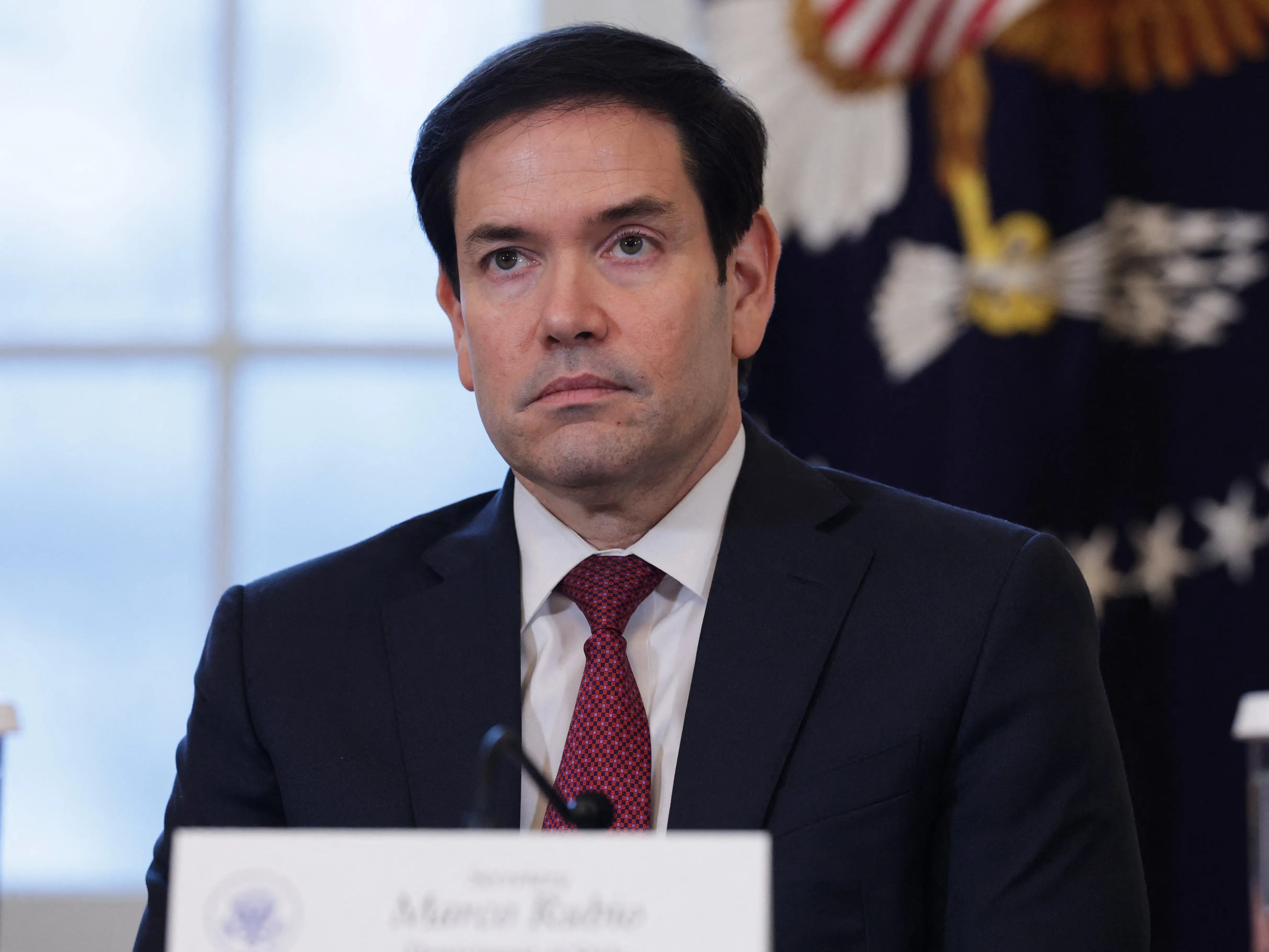
United States Secretary of State Marco Rubio appeared before the Senate Foreign Relations Committee on Wednesday (January 28), projecting a tough, unapologetic posture on Venezuela, his first public testimony since Nicolas Maduro was captured and flown to the United States. The secretary of state framed the moment as a necessary turning point, warning lawmakers that Venezuela posed a serious strategic danger to US security.
Rubio described the Maduro government as deeply entangled with international narcotics networks, arguing that the threat was especially alarming because it existed within the Western Hemisphere. Allowing such activity to continue, he said, was no longer viable. He went on to explain how the US is handling Venezuelan oil reserves that remain under sanctions. While the oil is being allowed into global markets, the revenue is being placed into accounts overseen by the United States. Rubio said the funds are intended for public use in Venezuela, particularly as the country faces diminishing oil storage capacity.
According to Rubio, the US does not require Venezuelan oil, but is seeking to help transition the country toward a functional, transparent energy sector free from corruption and political favoritism. He claimed rapid progress has already been made, including the early release of political prisoners, noting that developments have moved faster than anticipated in less than a month. When questioned by Senator Jim Risch about negotiations surrounding Maduro’s removal, Rubio said extensive preparation was necessary to neutralize threats to US personnel. He added that multiple efforts were made to convince Maduro to leave voluntarily, but those efforts failed due to Maduro’s repeated breaches of trust.

Also Read: Newly elected Seychelles President Patrick Herminie to make first official visit to India next month
Rubio said this marks the first time in two decades that the US has engaged in serious counter-narcotics discussions with Venezuelan authorities. He also emphasised efforts to roll back Iranian, Russian, and Chinese influence in the country. Democratic Senator Jeanne Shaheen asked whether interim leader Delcy Rodriguez was involved in drug trafficking. Rubio responded that Rodriguez has not been formally indicted, unlike Maduro and his wife, but characterised Venezuela’s governing structure as inherently corrupt rather than institutional.
Shaheen also questioned how the administration would prevent US-controlled funds from flowing to criminal organizations. Rubio acknowledged the risk, saying cooperation with current authorities is unavoidable during the stabilization phase. Republican Senator Pete Ricketts pressed Rubio on the legality and impact of Maduro’s arrest. Rubio confirmed the existence of a US bounty and said the country is safer with Maduro in custody. He added that Congress may eventually assist with Venezuela’s transition through licensing and economic activity, but stressed that Venezuela’s wealth means US financial support will not be required.
Trending Stories
)
‘Kill all in the name of...’: FBI arrests 21-year-old over alleged ISIS-inspired mass-casualty attack plot
)
Space mines, lasers & robotic arms: Lt Gen Pannu decodes US disclosure of weapons in space
)
Bitter Zelensky snubs Trump for playing politics with Ukraine war | Gravitas
)
Passengers scream as Iran flight suffers mid-air scare: Boeing 737 shakes violently after take-off | VIDEO
)
US fires up to 70 interceptors against Iran attack on Jordan, putting supplies under pressure
)
India’s imports from Russia jump 57% in five months; China remains top import source
)
‘US military task force aiding Saudi Arabia forces with intel, planning support’: Official
)
OpenAI boss Sam Altman repeats AI 'slow down' call, says world 'right to be afraid'
)
Top military commanders from US, Israel, and 7 Arab nations held secret meeting on Iran War
)
Sydney Sweeney defends provocative ad choice, the internet is still not impressed
)
'Definitely feel bad for yourself': Kuldeep Yadav opens up on India Test snubs
)
Ex-India all-rounder Yuvraj Singh wants India to avoid 'massive changes' before ODI World Cup 2027
)
Ed Sheeran’s US tour loses all support acts after Macklemore’s removal | Controversy explained
)
China's property crisis deepens as investment plunges nearly 20%
)
Messi set to play in farewell match on October 6 in Argentina vs Benin friendly
)
2,200 people donate Rs 1.5 crore for 'docile' Georgia donkey 'HeeHaw' shot dead by police officer
)
Putin-linked Russian oligarch, Melania links: Why Trump skipped his son’s Bahamas wedding bash?
)
800 million years old - Scientists discover 'fingerprints' of supercontinent Gondwana in ancient rocks
)
Saudi turns to Israel for intelligence help as Houthi attacks intensify: Report
)
Trump's name cannot return to Kennedy Center, US judge rules
)
Water equivalent to two Pacific Oceans could be stashed 2,900 km inside Earth
)
1,200 Indian and US troops begin high-altitude and desert drills
)
Ex-CIA officer caught with gold bars worth $40 million seeks plea deal | Gravitas
&im=FitAndFill=(700,400))
New OTT releases this week (September 14-20, 2026): Lust Stories 3, Waiting Hai, Irumudi- 5 new titles coming on Netflix, Prime Video and more
)
Trump's Iran war faces fresh House rebuke; 7 Republicans join Democrats in push to end conflict ahead of midterms
)
US Treasury yields cross 5% as Scott Bessent warns of ‘global issues’ impacting bonds
)
Who is Kalyan Bainsla, accused in the Gurugram hit-and-run case involving woman biker?
)
Saudi Arabia discovers 110 million tonnes of Uranium-rich ore in Madinah region
)
'Now Trump is copying us': Shivakumar links US $5,000 plan to Congress guarantees
)
Los Angeles helicopter crash: At least three dead, several injured; NTSB to investigate
)
West Bengal IPS officer Bushra Bano transferred after objections to ‘Assalamualaikum’, ‘Inshallah’
)
India summons top Pakistan diplomat after Pak Navy ship collides with Indian warship at high seas
)
Spanish officer sent home from NATO base over affair with 'Russian spy' | Gravitas
)
Saudi Arabia accuses Houthis of drone attack on Mecca, first-ever red alert in Islam's holiest site sparks panic
)
'Like a thug you are using agency to go after..': Kash Patel grilled by Senate Democrats over FBI firings, journalist investigations and hiring policy
Rubio said no US taxpayer money is currently being spent in Venezuela, arguing that the country’s collapse stemmed from widespread theft rather than a lack of resources. The administration’s objective, he said, is a stable, democratic Venezuela that can manage its own prosperity. Democratic Senator Chris Coons challenged the administration’s failure to consult Congress in advance, noting lawmakers were told military action was not imminent. Rubio replied that the plan only became feasible late in the process and that secrecy was essential due to leak risks. He later acknowledged that a contractor had internally disclosed elements of the plan.
Further questioning focused on preventing hostile foreign influence. Rubio argued that alignment with the US is in Venezuela’s long-term interest and warned that partnerships with Iran and other adversarial states have fueled instability. Senator Chris Murphy criticised the oil oversight strategy and questioned whether prolonged interim leadership would indicate failure. Rubio declined to set deadlines but said meaningful progress must be evident within six months. He also said that while the president keeps all options available, no further military action is expected.
Senator Rand Paul raised constitutional concerns, asking whether seizing a foreign leader would constitute an act of war if done to the US. Rubio rejected the comparison, describing the mission as a brief, targeted law enforcement action and reiterating that the US does not recognize Maduro as Venezuela’s legitimate head of state.

