‘No one knows what would take over’: Marco Rubio during Senate hearing warns Iran leadership collapse might spark complex US response

&imwidth=600&imheight=450&format=webp&quality=medium "‘No one knows what would take over’: Marco Rubio during Senate hearing warns Iran leadership collapse might spark complex US response")
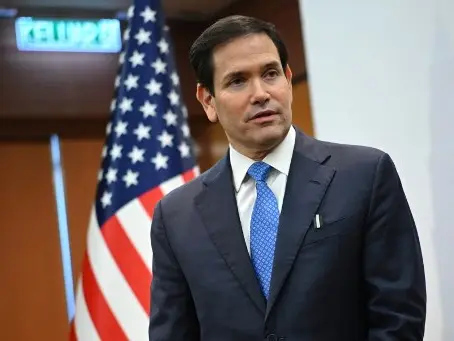
Marco Rubio Photograph: (AFP)
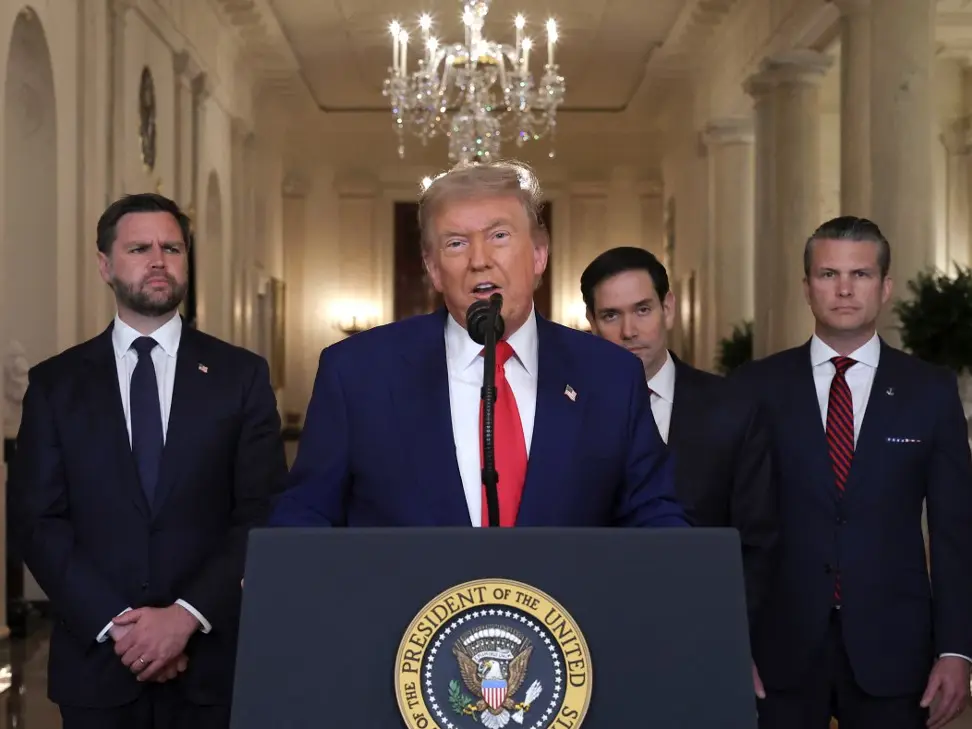
Marco Rubio told the Senate that the US must prepare for uncertain outcomes if Iran’s leadership falls, and said preemptive military options may be needed
US Secretary of State Marco Rubio, on Wednesday (January 28), during a Senate hearing, said that there is no clear answer to who would assume power in Iran if Supreme Leader Ayatollah Ali Khamenei were removed, warning that any transition would be highly complex and potentially destabilising. Testifying before the Senate Foreign Relations Committee, Rubio said Iran’s political system is deeply entrenched and divided among the supreme leader, the Islamic Revolutionary Guard Corps (IRGC), and quasi-elected officials who ultimately remain subordinate to Khamenei.
“No one knows what would take over,” Rubio said, describing the uncertainty surrounding a potential collapse of Iran’s current leadership. He added that any succession scenario would be “far more complex” than past US efforts involving regime pressure elsewhere, including Venezuela. Rubio emphasized that Iran’s long-standing power structure would make any transition difficult to predict or manage, requiring “a lot of careful thinking” if such a scenario were ever to arise. The secretary of state also suggested the United States should be prepared to take preemptive military action to protect American forces and allies in the Middle East, citing Iran’s growing military capabilities.
“I think it’s wise and prudent to have a force posture within the region that could respond and potentially, if necessary, preemptively prevent an attack against thousands of American servicemen and other facilities in the region and our allies,” Rubio told the committee. While stressing that he hoped military action would not be necessary, Rubio argued that Iran has amassed the ability to carry out attacks that could threaten US personnel and regional stability.
Ukraine security guarantees depend on US backstop: Rubio
US Secretary of State Marco Rubio on Wednesday (January 28) said that proposed security guarantees for Ukraine rely heavily on the presence of US support, even as discussions focus on deploying British and French troops. Speaking before the Senate Foreign Relations Committee, Rubio said there is broad agreement among allies that Ukraine will require security assurances, but noted that current proposals largely involve a limited European military presence backed by the United States.
Trending Stories
)
)
)
)
)
)
)
)
)
)
)
)
)
)
)
)
)
)
)
)
)
)
)
&im=FitAndFill=(700,400))
)
)
)
)
)
)
)
)
)
)
)
“There’s a lot of talk about security guarantees,” Rubio said, explaining that plans under discussion center on “a handful of European troops, primarily from France and the United Kingdom, and then a US backstop,” Rubio stressed that such guarantees would be ineffective without strong American involvement, arguing that many NATO allies have failed to adequately invest in their own defense capabilities over the past two to three decades.
“I’m not diminishing the fact that some countries in Europe are willing to place troops in a post-war Ukraine,” he said. “What I’m pointing out is that it is irrelevant without the US backstop.” The secretary of state said the need for American support highlights long-standing shortcomings within NATO, though he expressed hope that the trend is beginning to change. “Our allies and partners have not invested enough in their own defense capabilities over the last 20 or 30 years,” Rubio said, adding that some countries are now increasing defense spending and military readiness.

