

&imwidth=800&imheight=600&format=webp&quality=medium "'More protein, less sugar': Trump administration overhauls US dietary guidelines")
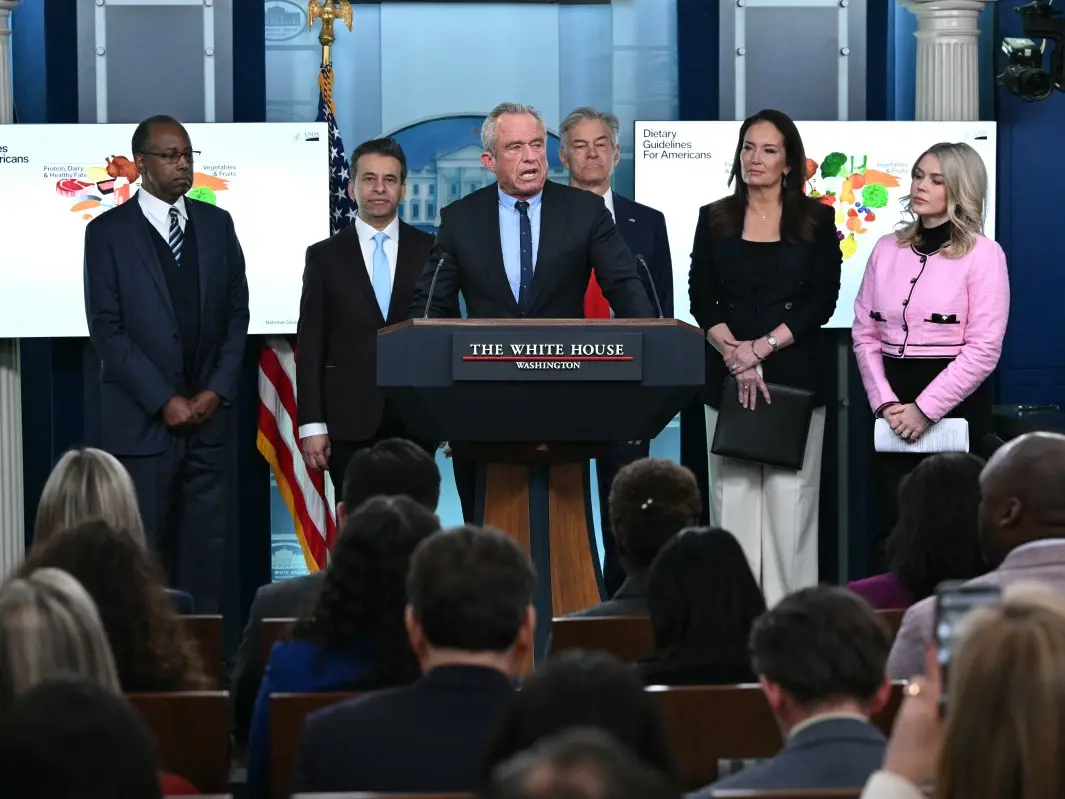
The Trump administration unveiled updated federal dietary guidelines on Wednesday (January 7), urging Americans to increase protein intake, sharply cut sugar consumption, and steer clear of heavily processed foods in pursuit of better health. The new recommendations align with the administration’s “Make America Healthy Again” (MAHA) initiative, a movement closely associated with Health and Human Services Secretary Robert F. Kennedy Jr. Alongside Agriculture Secretary Brooke Rollins, Kennedy has advanced MAHA priorities that include limiting access to unhealthy foods in federal assistance programs and challenging longstanding public health policies.
Issued jointly by the Department of Health and Human Services and the Department of Agriculture, the dietary guidelines are revised every five years and influence everything from school lunches to medical advice nationwide.
Kennedy said the updated guidance reflects a push to reduce the role of food industry interests and simplify nutrition advice for the public. Among the most notable changes is a stronger warning against consuming added sugars and highly processed foods, which administration officials link to rising rates of chronic illnesses such as diabetes and heart disease.
“At long last, the federal government is taking a firm stand against added sugar,” Kennedy said during a White House briefing. Despite the changes, several core recommendations remain unchanged. The guidance continues to emphasize fruits, vegetables, and whole grains, and still advises limiting saturated fat to no more than 10% of daily calorie intake.
Kennedy argued that following the new guidelines could help curb healthcare spending, a politically significant issue for Republicans as the 2026 midterm elections approach. He said diets centered on whole, nutrient-rich foods offer a practical path to improving health while reducing medical costs. The MAHA Commission, chaired by Kennedy, has also proposed overhauling how future dietary guidelines are developed, including changes to the advisory committee that shapes them. Critics have long accused the committee of being too closely tied to food industry interests. Notably, the panel that advised on the current guidelines was appointed under former President Joe Biden.
Trending Stories
&imwidth=180&imheight=135&format=webp&quality=medium)
Viral video shows cross falling on Colombia priest, no official confirmation | WATCH
&imwidth=180&imheight=135&format=webp&quality=medium)
Trump’s approval ratings hit a new low, Democrats want US president to campaign more
&imwidth=180&imheight=135&format=webp&quality=medium)
France reports first human case of livestock virus Shamonda, patient dies; what we know so far
&imwidth=180&imheight=135&format=webp&quality=medium)
Trump called Musk to lift Starlink restrictions affecting Ukraine's military operation: Report
&imwidth=180&imheight=135&format=webp&quality=medium)
Two BrahMos missiles on Tejas, triple the range and 100% indigenisation, says former BrahMos CEO
&imwidth=180&imheight=135&format=webp&quality=medium)
Ilhan Omar breaks silence over alleged marriage to her brother; Trump thinks it's 'really good answer'
&imwidth=180&imheight=135&format=webp&quality=medium)
Pakistan signs another defence pact even as Makkah Alliance shows no teeth. This time, it's with Qatar, Indonesia, Turkey
&imwidth=180&imheight=135&format=webp&quality=medium)
Netanyahu dials PM Modi, invites him and Capt Smit Machchhar to light torch on Israel’s Independence Day
&imwidth=180&imheight=135&format=webp&quality=medium)
'This time I’m not doing it': Trump reveals Google CEO refused his Atlantic Ocean renaming idea
&imwidth=180&imheight=135&format=webp&quality=medium)
Acton was raped by her stepfather as a child, Ramaswamy mocks it
&imwidth=180&imheight=135&format=webp&quality=medium)
Iran to invade neighbours soon, Israeli jets in action, American troops ready to strike any moment
&imwidth=180&imheight=135&format=webp&quality=medium)
US midterms 2026: US Supreme Court allows New Hampshire to restrict student IDs for voting
&imwidth=180&imheight=135&format=webp&quality=medium)
Putin fires nuclear capable hypersonic missiles, Zelensky ready to surrender 25% territory
&imwidth=180&imheight=135&format=webp&quality=medium)
Trump ordered to answer questions under oath in BBC defamation lawsuit by December 11
&imwidth=180&imheight=135&format=webp&quality=medium)
Putin says Russia is ready to resume Ukraine-US peace talks but rejects 'short ceasefire' amid deadly attacks
&imwidth=180&imheight=135&format=webp&quality=medium)
From Agni-V to Project Kusha: How are India’s indigenous missile systems and defence shield reshaping modern warfare
&imwidth=180&imheight=135&format=webp&quality=medium)
'It's a crime not to see this scene': Tehran puts Trump 'behind bars'
&imwidth=180&imheight=135&format=webp&quality=medium)
What is the ‘heat ray’ weapon? Pete Hegseth reportedly authorises DHS to test it at US-Mexico border
&imwidth=180&imheight=135&format=webp&quality=medium)
Will Rohit and Kohli play ODI World Cup 2027? BCCI president Manhas says board 'not in a position to comment'
&imwidth=180&imheight=135&format=webp&quality=medium)
China's dancing robot turns violent bodyguard, lifts cars and fights intruders - Watch
&imwidth=180&imheight=135&format=webp&quality=medium)
Watch: India rejects ‘imprecise and unsupported’ references in UN migrant rights report
&imwidth=180&imheight=135&format=webp&quality=medium)
US to get 850 F-35 stealth fighter jets under 10-year Pentagon-Lockheed deal
&imwidth=180&imheight=135&format=webp&quality=medium)
GRAVITAS | Putin fires nuclear-capable hypersonic missiles, Zelensky ready to surrender 25% territory
&imwidth=180&imheight=135&format=webp&quality=medium)
IIFA 2026: Salman Khan warns paps, kisses little fan and hugs Kareena Kapoor at press conference
&imwidth=180&imheight=135&format=webp&quality=medium)
US business activity grows in June, but tariffs and inflation cloud outlook
&imwidth=180&imheight=135&format=webp&quality=medium)
'That was great, who threw that punch?': Trump asks as protester punched at rally
&imwidth=180&imheight=135&format=webp&quality=medium)
‘I caution the president...’: Trump’s ex-press secretary warns after Zacharia’s exit
&im=FitAndFill=(700,400)&imwidth=180&imheight=135&format=webp&quality=medium)
Serbia elections: Nearly 150,000 people take to streets in massive rally against Aleksandar Vucic | In pics
&imwidth=180&imheight=135&format=webp&quality=medium)
Trump’s bid to put his name on everything: This time, it was Atlantic Ocean; a look at past efforts
&imwidth=180&imheight=135&format=webp&quality=medium)
'This is despicable': Amy Acton hits back at Vivek Ramaswamy over Ohio campaign ad featuring her estranged mother
&imwidth=180&imheight=135&format=webp&quality=medium)
Finance influencer dies by suicide in Chennai; father accuses tech CEO, who denies charge
&imwidth=180&imheight=135&format=webp&quality=medium)
'Vivek should keep it up': Trump defends Ramaswamy's controversial campaign ad targeting Amy Acton
&imwidth=180&imheight=135&format=webp&quality=medium)
One man, 8 months of work, and a river dirty again: Why Bittu Tabahi may quit
&imwidth=180&imheight=135&format=webp&quality=medium)
ENG vs SL: Harry Brook’s 202 goes in vain as Sri Lanka pull off second-highest ODI chase
&imwidth=180&imheight=135&format=webp&quality=medium)
ENG vs SL: Harry Brook breaks Shubman Gill’s record for fastest ODI double century
&imwidth=180&imheight=135&format=webp&quality=medium)
Saudi Arabia targeted yacht carrying 14 Indians in Red Sea, rescue underway, Houthis claim
Higher protein, lower sugar
The revised guidelines recommend adults consume between 1.2 and 1.6 grams of protein per kilogram of body weight daily, significantly higher than the previous standard of 0.8 grams. They also reverse decades of advice favoring low-fat dairy, now endorsing full-fat dairy products. Dairy industry groups have long argued that low-fat guidance unfairly hurts farmers and lacks strong scientific backing.
Another change removes explicit daily alcohol limits. Instead of specifying one or two drinks per day, the guidelines now broadly advise adults to drink less alcohol to improve overall health. A White House official said the recommendations are grounded in credible science and are expected to improve long-term public health outcomes.
The American Medical Association welcomed the focus on reducing processed foods, sugary drinks, and excess sodium, citing their role in fueling obesity, diabetes, and heart disease. Meanwhile, the School Nutrition Association noted that schools already comply with federal standards but need additional resources and training to expand fresh, scratch-made meals.
Strong warning on processed foods
The guidelines state that added sugars and non-nutritive sweeteners have no role in a healthy diet and recommend keeping added sugar below 10 grams per meal if consumed at all. Earlier guidance allowed limited sugar use as long as daily intake stayed under 10% of calories.
Foods containing artificial flavors, dyes, and low-calorie sweeteners are discouraged. Several major food companies have begun reformulating products in response to the administration’s stance. Beverage companies such as Coca-Cola, PepsiCo, and snack producer Mondelez, along with European firms Nestlé and Danone, have faced heightened scrutiny from Kennedy. The American Beverage Association countered that most drinks sold today contain little or no sugar and argued that discouraging sugar-free beverages is unrealistic.
While the guidelines stop short of addressing “ultra-processed” foods directly, federal agencies say they are working on a formal definition. Researchers worldwide have linked ultra-processed foods—often made with industrial additives—to higher risks of obesity and type 2 diabetes.

