Total solar eclipse August 12: Date, time, path and where to watch Live - Full visibility guide

&imwidth=600&imheight=450&format=webp&quality=medium "Total solar eclipse August 12: Date, time, path and where to watch Live - Full visibility guide")
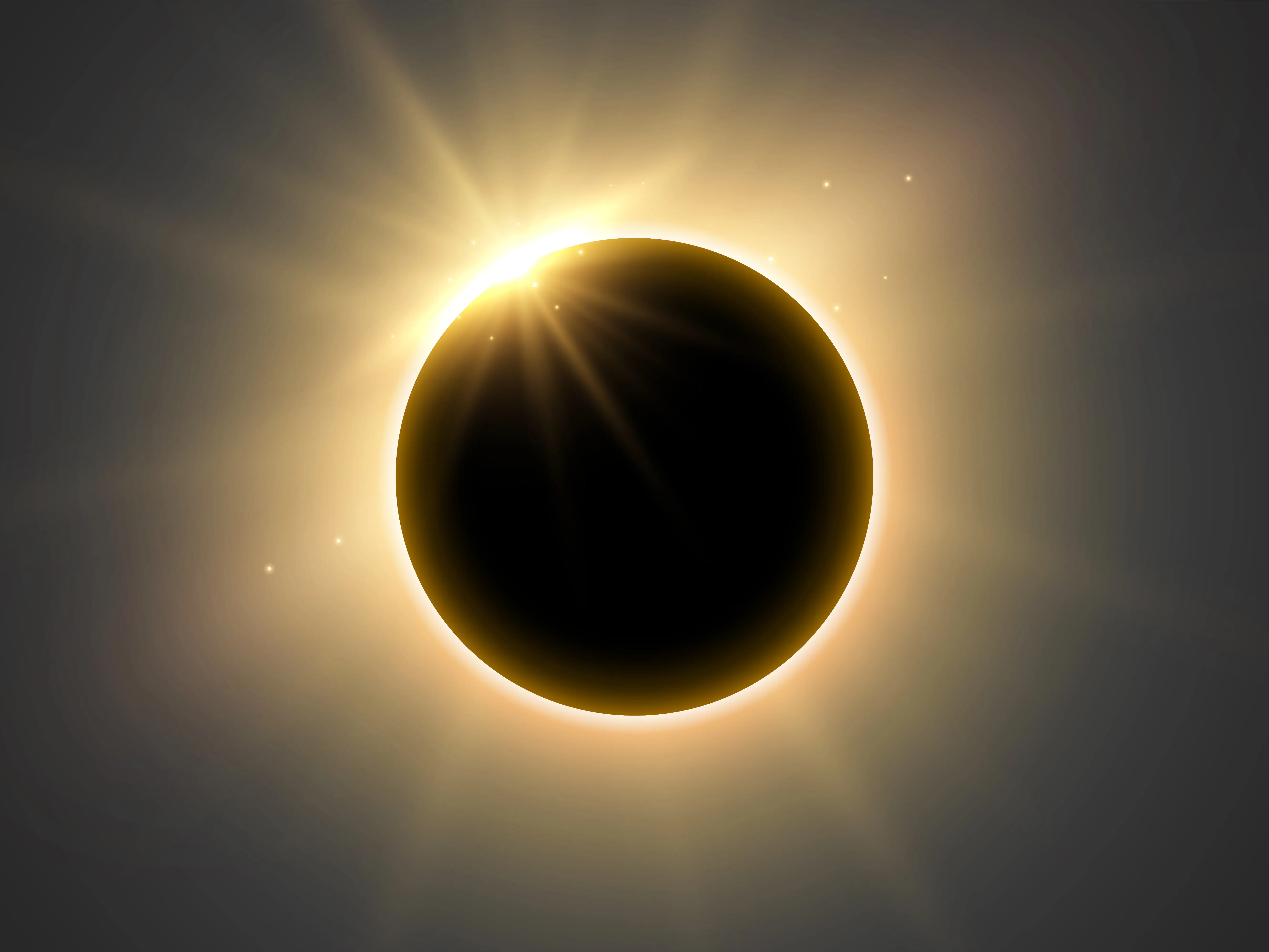
Representative image. Photograph: (Magnific)
The primary broadcast will come from the Observatorio Astrofísico de Javalambre in Teruel, where totality lasts 1 minute 21 seconds starting at 20:31 CEST, backed by additional feeds from León and Frómista as a hedge against cloud skies.
The Moon is set to completely cover the Sun on the evening of August 12, plunging a narrow strip of Europe into darkness for just over a minute in some spots and nearly two minutes in others. This marks the first solar eclipse anywhere on Earth since April 2024, and the first to sweep across the Iberian Peninsula in over a hundred years.
Spain takes centre stage simply because it's the only heavily populated area within the shadow's path. Totality of the solar eclipse kicks off over the Arctic, moves across eastern Greenland and western Iceland, brushes a small corner of northeastern Portugal near Montesinho Natural Park, and then travels west to east through northern Spain. The rest of Europe, along with part of North America, will only see a partial eclipse.
Where to watch the total solar eclipse
In Spain, the eclipse will widely cover areas including León, Burgos, Valladolid, Santander, Bilbao, Zaragoza, Valencia and Palma, with peak nearly 8:32-8:33 pm CEST. Iceland's western coast, including Reykjavík and Ísafjörður, experiences totality earlier, at 5:48 pm GMT, though Látrabjarg gets the longest duration.
Elsewhere, Dublin will see 94 per cent coverage, Paris 92 per cent, and London 91 percent. North America fares much worse: New York gets just 9 per cent, Washington DC only 4 per cent, and Chicago a negligible 0.1 per cent. St John's in Newfoundland offers the continent's best view at 53 per cent. India won't see the eclipse at all, since it occurs well past midnight IST.
Also read: Uttarakhand young innovator builds India's own flying vehicle, conducts first test flight: WATCH
Trending Stories
)
)
)
)
)
)
)
)
)
)
)
)
)
)
)
)
)
)
)
)
)
)
)
)
)
)
)
)
)
)
)
)
)
)
&im=FitAndFill=(700,400))
)
)
)
)
What sets this eclipse apart from the 2024 one
Two factors make it different. First, it coincides with lunar perigee, meaning the Moon will appear slightly larger than usual, stretching totality longer than it would otherwise last. Second, it falls on the same night as the peak of the Perseid meteor shower. Watch the eclipse at sunset, then stick around as the sky fills with meteors.
The phenomenon can be seen on ESA, which is streaming free on YouTube and ESA Web TV from 19:30 to 20:45 CEST, hosted by space scientist Dame Dr Maggie Aderin. The primary broadcast will come from the Observatorio Astrofísico de Javalambre in Teruel, where totality lasts 1 minute 21 seconds starting at 20:31 CEST, backed by additional feeds from León and Frómista as a hedge against cloud skies. ESA is also hosting a free public event at the Palacio de Exposiciones y Congresos in León, conducted largely in Spanish.

