

&imwidth=800&imheight=600&format=webp&quality=medium "Shaking the Earth: Top 10 countries most affected by Earthquakes—Where does India stand?")
Months after an earthquake of magnitude 7.7 jolted Myanmar's Sagaing on March 28, 2025, claiming over 5000 lives, another massive earthquake of magnitude 8.8 struck off Russia's far eastern Kamchatka Peninsula on Wednesday (July 30). Later, the powerful quake prompted a tsunami warning in the Pacific Ocean, which triggered evacuations across Russia, Japan, and Hawaii.
After the major-to-minor earthquake in the recent past, you might be wondering which countries are frequently hit by massive earthquakes. As you know, when the quake hits, it reshapes landscapes, infrastructure, economies, and lives in seconds.
Numerous Asian countries are highly prone to earthquakes. China and Indonesia are experiencing the most seismic activity, and when looked at in relative terms, Japan records the highest number of earthquakes globally.
Based on seismic records and NOAA’s data, here is the list of the top 10 countries frequently hit by major earthquakes over the last three decades.
10. Afghanistan
Afghanistan has secured the 10th spot across the world after it endured repeated earthquakes, particularly in its northeastern and central provinces. The Hindu Kush region is a hotspot for seismic and tectonic activity due to the collision between the Indian and Eurasian plates.
Trending Stories
&imwidth=180&imheight=135&format=webp&quality=medium)
100,000 strikes in 3 years: How October 7 redefined Israel's war
&im=FitAndFill=(700,400)&imwidth=180&imheight=135&format=webp&quality=medium)
Happy Birthday Rekha: Watch these 7 evergreen Bollywood hits on Netflix, Prime Video and more
&imwidth=180&imheight=135&format=webp&quality=medium)
‘Your people don’t even let us near it’: IAF chief’s blunt response on US F-35; India yet to decide on Russia’s Su-57
&imwidth=180&imheight=135&format=webp&quality=medium)
Real or fake? PIB fact-checks protest videos; Delhi Police clarifies on Gurdwara Bangla Sahib clip
&imwidth=180&imheight=135&format=webp&quality=medium)
Delhi on high alert for CJP protest: Delhi police to use body cams to 'prove whether we did anything’; Pink Force, RAF, 35,000 personnel deployed
&imwidth=180&imheight=135&format=webp&quality=medium)
‘Never-ending flow of cheap labour’: JD Vance hits back at Indian-origin Congresswoman over US green card curbs for major tech companies
&imwidth=180&imheight=135&format=webp&quality=medium)
Panama president declares ‘major disaster’ after powerful 7.7-magnitude earthquake; over 80 aftershocks recorded
&imwidth=180&imheight=135&format=webp&quality=medium)
Why Rajinikanth turned down Baasha 2 and Petta 2 but returned for Jailer 2
&imwidth=180&imheight=135&format=webp&quality=medium)
'Jantar Mantar not the story of India': BJP's Sambit Patra claims 'anarchists' tried to hold Delhi captive
&imwidth=180&imheight=135&format=webp&quality=medium)
BJP MP Ravi Shankar Prasad slams CJP protests, calls it 'shadow boxing for AAP'
&imwidth=180&imheight=135&format=webp&quality=medium)
US midterm elections: Why Zohran Mamdani's influence could become a headache for Democrats and Republicans
&imwidth=180&imheight=135&format=webp&quality=medium)
Riyadh airport hit in missile attack, dozens injured; 5 in intensive care
&imwidth=180&imheight=135&format=webp&quality=medium)
'Spent Rs 2,000 cr to elect Trump': Elon Musk bought US President's loyalty by writing the biggest political cheque in human history
&imwidth=180&imheight=135&format=webp&quality=medium)
Powerful 7.7 magnitude earthquake strikes Panama, tsunami warning issued
&imwidth=180&imheight=135&format=webp&quality=medium)
Elon musk & India clash over Starlink's market entry terms
&imwidth=180&imheight=135&format=webp&quality=medium)
INDIA bloc plans mega protest on Monday amid Delhi crackdown, Wangchuk's warns to launch 'padyatra'
&imwidth=180&imheight=135&format=webp&quality=medium)
Who is Ajinkya Shinde, announced to lead CJP protest after Dipke, Das and Ranka's detention?
&imwidth=180&imheight=135&format=webp&quality=medium)
'Ouch!!! That must hurt': Kangana Ranaut hails Kamal Haasan's sharp reply to Elon Musk over Starlink row
&imwidth=180&imheight=135&format=webp&quality=medium)
‘Right to protest must be protected, but...’: Delhi Police reveals why it denied CJP permission for October 10 Jantar Mantar protest
&imwidth=180&imheight=135&format=webp&quality=medium)
Hamas used double agents, deceived Israel to carry out October 7 massacre
&imwidth=180&imheight=135&format=webp&quality=medium)
NIA files FIR in Flydubai hijack attempt and attack on Smit Machchhar, probes ‘larger conspiracy’
&imwidth=180&imheight=135&format=webp&quality=medium)
Portugal Federation confirms Cristiano Ronaldo’s return to national team despite suspension
&imwidth=180&imheight=135&format=webp&quality=medium)
All 22 Indian seafarers safe in attack on Panama-flagged tanker off UAE coast
&imwidth=180&imheight=135&format=webp&quality=medium)
‘Time for Ukraine to get a new president’: Trump lashes out at Zelensky over Russia strikes
&im=FitAndFill=(700,400)&imwidth=180&imheight=135&format=webp&quality=medium)
Food shortages, suicide attempts and more: USS Abraham Lincoln returns to US after 321 day deployment — What happened aboard the US carrier?
&imwidth=180&imheight=135&format=webp&quality=medium)
Thai queen becomes first reigning monarch to fly jet solothailand #queen #wion
&imwidth=180&imheight=135&format=webp&quality=medium)
‘Every game against Liverpool is special’: Erling Haaland ahead of Anfield clash
&imwidth=180&imheight=135&format=webp&quality=medium)
Rahul Gandhi calls Modi, Shah ‘cowards’ amid CJP protest crackdown in Delhi
&imwidth=180&imheight=135&format=webp&quality=medium)
Four years, 3 licenses, zero launch: Why is Elon Musk’s Starlink still struggling to crack Indian market? EXPLAINED
&imwidth=180&imheight=135&format=webp&quality=medium)
AUS vs SA 1st Test, Day 2: Renshaw shines with 190 as Australia dominate South Africa
&imwidth=180&imheight=135&format=webp&quality=medium)
Why was CJP founder Abhijeet Dipke detained? What Delhi Police said
&imwidth=180&imheight=135&format=webp&quality=medium)
Putin conveys Iran’s proposal to Trump, offers to take Tehran’s enriched uranium
&imwidth=180&imheight=135&format=webp&quality=medium)
'It’s been 12 hours': CJP writes to Delhi Police, demands release of Dipke, Saurav Das and Ranka
9. Mexico
Like many living organisms nestled within the fiery embrace of the Pacific Ocean's Ring of Fire, Mexico has a deep connection with earthquakes. The land is in the range of shifting tectonic plates, making earthquakes frequent in the region.
8. Philippines
With a total of 553 earthquakes and 55 major earthquakes, the Philippines places 8th. This land regularly experiences strong earthquakes due to the Philippine Sea Plate’s interaction with the Eurasian Plate. The most devastating earthquake on this land was in 1990, when Luzon Island was hit by a 7.7 magnitude quake, claiming the lives of 2,412 people.
7. India
India ranks 7th, as the northeast and Himalayan belt are highly earthquake-prone due to continuous seismic activity and tectonic collision with the Eurasian Plate. The 2001 Gujarat earthquake was one of the most devastating earthquakes, which claimed over 20,000 lives.
6. Turkey
Turkey holds the 6th spot in terms of the most earthquakes, as it lies along the North Anatolian Fault, a major east-west fault line that has produced multiple deadly quakes. The 1999 İzmit and the 2023 Kahramanmaraş earthquakes are among the most destructive in history. According to official figures, at least 18,373 people died and 48,901 people were injured during the 1999 İzmit earthquake, and the 2023 Kahramanmaraş earthquakes claimed over 50,000 lives.
5. United States
The US witnessed the most seismic activity in California and Alaska. The San Andreas Fault is quite popular for coming up with destructive quakes, and Alaska also experiences some of the strongest earthquakes in North America. From 1990 to 2024, the US has experienced a total of 78 massive earthquakes, claiming several lives.
4. Japan
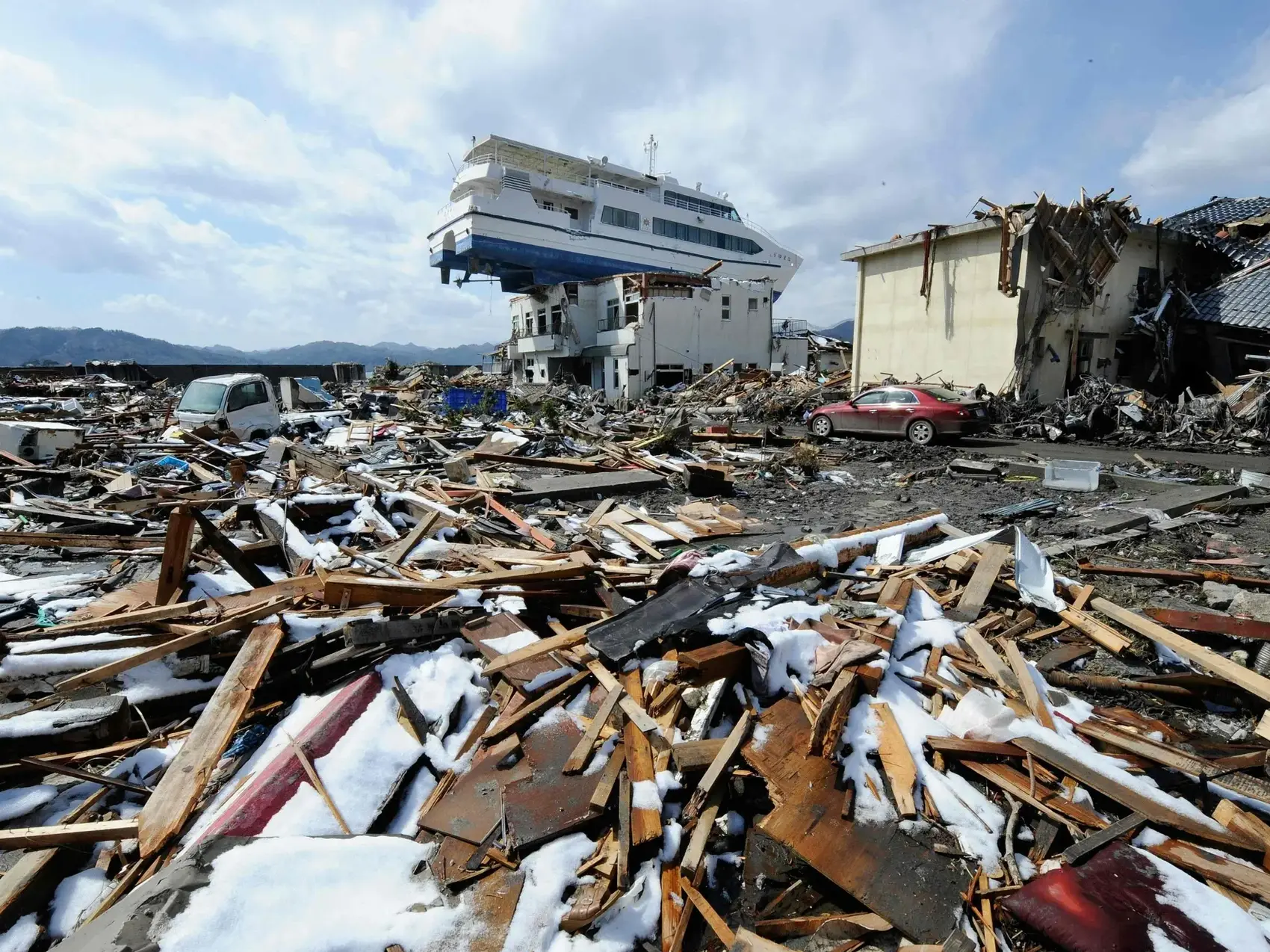
Japan also faces some of the strongest tremors in the world. It is located squarely on the Ring of Fire, which prompts frequent earthquakes. The massive and hazardous quakes on this land include the 2011 Tōhoku earthquake and tsunami, which killed at least 20,000 people. The region has witnessed a total of 98 major earthquakes as of 2024.
3. Iran
Due to its location at the collision zone between the Arabian and Eurasian tectonic plates, Iran is highly prone to earthquakes, securing at 3rd spot. The massive quakes in cities such as Bam in 2003 and Manjil-Rudbar in 1990 have devastated them, claiming several lives and destroying major infrastructure.
2. Indonesia
Indonesia is the most seismically active nation in the world, as it is also situated in the Pacific Ring of Fire, which has been hit by around 1000 earthquakes and 166 massive earthquakes since 1990. The 2004 Sumatra quake and tsunami remain one of the deadliest disasters across the world, as it claimed the lives of over 2 lakh people.
1. China
China tops the list with a total of 186 powerful earthquakes since 1990. Its western and southwestern regions, especially along the Longmenshan and Himalayan fault lines, are a highly seismic zone. The Sichuan earthquake in 2008 and the Tangshan quake in 1976 caused massive loss of life and infrastructure damage.

