
&imwidth=800&imheight=600&format=webp&quality=medium "Scientists just found 'deep-sea oasis' in an Arctic region thought to be barren")
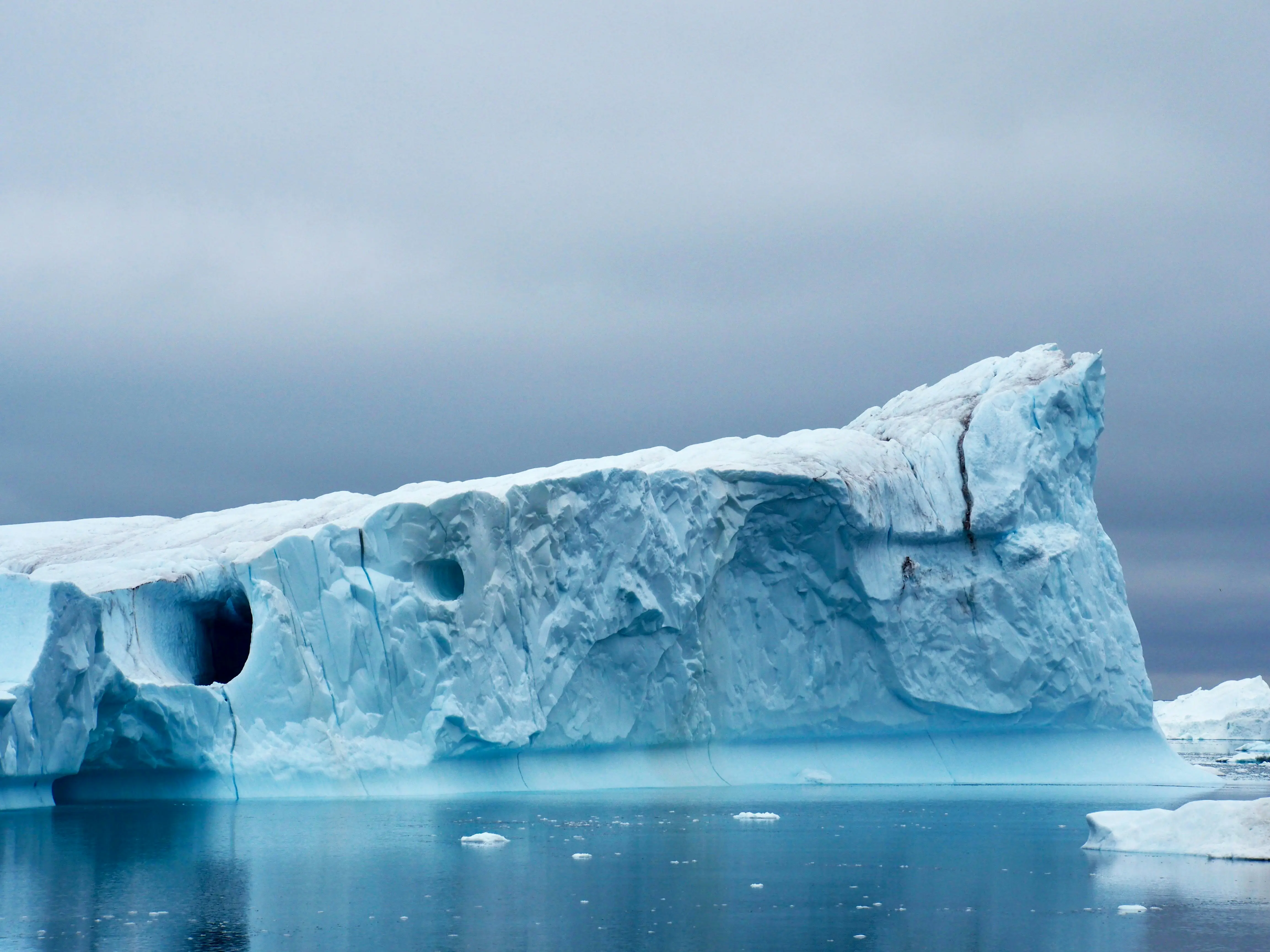
Scientists have discovered a "deep-sea oasis" nearly 4,000 meters beneath the Arctic Ocean that changes previous understanding of how deep-sea biodiversity works. The findings include the deepest known methane hydrate mounds, also known as Freya mounds, below the surface on the Molloy Ridge in the Greenland Sea. A team of researchers, led by Giuliana Panieri and Jonathan T. Copley, published the findings in Nature Communications. The study rewrites the understanding of how life survives in the most extreme conditions on Earth. It mentions how solid structures are trapping methane, other gases and crude oil under the Arctic seafloor. This oasis is teeming with life, as amphipods and caridean red shrimp inhabit the waters around the mounds.
Lead author Panieri, of UiT The Arctic University of Norway, said, "These hydrate mounds represent the deepest cold seeps ever found in the Arctic. They are active, dynamic systems that host unique life forms and play a role in global carbon cycling. “This discovery rewrites the playbook for Arctic deep-sea ecosystems and carbon cycling.”

"Freya mounds" are made up of frozen methane
These are the deepest methane hydrate mounds ever recorded in the Arctic. Scientists found a thriving ecosystem supported by chemosynthesis in a region that is completely dark and has extremely cold conditions, essentially making it impossible to support life. A unique food web has formed in the region, with bacteria feeding on methane and sulfide as energy sources. The "Freya mounds" are made up of frozen methane, other gases, and crude oil and are shaped like a cone. They release massive gas flares, plumes of methane-rich bubbles that rise over 3,300 metres high. The researchers used a remotely operated vehicle named Aurora to find a whole new world where these six-metre-wide conical mounds reside.
Also Read: World's deepest blue hole remained a secret until 2021 because it is invisible from space
Trending Stories
)
Noel Tata challenges Chandrasekaran’s reappointment as Tata Sons chairman. What happened at the board meeting
)
TIFF 2026: Theja Rio’s Angh wins Platform Prize, puts Nagaland story on global stage
)
Arvind Kejriwal, family members, Delhi CM Rekha Gupta get SIR notices
)
Fleming's aspirations as England Test coach include WTC, top ranking and Ashes
)
Apple reportedly building AI server with M8 Ultra chips, may use Nvidia technology
)
Several petrol pumps, other businesses to refuse UPI payments above Rs 2,000 from Oct 16: Is it legal?
)
Microsoft executive called AI training the ‘largest theft of labour in human history’
)
Delhi Air pollution: Strict crackdown on waste burning
)
Delhi: Flagged voters remain on the draft roll but face hearings
)
Trump says he'll build an 'AI Force' and appoint a czar, for 'high IQ' people only
)
ICE shooting in Texas leaves man seriously injured; officials demand independent investigation and transparency
)
China now makes advanced memory chips without the machines it was banned from buying
)
Bessent meets China’s He Lifeng to prepare for Trump-Xi summit
)
SNL UK takes aim at Ed Sheeran with AI Princess Diana sketch
)
Taylor Swift has a 'proud wife' moment as Travis Kelce scores first touchdown of season: 'That’s my husband!'
)
US ships in Indian Ocean ‘will be attacked’ if war resumes, warns Iran
)
BTS' fans question iHeartRadio’s treatment of group after brief festival set
)
Iran sets 7 conditions to end war with US: What are Tehran’s demands?
)
'Does not mean name deletion': EC issues clarification after ex-Election Commissioner, former CM Kejriwal, EAM Jaishankar, others get SIR notices
)
Italy moves to ban face veils in schools as Meloni pushes new integration measures
)
Saudi Arabia exits China-led mBridge digital currency platform amid Saudi-Houthi conflict
)
Glitch in the matrix caught on camera: Woman vanishes after talking to reporter
&im=FitAndFill=(700,400))
New OTT releases this week (September 21-27, 2026): Shaque: Trust No One, Hunkkaar, Don’t Be Shy- 5 new titles coming to Netflix, Prime Video and more
)
AI kill switch explained: Why shutting down a dangerous AI may not be as simple as pressing a button
)
CDU suffers historic defeat in eastern Germany as AfD surges, Merz vows to stay on
)
'Lot of things to learn from experienced players': Jayasuriya backs Rohit, Virat for 2027 ODI World Cup
)
Jailer 2: Vidya Balan joins Rajinikanth's upcoming film as Kantha | Watch
&im=FitAndFill=(700,400))
Gulshan Grover turns 70: Ram Lakhan, Gangster, Hera Pheri- Must-watch movies of the actor on OTT platforms
&im=FitAndFill=(700,400))
Kareena Kapoor birthday special: Inside her net worth, best movies, luxurious lifestyle and love story with Saif Ali Khan
)
Samsung raises Galaxy S26 prices by Rs 20,000: Here’s what each model now costs
&im=FitAndFill=(700,400))
What TSMC's 2nm technology means for Apple
)
AI actress Tilly Norwood glitches mid-interview, switches from English to Chinese | Watch
)
‘0% chance’: Nvidia CEO Jensen Huang dismisses AI extinction fears by 2030
)
Saudi vs Houthis: Houthis claim missiles & drones used in attack on key Saudi sites
)
Ed Sheeran addresses Macklemore's removal, Gaza conflict during Philadelphia concert: 'I cannot hide how I feel'
)
Trump-Xi summit: US Treasury Secretary holds meeting with Chinese Vice Premier
)
S Jaishankar, former Army chief among high-profile names issued Delhi SIR notices
)
Maharashtra TET paper leak: All 18 accused arrested. How alleged Agra-to-Maharashtra racket unfolded
)
'Were you here to sell chickpeas?': Wasim Akram criticises Babar Azam's captaincy
)
Punjab man consumes poison outside DC office; Congress, BJP target AAP government
)
Chancellor Friedrich Merz vows to stay on as exit polls signal major poll setback
)
Operation Sindoor’s hidden naval dimension | MoD reveals Indian Navy Special Forces joined May 7 strikes
“Forests” of shrimp, snails, and amphipods were found
The ROV captured images of over 20 species living in this oasis, with a dense population of Sclerolinum tube worms, caridean red shrimp, snails, and amphipods present. The expedition took place in May 2024 and also led them to uncover chemical "fingerprints" that reveal the hydrocarbons (methane, propane, and butane) leaking from the seafloor originate from source rock dating back to the Miocene age, millions of years ago. This discovery alters the understanding of global carbon cycling, systems that play a critical role in how the greenhouse gas methane is stored and released from the seabed. The gas mixture also includes ethane, propane, and butane, suggesting that they are coming from deep in the Earth's crust.
Deep-sea mining
Norway opened this Arctic region for seabed mineral exploration in early 2024. Following pressure from the public, it paused issuing new mining licenses and has suspended public funding for further seabed mineral mapping until at least the end of 2029. This discovery proves that there is a lot humans still don't know about seafloors. It is crucial to know about them before we go digging them up, something that can have grave consequences.

