Researchers claim 'ancient wood from Noah's Ark' broke their drill during excavation of mystery structure

&imwidth=600&imheight=450&format=webp&quality=medium "Researchers claim 'ancient wood from Noah's Ark' broke their drill during excavation of mystery structure")
A team from Noah's Ark Scans drilled the Durupınar formation but something broke their drill.
During the drilling of the 515-foot boat-shaped formation located on a mountain in Turkey, something broke a piece of the machine. The team believes what it hit was ancient, decayed wood. However, the analysis is yet to be peer-reviewed.
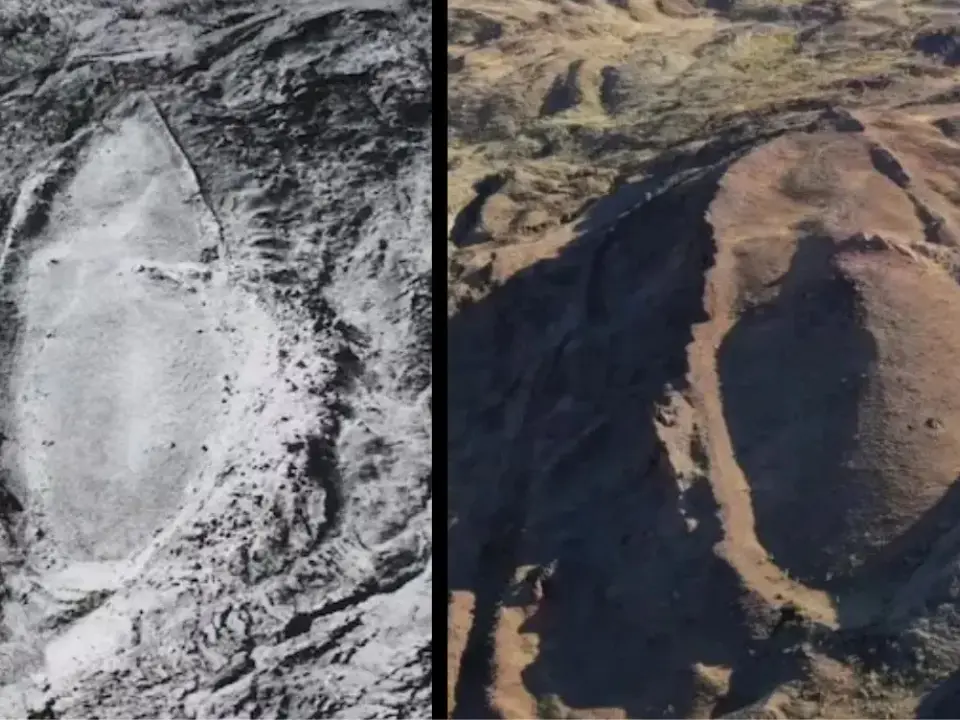
A team of researchers drilled into the mysterious boat-shaped feature on a mountain in Turkey and claims to have found evidence of decayed wood. The Durupınar formation has long been believed to be the remains of Noah's Ark, the boat built on Lord Jesus's order before the Great Flood, as per the Bible. However, several experts have dismissed these claims, but there are some groups who continue to entertain the idea that this is not a natural structure.
Noah's Ark Scans is one such group which has been analysing the site and recently sent a Gopher Drone into the structure. It went nearly 60 feet deep and collected samples from inside the Durupınar. "I believe this is Noah’s Ark; that’s why I’m putting the Durupinar site through the most rigorous testing possible," Andrew Jones, the founder of the organisation, said. The team reported a series of successful core drilling excavations in a press release. One of the excavations reportedly broke a drill after hitting something deep inside, which they believe could be petrified wood.
Also Read: 'FIRST LOOK from inside Noah’s Ark': Researchers share video from inside mysterious mound in Turkey
Something broke a drill inside the boat-shaped formation
Jones said their findings show that this is not a natural rock formation. In a series of posts on X, the team stated that they did not find limestone bedrock, and the core drilling effort also experienced a broken bit. He believes that this happened because of the presence of ancient petrified wood. If softer limestone was present inside the structure, the drill would not have broken, he explained. The preliminary radar data did not show "a simple homogeneous solid-rock signature", they said on X.
Meanwhile, the core drilling samples will be analysed in a laboratory to learn more about the structure that remains a mystery because of its unique shape. The team is also planning to send a robot into the tunnels and chambers that were discovered in previous scans.
Trending Stories
)
)
)
)
)
)
)
)
)
)
)
)
)
)
)
)
)
)
)
)
)
)
)
)
)
)
)
)
)
)
)
)
)
)
&im=FitAndFill=(700,400))
)
)
)
)
The 515-foot surface looks like a boat, leading many to believe that it is the final resting place of Noah's Ark. Turkish Army Capt. İlhan Durupınar spotted it for the first time in 1959.

