Mammoth stone circles 10,000 feet above an Argentine mountain baffle researchers

&imwidth=600&imheight=450&format=webp&quality=medium "Mammoth stone circles 10,000 feet above an Argentine mountain baffle researchers")
Ai representation of the Argentina stone circles on Mendoza mountain. Photograph: (AI-Generated image)
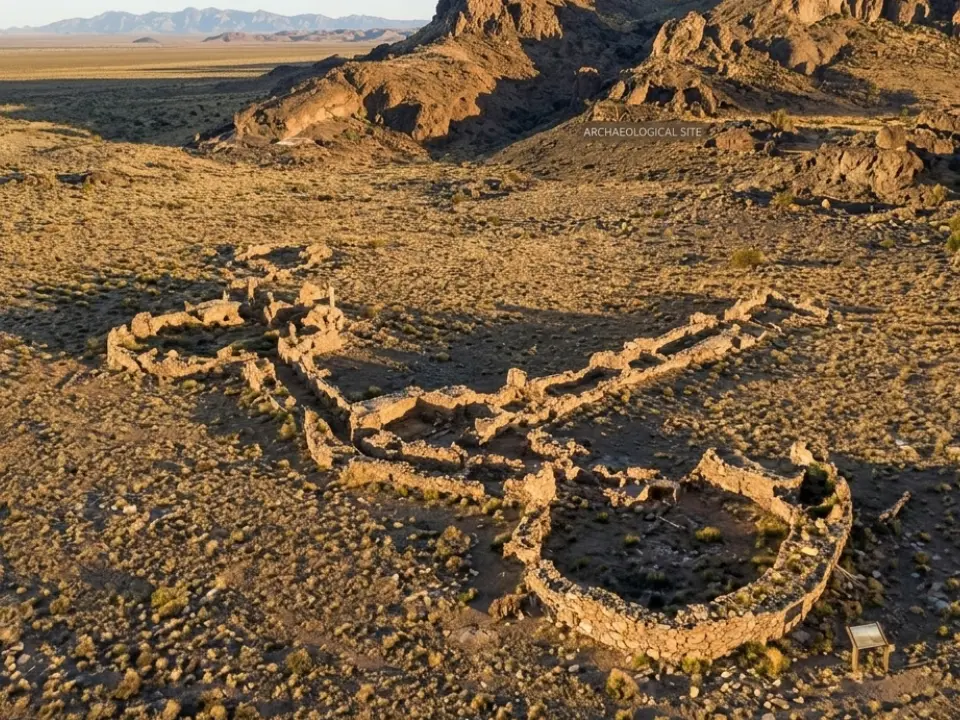
High above a mountain in the Mendoza region of Argentina sits a mammoth stone structure connected with passages. Researchers have failed to understand why a civilisation would build something like this in such a remote location. The age of the circles and the builders remain a mystery.
Archaeologists are studying the large circular structures located nearly 10,000 feet above sea level on a mountain in Argentina. Some of these circles measure 88 to 114 feet in diameter, creating a striking visual from above. They were discovered in May 2025 by mountaineer Carlos Gobbi, who was studying satellite images of the region. He came across the large geometric stone structures in Cordillera del Tigre, which were later compared to Peru’s famous Nazca Lines.
This led to an investigation into the formation to understand who built them and the purpose they served. However, archaeologists are still struggling to answer questions about it, including their age. To uncover the secrets behind this structure, a team of researchers tried to reach the remote location. But the rugged terrain, lack of water and lack of communication infrastructure made that task difficult.
Gobbi, Adrián Radich and Gabriel Orofino managed to finally reach the site in February this year after travelling through the mountains for four days. They could finally analyse the site in person, but more mysteries were born. They came across extensive stone constructions and large circles connected by corridors. There were also stones buried in the ditches which looked like channels and walls above the ground. Even though they were similar to the Nazca Lines, the researchers stressed they are distinct from anything else that had ever been found.
The purpose of this structure has been the real puzzle. Why would humans build such mammoth structures in a high-altitude location that is almost impossible to reach? There has been no evidence yet that connects it to domestic life, as pottery fragments, food remains, and other surface evidence remain missing.
This led them to investigate if the stone circles served ritual, symbolic or ceremonial purposes. Another theory proposes that it could have been inhabited by pre-Hispanic populations before the Inca expansion. To dive deeper, they looked for records of a comparable archaeological site in Mendoza, but found nothing. So far, all of the above theories remain unverified.
In order to unravel the mystery of the circles, the researchers from the Argentine Institute of Snow Research, Glaciology and Environmental Sciences (IANIGLA-CONICET) and Spain’s University of Jaén will now undertake sediment analysis using remote-sensing techniques.
)
)
)
)
)
)
)
)
)
)
)
)
)
)
)
)
)
)
)
)
)
)
)
)
)
)
)
)
)
)
)
)
)
)
&im=FitAndFill=(700,400))
)
)
)
)

