Did Hitler kill his niece Geli Raubal? Newly found records reopen a 95-year-old mystery

&imwidth=600&imheight=450&format=webp&quality=medium "Did Hitler kill his niece Geli Raubal? Newly found records reopen a 95-year-old mystery")
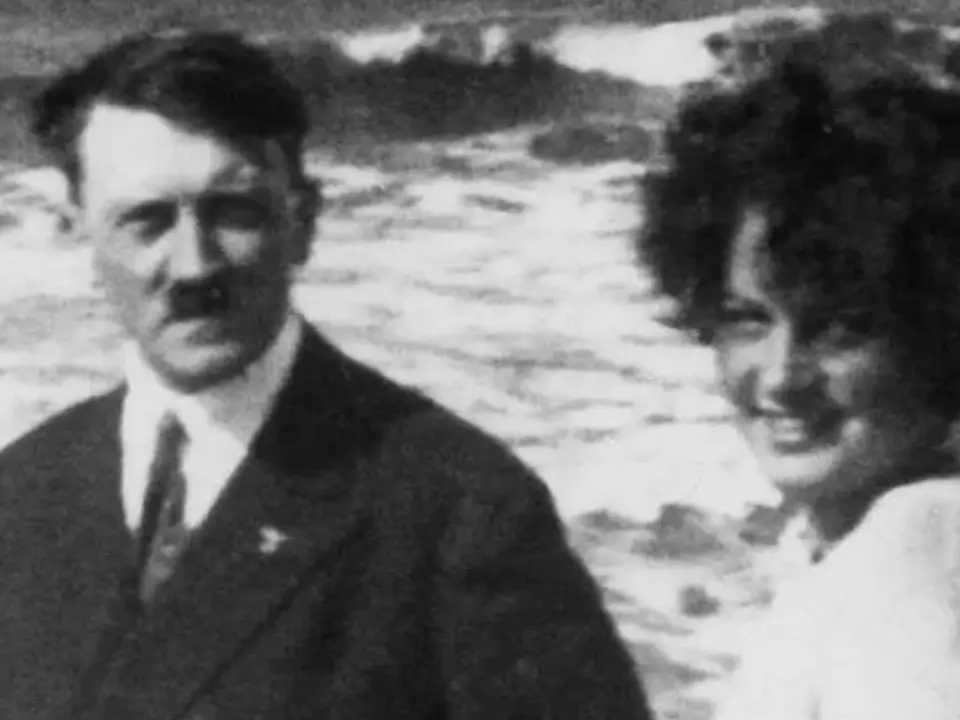
Adolf Hitler and Angela ‘Geli’ Raubal Photograph: (X (@HistorylandHQ))
Newly uncovered records challenge the timeline of Geli Raubal’s 1931 death, placing Hitler in Munich when his half-niece was found dead
Newly uncovered archival documents have raised fresh questions about the death of Angela ‘Geli’ Raubal, Adolf Hitler’s half-niece, whose death in his Munich apartment in 1931 was officially ruled a suicide. Raubal, 23, was found dead from a gunshot wound to the chest in Hitler’s Munich apartment in September 1931. The pistol used in the shooting belonged to Hitler, who is widely understood to have maintained an unusually close and controlling relationship with his young relative.
For almost a century, the accepted chronology has placed the discovery of Raubal’s body on September 19. That date appears in the Munich police investigation into her death. According to police records, Hitler’s personal servant, Georg Winter, forced open Raubal’s locked room that morning and discovered her body on the floor. The established timeline has also indicated that Hitler had already left Munich for Nuremberg the previous afternoon, seemingly making his involvement in her death impossible.
However, German historian Harold Sandner says he has uncovered an entry in Munich’s official death register that records the discovery of Raubal’s body at 10:15 am on September 18, 1931. Two death notices found in archives also reportedly carry the September 18 date. If authentic, the records would place Raubal’s death approximately 24 hours earlier than the date traditionally accepted. They would also place Hitler in Munich when her body was discovered, as official records indicate that he did not leave for Nuremberg until the afternoon of September 18.
Sandner has suggested that the conflicting records could be evidence of a possible cover-up by police officials sympathetic to the Nazi Party. His findings were first reported by German news magazine Der Spiegel and are set to be examined in greater detail in his forthcoming book, The Death of Angela ‘Geli’ Raubal: Suicide or Foul Play? Thomas Weber, an expert on Nazi Germany and history lecturer at the University of Aberdeen, said Sandner presented the findings to him. Weber said he initially approached the material with skepticism but came to believe that the newly uncovered documents could significantly undermine the established chronology.
“Assuming that the photocopies of the documents that Sandner shared with me are authentic, and I have no reason to doubt that, it seems clear that Raubal died a day earlier than we all have assumed over the last almost one hundred years, and thus that Hitler was still in Munich when she died,” he said. Weber noted that three newly uncovered documents reportedly place Raubal’s death on September 18, making a simple clerical error appear less likely.
Still, Weber warned against concluding that the revised timeline proves Hitler murdered Raubal. He said there could have been other reasons for concealing what happened. At the time, the Nazi Party was seeking wider support among mainstream conservatives, while Hitler was attempting to portray himself “for electoral reasons as the embodiment of trust and virtue.” According to Weber, ‘any scandal’ could have threatened that image.
Trending Stories
)
)
)
)
)
)
)
)
&im=FitAndFill=(700,400))
)
)
)
)
)
)
)
)
)
)
)
)
)
)
)
)
)
)
)
)
)
)
)
)
&im=FitAndFill=(700,400))
)
Also Read: Trump rejects Iran's 7-day ceasefire proposal as US weighs renewed bombing after midterms: Report
A death surrounded by speculation
Raubal was the daughter of Hitler’s half-sister, Angela Hammitzsch, formerly Angela Hitler. She spent years in close proximity to Hitler while her mother worked as his housekeeper before eventually moving into his Munich apartment in 1929. Historians have long debated the nature of Hitler’s relationship with Raubal. Some have described him as deeply infatuated with her and have argued that his behaviour became increasingly controlling and possessive. Claims that their relationship was sexual have also circulated, although those allegations remain disputed.
“The speculation has been that Hitler had an unhealthy obsession with Raubal, that he loved her, and that his interest was incestuous in nature, and that he murdered her out of jealousy because she wanted to leave him, or that he realized that she loved someone else,” Weber said, adding that there were many variations of this speculation.
Weber said he personally finds it difficult to accept the claim that the relationship was incestuous, while noting that Hitler’s behaviour appears to indicate a ‘deep bond’ with Raubal. In the period shortly before her death, Hitler and Raubal were reportedly involved in an argument over her plans to leave Munich for Vienna, where she wanted to pursue musical studies. The newly discovered documents do not establish how Raubal died or prove that she was murdered. They do, however, challenge the long-accepted chronology surrounding her death and place Hitler in Munich at a time when, according to the traditional account, he was already in Nuremberg.

