Future of healthcare: How artificial intelligence is transforming hospitals

&imwidth=600&imheight=450&format=webp&quality=medium "Future of healthcare: How artificial intelligence is transforming hospitals")
Future of healthcare: How artificial intelligence is transforming hospitals Photograph: (X)
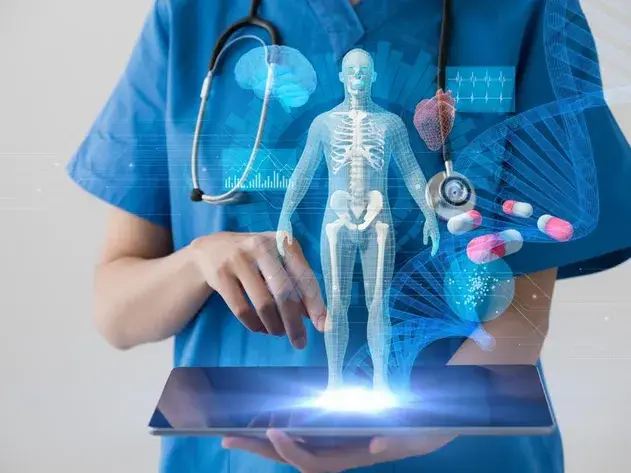
AI is changing healthcare. From faster X-ray reports to early warnings for sepsis, new tools are helping doctors diagnose quicker and more accurately. What the future holds for ethical and safe use of AI in hospitals is worth watching. Know more below.
AI is reshaping how doctors diagnose disease. Now, new AI-enabled tools can analyse scans, lab results, and even patient photos to help catch illnesses earlier.
Smarter Medical Imaging
Northwestern University in the US tested an AI tool that drafts X-ray reports, completing almost 95 per cent of the work. This trial showed that it boosted report-writing speed by about 40 per cent, allowing radiologists to focus on critical and more complex cases. Similarly, a researchers in China created a phone-based AI that identified childhood eye problems such as myopia or strabismus from simple photos, as per report it helps in catching nearly all cases as per report published in PubMed.
Early Warnings in Critical Care
Teams at Johns Hopkins University and Singapore have built AI-enabled systems that can spot signs of sepsis up to 12 hours earlier than doctors could normally detect. Sepsis is life-threatening if missed, and these “early warning” tools could save thousands of lives, according to the Mayo Clinic Platform.
Accuracy and Risks
Trending Stories
)
)
)
)
)
)
)
)
&im=FitAndFill=(700,400))
)
)
)
)
)
)
)
)
)
)
)
)
)
)
)
)
)
)
)
)
)
)
)
)
)
)
)
)
&im=FitAndFill=(700,400))
)
A University of Virginia Health study found that ChatGPT-4 diagnosed clinical cases correctly 92 per cent of the time. Experts say AI can be an “effective and powerful tool for diagnosis”; however, doctors still play a crucial role in guiding and checking results as they are getting time to check and get involved in more complex cases.
As one analysis put it, AI can “analyse large amounts of medical data and find patterns doctors might miss.” As of now, AI can help doctors and hospitals in many new ways. It will be exciting to see what the future holds and how efficiently and ethically it is adopted.
Researchers says patients may soon see AI chatbots or apps giving 24/7 advice, helping them decide when to see a doctor or seek urgent care.
