

&imwidth=800&imheight=600&format=webp&quality=medium "The 2026 title fight is between Mercedes and Ferrari: Karun Chandhok")
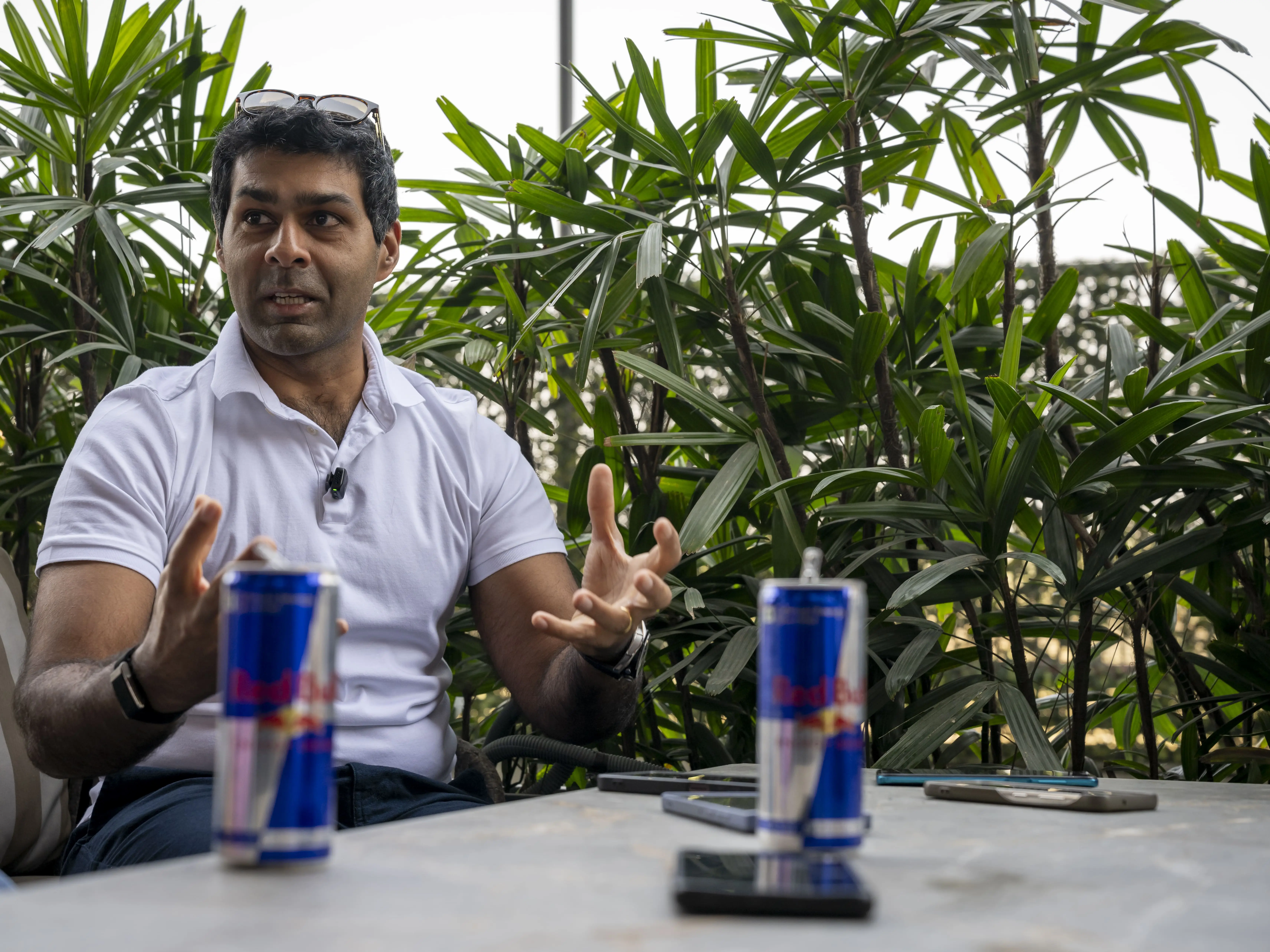
Out of his race suit and in relaxed casuals, Karun Chandhok looked more like a paddock insider than a former Formula 1 driver. But as soon as the conversation shifted to engines, hybrids, and the 2026 reset, the tone changed. The analysis was sharp, technical, and unfiltered. What followed was not hype about liveries or driver line-ups. It was a deep dive into electronics, integration, and why Formula 1’s next era could be defined less by outright combustion power and more by who controls the energy flow best.
The integration advantage: Why 2026 is different?
Formula 1’s 2026 regulations will push the sport into an unprecedented balance, close to a 50-50 split between internal combustion and electrical power. On paper, that sounds evolutionary. In practice, Chandhok believes it could be revolutionary. “What you have to remember,” he explained, “is that this puts huge emphasis on the electronics. When does the battery deploy? When does it switch off? How does it blend with the combustion engine so you don’t get a sudden surge? All of that is super important.”
In the current era, hybrid deployment already plays a critical role. But in 2026, energy harvesting, storage, and deployment will define not just straight-line speed, but drivability. Drivers will no longer simply manage tyre wear and fuel loads; they will manage energy windows corner by corner. And that’s where the real advantage lies. “If you can have the engine, the chassis, and the electronics all under the same roof, you have an advantage,” Chandhok, who is in India ahead of the Red Bull Moto Jam, said.
In the upcoming cycle, that narrows the early favourites considerably. Scuderia Ferrari, Mercedes-AMG Petronas Formula One Team, Red Bull Racing, and Audi F1 Team are the primary outfits operating as works projects with full integration. Ferrari and Mercedes have decades of engine-building heritage. Red Bull is entering new territory with their in-house power unit programme. Audi arrives as a full works manufacturer, building both chassis and engine together from day one. On paper, that synergy matters. Because in this formula, it’s not just about building a powerful engine. It’s about building a system.
Trending Stories
&imwidth=180&imheight=135&format=webp&quality=medium)
Viral video shows cross falling on Colombia priest, no official confirmation | WATCH
&imwidth=180&imheight=135&format=webp&quality=medium)
Rafale Marine fighter begins flight trials in Goa ahead of Indian Navy induction
&imwidth=180&imheight=135&format=webp&quality=medium)
Ranbir Kapoor apologises for Dussehra speech slip, clarifies remark at Ramayana event
&imwidth=180&imheight=135&format=webp&quality=medium)
Meta slapped with $25 billion fine in New Mexico over Facebook data practices, company plans appeal
&imwidth=180&imheight=135&format=webp&quality=medium)
WATCH: Woman IPS officer fires several rounds of AK-47, ignites debate online
&imwidth=180&imheight=135&format=webp&quality=medium)
WATCH | Mysterious haze grips Ohio city as toxic chemical leak forces mass evacuation – What is happening?
&imwidth=180&imheight=135&format=webp&quality=medium)
EU probes Booking.com under Digital Services Act
&imwidth=180&imheight=135&format=webp&quality=medium)
Ilhan Omar breaks silence over alleged marriage to her brother; Trump thinks it's 'really good answer'
&imwidth=180&imheight=135&format=webp&quality=medium)
Kim Jong Un death rumors explode | China accused of secretly sending troops to Pyongyang
&imwidth=180&imheight=135&format=webp&quality=medium)
US-Iran war: Bibi, Trump gamble on new Iran war to save themselves in polls
&imwidth=180&imheight=135&format=webp&quality=medium)
US midterms: Democrats sue Trump administration over alleged 'threats and intimidation' ahead of election, Musk issues warning to Dems
&imwidth=180&imheight=135&format=webp&quality=medium)
Why websites around the world are suddenly going offline? What you need to know about PHP
&imwidth=180&imheight=135&format=webp&quality=medium)
Will Rohit and Kohli play ODI World Cup 2027? BCCI president Manhas says board 'not in a position to comment'
&imwidth=180&imheight=135&format=webp&quality=medium)
1 killed, several injured in attack on Saudi Arabia's King Fahd airport
&imwidth=180&imheight=135&format=webp&quality=medium)
US midterms 2026: What polls and prediction markets indicate about Congress
&imwidth=180&imheight=135&format=webp&quality=medium)
'You are a dummy, you are a stupid person': Trump loses temper with CNN, ABC reporters after questions about Russia sanctions
&imwidth=180&imheight=135&format=webp&quality=medium)
China's dancing robot turns violent bodyguard, lifts cars and fights intruders - Watch
&imwidth=180&imheight=135&format=webp&quality=medium)
16-foot doomsday fish in Chile triggers fears that the next earthquake is coming
&imwidth=180&imheight=135&format=webp&quality=medium)
US Midterms 2026 and money: From Bloomberg to Musk, corporate donors, super PACs and lobbies, it's all about the cash
&imwidth=180&imheight=135&format=webp&quality=medium)
Are the US and Israel preparing for another major attack on Iran? Here's what report claims
&imwidth=180&imheight=135&format=webp&quality=medium)
Priyanka Chopra celebrates Dussehra 2026 with Nick Jonas and daughter Malti Marie | See pics
&im=FitAndFill=(700,400)&imwidth=180&imheight=135&format=webp&quality=medium)
New OTT releases this week (October 19-25, 2026): Gajab Raat to Chaar Yaar-8 titles to watch during Dussehra week on Netflix, Prime Video and more
&imwidth=180&imheight=135&format=webp&quality=medium)
'Bombed the Vidhana Soudha': Bihar man arrested over AI-generated Bengaluru blast video; netizens slam 'zero freedom of speech' | Watch
&imwidth=180&imheight=135&format=webp&quality=medium)
‘I caution the president...’: Trump’s ex-press secretary warns after Zacharia’s exit
&imwidth=180&imheight=135&format=webp&quality=medium)
'Father of all bombs' vs 'mother of all bombs': Iran threatens US with new weapon as Trump hints at MOAB strike
&imwidth=180&imheight=135&format=webp&quality=medium)
Australia police arrest former national 100m champ Jake Doran for alleged child abuse
&imwidth=180&imheight=135&format=webp&quality=medium)
'Gyanu must go': CJP's Saurav Das, Ashutosh Ranka after release, despite Jantar Mantar protest undertaking
&imwidth=180&imheight=135&format=webp&quality=medium)
Hunger makes alcohol more appealing, study finds
&imwidth=180&imheight=135&format=webp&quality=medium)
Finance influencer dies by suicide in Chennai; father accuses tech CEO, who denies charge
&imwidth=180&imheight=135&format=webp&quality=medium)
Kolkata airport: CISF detects ₹1.13 crore in US dollars hidden in bags of 2 Bangkok-bound passengers
&imwidth=180&imheight=135&format=webp&quality=medium)
Saudi Arabia: Drone targeted oil facility near UAE border; violence continues in Yemen's Taiz
&imwidth=180&imheight=135&format=webp&quality=medium)
Feds obtain DNA evidence that could prove Ilhan Omar married her brother: Report
&imwidth=180&imheight=135&format=webp&quality=medium)
US midterms 2026: Trump's approval rating hits record low as Democrats gain ground
Battery cooling, power delivery mapping, energy regeneration efficiency, weight distribution, and software logic; each element must speak the same language. If one part of the ecosystem lags, the entire car suffers. Chandhok believes early confidence from certain camps is not accidental. “I think Mercedes is very confident with what they’ve got from testing,” he said. “And in my opinion, George Russell starts the season as the favourite. Last year, he was arguably the second-best driver on the grid behind Max.” It’s a bold claim in a field still shaped by Max Verstappen’s dominance. But in a reset year, history shows that power units can reshuffle hierarchies overnight.
Smart drivers, bigger gaps, and the engine war within
Every time Formula 1 resets its regulations, performance gaps initially widen. Chandhok expects 2026 to follow that pattern. “When you start a new rule cycle, the car makes a bigger difference. Some teams will get it more right than others.” Last season, the spread between the best and worst car was just over one per cent, a historically tight grid. Under a fresh engine formula, that gap could grow again before development gradually compresses the field.
But the competitive shift won’t just be between teams. It will also be within cockpits.
Energy deployment will no longer be a background process. Drivers will actively decide when to harvest, when to defend, and when to unleash maximum deployment. Using too much battery exiting one corner, and you could be exposed three corners later on a long straight. “If I use too much energy here, four corners later, I could be in trouble. The smart drivers will be the successful drivers.” That emphasis on intelligence and adaptability plays into the hands of drivers known for racecraft and calculation. Verstappen’s ability to read races in real time. Alonso’s instinctive energy management and tyre preservation. Drivers who think while attacking.
In qualifying, the equation becomes even more complex. Certain tracks, especially those with long straights, may expose limitations in sustained electrical deployment. Managing a single flying lap could require strategic compromise.
Yet Chandhok remains unfazed by the narrative that hybrid-heavy regulations dilute the sport. “F1 has always been a technologically led sport. The fastest teams were always at the front. It’s just a different set of rules now.”
Formula 1 has evolved from V10 screamers to turbo hybrids, from refuelling sprints to tyre management marathons. Each era has had its critics. Each era has also produced excellence. The 2026 reset, in his view, is simply the next evolution. And for all the technical complexity, the hierarchy principle remains unchanged. “Take any racing car in the world to the same circuit, the Formula 1 car will still be the fastest. That’s why it’s the pinnacle.”
Sitting in casual clothes, far removed from helmet visors and grid walks, Chandhok spoke less like a former driver and more like a systems analyst breaking down a high-performance ecosystem. Because that’s what Formula 1 is becoming, a battle of integration as much as innovation. The next championship may not be won purely on horsepower. It may be won in software labs, cooling simulations, and energy models.
An engine war, yes. But more than that, an intelligence war. And in 2026, the teams that think best might just win fastest. We just have to wait and watch as the countdown for the season begins.

