
&imwidth=800&imheight=600&format=webp&quality=medium "Caster Semenya, two-time Olympic champ, wins appeal against Swiss court for denying her fair hearing")
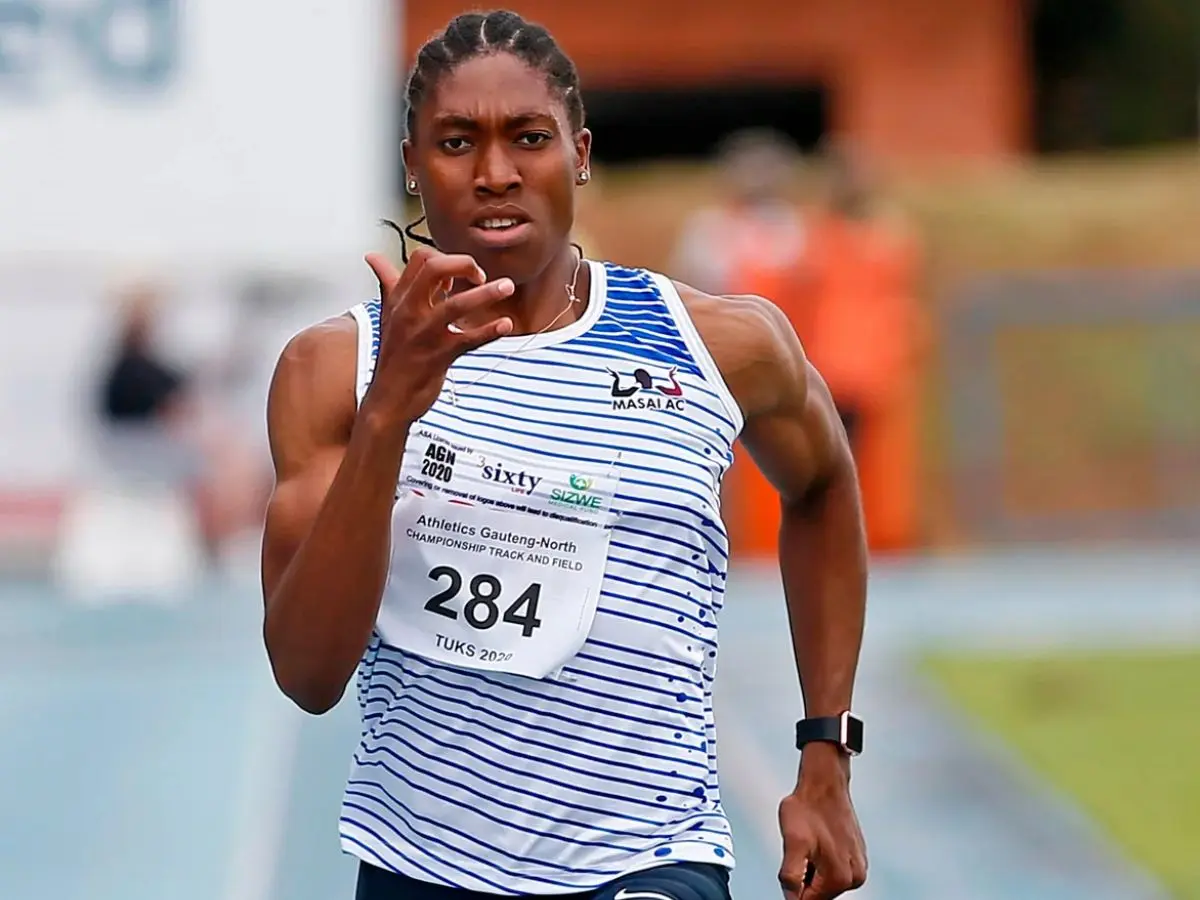
South African athlete Caster Semenya has a little victory on her side. She has won the appeal against Switzerland's Federal Supreme Court in the case pertaining to her right to fair hearing. The decision was given by European Court of Human Rights (ECHR) - the top continental authority in the matter. She's two-time Olympic champion in the 800m race - winning gold in both 2012 and 2016 Olympics. At 34, she not longer can take part in competitions due to restrictions around differences of sexual development (DSD) by World Athletics since 2019 in category 400m to a mile.
What's her controversial case?
The controversial case between Semenya and track’s governing body, based in Monaco was about whether athletes like her, who have certain medical traits, a male-type chromosome pattern and naturally high testosterone should be allowed to compete in women’s sports without restrictions.

What this appeal means to Caster Semenya?
The appeal won by the athlete does not impact the restriction put up by World Athletics body around DSD. What she has has won is an appeal in which ECHR acknowledged that the Swiss court failed to give her a proper hearing in the case against Court of Arbitration for Sports (CAS). Semenya had filed an appeal against DSD rules which came into effect in 2019 but lost it before CAS. The Swiss Supreme Court then temporarily suspended the CAS ruling before revisiting and approving it. The appeal won by Semenya is against Swiss Supreme Court decision of upholding the CAS ruling without giving her a proper hearing.
Who is Caster Semenya?
Trending Stories
)
Three labourers killed as DU student loses control of his car, rams into them on Dwarka Expressway
)
Pentagon revives mandatory testosterone testing for male troops aged 30 and above
)
FACT CHECK: Why did PM Modi ask Xi ‘is it okay’ at BRICS Summit? New video reveals...
)
India seeks to build a full semiconductor supply chain
&im=FitAndFill=(700,400))
From Abhishek Sharma to Sahil Chauhan, 5 batters with fastest T20I hundreds
)
Indian activist-lawyer Prashant Bhushan's post brings focus on ‘conflict of interest’ appointments of ex-govt officials at Reliance, Adani groups
)
US And Denmark reach Greenland deal, Trump announces expanded military presence
)
Former India player Diana Edulji wants Smriti Mandhana to replace Harman as skipper at the earliest
)
China may have gained access to US's classified F-35 jets; parts meant for repairs diverted to Hong Kong, sparking Pentagon inquiry
&im=FitAndFill=(700,400))
Meet top 5 batters in the latest ICC T20I Rankings
)
Godfather of AI Geoffrey Hinton gives US lawmakers a one-year warning on AI
)
Shivakumar attends 79th Kalyana Karnataka Utsav in Kalaburagi
)
Trump signs Russia sanctions law: India faces fresh 100% tariff threat over Russian oil
)
Why Ranveer Singh’s Dhurandhar missed India’s Oscar entry; FFI jury member reveals what happened
)
How did an Australian river with 500 crocodiles pass the Olympic test? Here's how
)
‘Will go to any extent’: Pakistan vows to defend Saudi Arabia amid Houthi attacks
)
The Verdict | When precision fails: US commits war crime in Minab school strike, UN finds
)
Trump signs Russia sanctions bill into law, targets Moscow’s energy sector
&im=FitAndFill=(700,400))
New Friday OTT releases (September 18, 2026): Lust Stories 3, You+Me, Best of the Best- 8 new titles coming on Netflix, Prime Video and more
)
Fast bowler Brydon Carse faces no charges over Derby nightclub incident
)
Flying cars in UAE: Ras Al Khaimah signs deal with Chinese company to test new transport
)
Africa is splitting, and a lot sooner than estimated, giving way to a new ocean
)
'Gangsta' crab shoves knife blade at man and his dog in Florida - Watch
)
Trump bans CNN, MS NOW and Politico from White House over ‘FAKE NEWS’
)
Trump 2.0: Dark days ahead for America’s ‘imperial presidency’
)
Trump's Greenland dream comes true? POTUS announces 'Infinite Life' deal with Denmark, claims permanent US control
)
Laura Wolvaardt sets new world record for most WT20I runs in a year
)
Drone strikes cooling tower at Russia's Kursk Nuclear Plant, IAEA confirms
)
Who is Khalilur Rahman? All you need to know about 81st UN General Assembly President
&im=FitAndFill=(700,400))
Meet top 5 bowlers in latest ICC T20I rankings
)
Indian Cinema bets big on mythology, brings ancient stories to modern audiences
)
Ukraine plans record $109 bn defence spending, nearly two thirds of budget amid Russia war
)
Russia holds first parliamentary elections since the beginning of the Ukraine war
&im=FitAndFill=(700,400))
Meet top 5 Indian batters with fastest T20I centuries
South African born Caster Semenya was born with a condition known as Differences of Sexual Development (DSD). From 2009 to 2019, the South African athlete ruled the 800m race, winning 30 races in a row. Her 30th straight victory came at the Doha Diamond League in May 2019. She became a national hero after winning her first World Championship gold medal in 2009 with thousands of excited supporters gathering at Johannesburg airport to welcome her home.
Since 2019, she has not been able to race in the 800 meters after World Athletics introduced rules limiting testosterone levels for events between 400 meters and one mile. The South African runner says these rules are unfair and target athletes with DSD, forcing them to lower their natural hormone levels just to compete.
World Athletics body say on this matter?
World Athletics Body argues that the rules which were expanded in 2023 to include all women’s track and field events are necessary to keep the competition fair and to protect the women’s category.