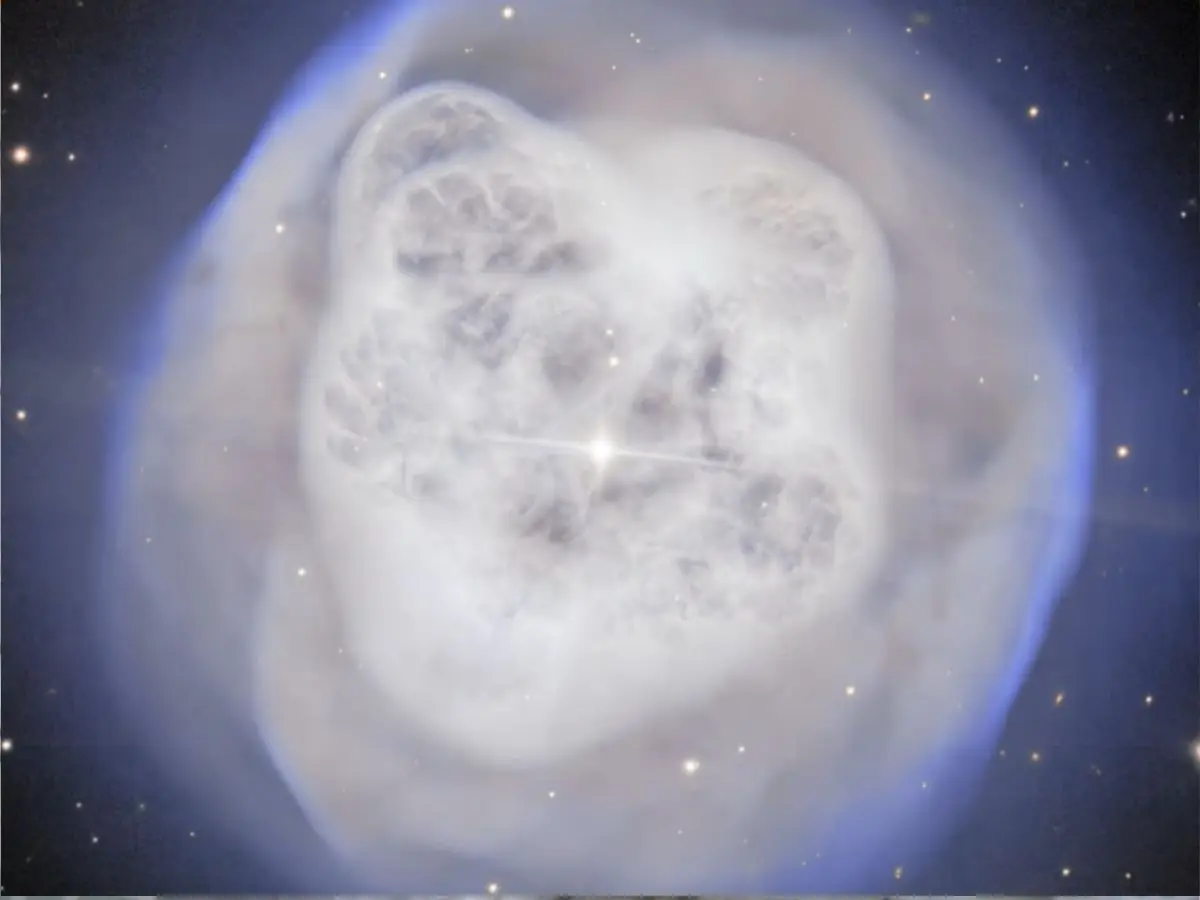
Neptune’s mysterious moon Nereid may be the only survivor of an ancient cosmic crash, NASA's JSWT finds

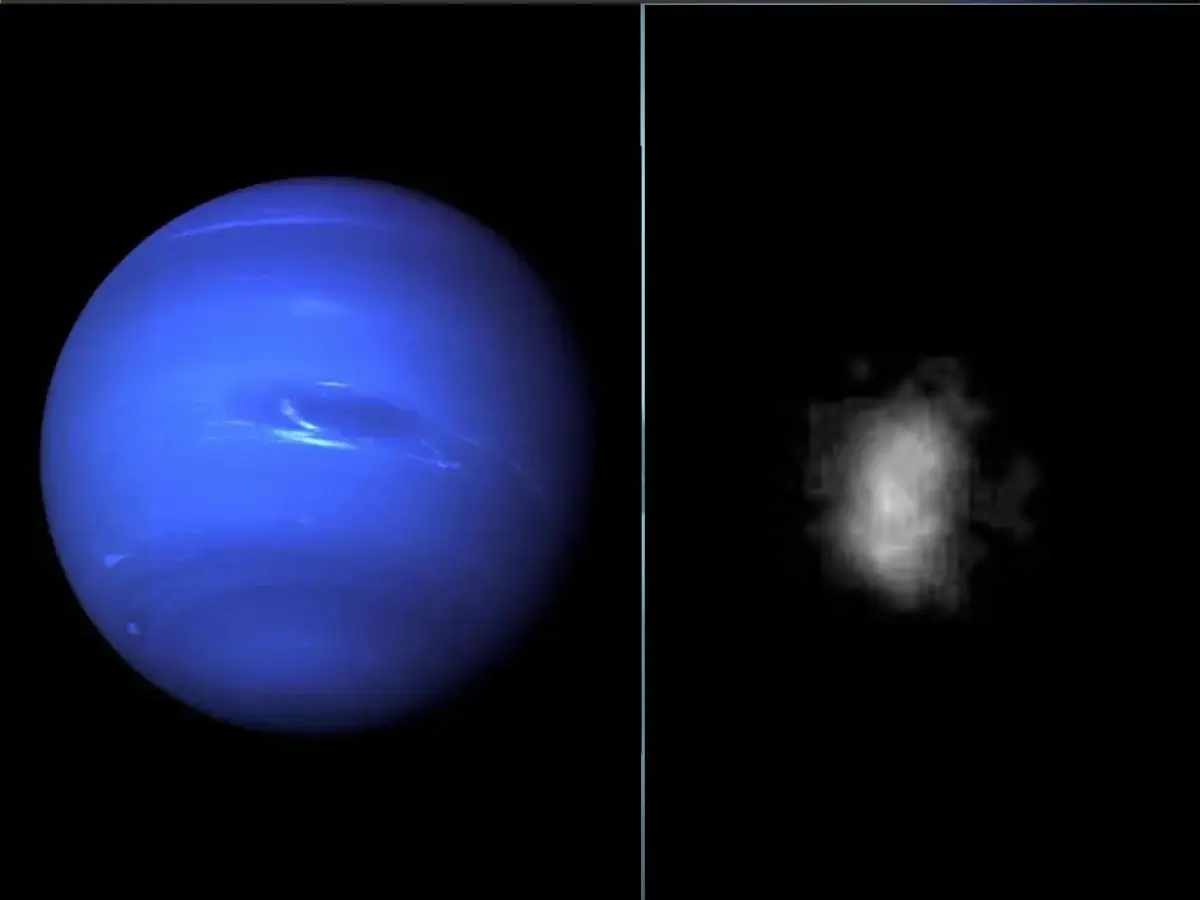&imwidth=600&imheight=450&format=webp&quality=medium "Neptune’s mysterious moon Nereid may be the only survivor of an ancient cosmic crash, NASA's JSWT finds")
Webb telescope sheds new light on Neptune’s strangest moon Photograph: (NASA)
Nereid, discovered in 1949 by Dutch-American astronomer Gerard Kuiper, is the third-largest moon orbiting Neptune and follows one of the most eccentric orbits of any known planetary satellite.
Astronomers using NASA’s James Webb Space Telescope have uncovered new clues about one of Neptune’s most unusual moons, suggesting that Nereid may be the lone surviving remnant of a violent cosmic disruption that reshaped the outer planet’s moon system billions of years ago. The findings, reported by researchers analysing Webb telescope observations, indicate that Nereid differs sharply from Neptune’s other moons in both composition and behaviour. Scientists believe the moon may preserve evidence from an earlier era of the Solar System before Neptune captured its largest moon, Triton.
Discovered in 1949 by Dutch-American astronomer Gerard Kuiper, Nereid is Neptune’s third-largest moon and follows one of the most unusually elongated or eccentric orbits known among planetary satellites. Roughly 350 kilometres (220 miles) wide, the moon travels on an extreme orbital path around the distant planet.
ALSO READ: ‘Green orbs, discs and fireballs’: Pentagon releases second batch of declassified UFO files
A moon unlike the others
Researchers say Nereid’s unusual properties have long puzzled astronomers. Unlike Neptune’s inner moons, which appear darker and more uniform, Nereid reflects significantly more sunlight and displays characteristics more commonly associated with icy bodies found in the distant Kuiper Belt. According to the Associated Press, a team led by the California Institute of Technology used NASA’s Webb Space Telescope to study Nereid, the gethered data revealed strong signatures of water ice and carbon dioxide ice on Nereid’s surface. Scientists noted that its composition appears strikingly different from nearby moons, strengthening theories that it may have originated elsewhere.
According to researchers, Neptune’s moon system likely underwent massive disruption after Triton, Neptune’s largest moon, was gravitationally captured by the planet billions of years ago. That event may have destabilised or destroyed many of Neptune’s original moons. Scientists now suspect Nereid could be one of the few objects that survived the chaos.
Trending Stories
)
)
)
)
)
&im=FitAndFill=(700,400))
)
)
)
&im=FitAndFill=(700,400))
)
&im=FitAndFill=(700,400))
)
)
)
)
)
)
)
&im=FitAndFill=(700,400))
)
&im=FitAndFill=(700,400))
)
)
&im=FitAndFill=(700,400))
)
)
)
)
)
)
)
)
The observations show for the first time that Nereid’s peculiar orbit matches ‘the history we might expect from a moon that originally formed close to Neptune and was later pushed outward from the capture of Triton,’ a Carnegie Science planetary astronomer, Scott Sheppard said, according to AP.
Clues to the Solar System’s violent past
Researchers believe studying Nereid could help explain how giant planets evolved during the early formation of the Solar System. The moon’s highly stretched orbit is viewed as possible evidence of past gravitational upheaval linked to Triton’s arrival.
The Webb telescope observations also suggest Nereid has remained relatively unchanged over billions of years, potentially preserving material from the outer Solar System’s earliest period.
Astronomers say the discovery is important because Neptune remains one of the least explored planets in the Solar System. Only NASA’s Voyager 2 spacecraft has ever flown past the planet, during its historic 1989 mission. Scientists hope future observations of Nereid and Neptune’s wider moon system could provide deeper insight into how planetary collisions, moon capture events and orbital instability shaped the architecture of the modern Solar System.