Chaos, heat and a star that went bonkers: Scientists see major collision between two planets

&imwidth=600&imheight=450&format=webp&quality=medium "Chaos, heat and a star that went bonkers: Scientists see major collision between two planets")
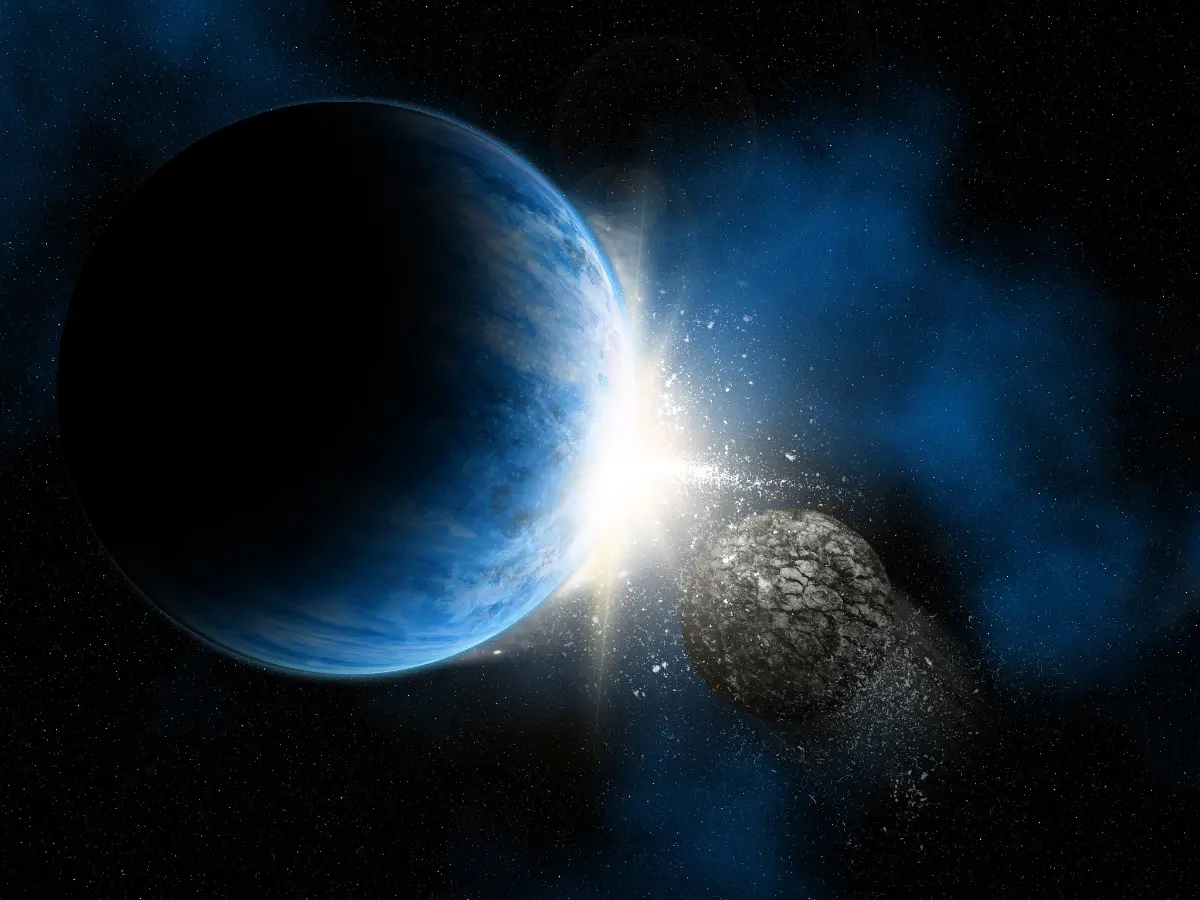
Planetary collision representative image Photograph: (Freepik)
A collision between two planets was seen from Earth, an event that has only been seen a handful of times in the past. Scientists noticed chaos and temperatures running extremely high near the constellation Puppis, and were surprised when they found the reason.
Scientists have captured two planets smashing into each other, giving a rare insight into how our own planet, Earth and the Moon might have formed. The exciting event happened around Gaia20ehk, a star similar to our sun, located 11,000 light-years from Earth. The star and its planets reside near the constellation Puppis, or the "poop deck". A planetary collision has only been seen a few times in the past, but this one is different since astronomers say it is almost like seeing our own planet's history. Lead author of the study, Anastasios Tzanidakis, a doctoral candidate in astronomy at the University of Washington, said that several telescopes around the world "caught the impact in real time." He added, "There are only a few other planetary collisions of any kind on record, and none that bear so many similarities to the impact that created the Earth and moon." The study was published in The Astrophysical Journal Letters on March 11.
How did scientists know that two planets had collided?
It is not like planets rarely collide with each other. In fact, every young star system is a chaotic place with debris flying all around, crashing and smashing before coalescing to form planets and moons. However, to see these events from Earth is not easy. To witness the violent cosmic episodes, the planets' orbits must take them directly in front of their home star. When this happens, their debris blocks part of the star's light, and the telescopes detect and measure it in visible and infrared light. Tzanidakis was scanning through NASA's SPHEREx mission when he saw something strange. In 2016, the star Gaia20ehk was stable and just like any other fireball in the universe. However, five years later, it dimmed by three times its original light, and chaos started. "Right around 2021, it went completely bonkers," Tzanidakis said, adding that stars like our sun do not experience such weird alterations.
Star got hotter and hotter, creating an infrared glow
Trending Stories
)
)
)
)
)
)
)
)
)
)
)
)
)
)
)
)
)
)
&im=FitAndFill=(700,400))
)
)
)
)
)
)
)
)
&im=FitAndFill=(700,400))
)
)
)
)
)
)
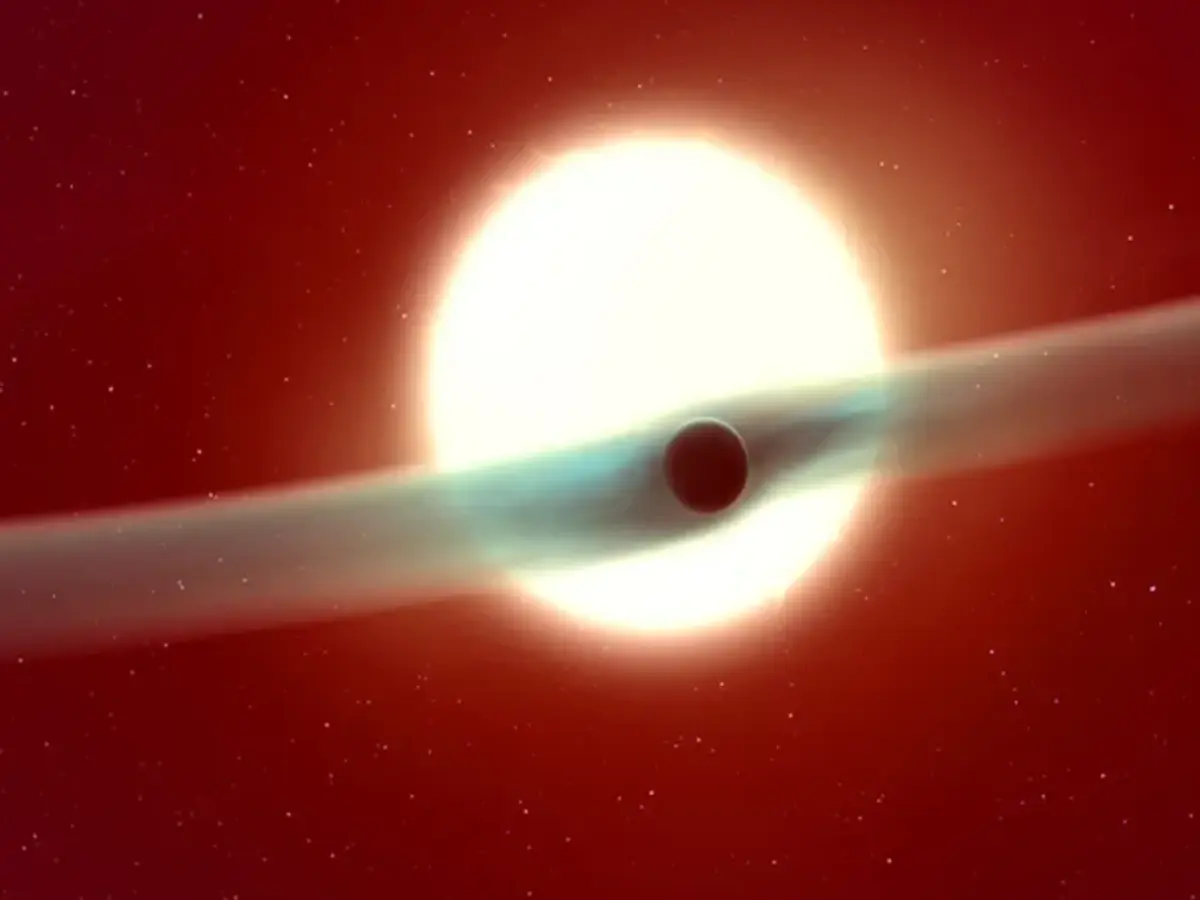
Further observations showed that something repeatedly passing in front of the star was blocking part of its light. However, visible-light data was not enough to conclude. This could be happening because of anything - from a stellar explosion to a planet being gobbled up by a supermassive black hole. An analysis of Gaia20ehk's emission in the infrared spectrum showed that its infrared signal shot up even though the star's light dipped. This means it was getting hotter, and in fact, whatever material was blocking it was also extremely hot, as proven by the infrared glow.
The researchers concluded that what they were seeing was a collision between two planets, since such an event could throw out hot dust and rock into an orbit, perfectly aligning with their findings. However, it was likely not a one-time head-on collision. Scientists think they initially grazed each other, which is when the star's light dimmed. "Then, they had their big catastrophic collision, and the infrared really ramped up," Tzanidakis said. The study states that the event resembles our moon's past since the debris cloud around Gaia20ehk is around one astronomical unit from its star, almost the same distance as Earth orbits the sun.