'Influence of military...': Imran Khan's son claims Pakistan sliding towards dictatorship

&imwidth=600&imheight=450&format=webp&quality=medium "'Influence of military...': Imran Khan's son claims Pakistan sliding towards dictatorship")
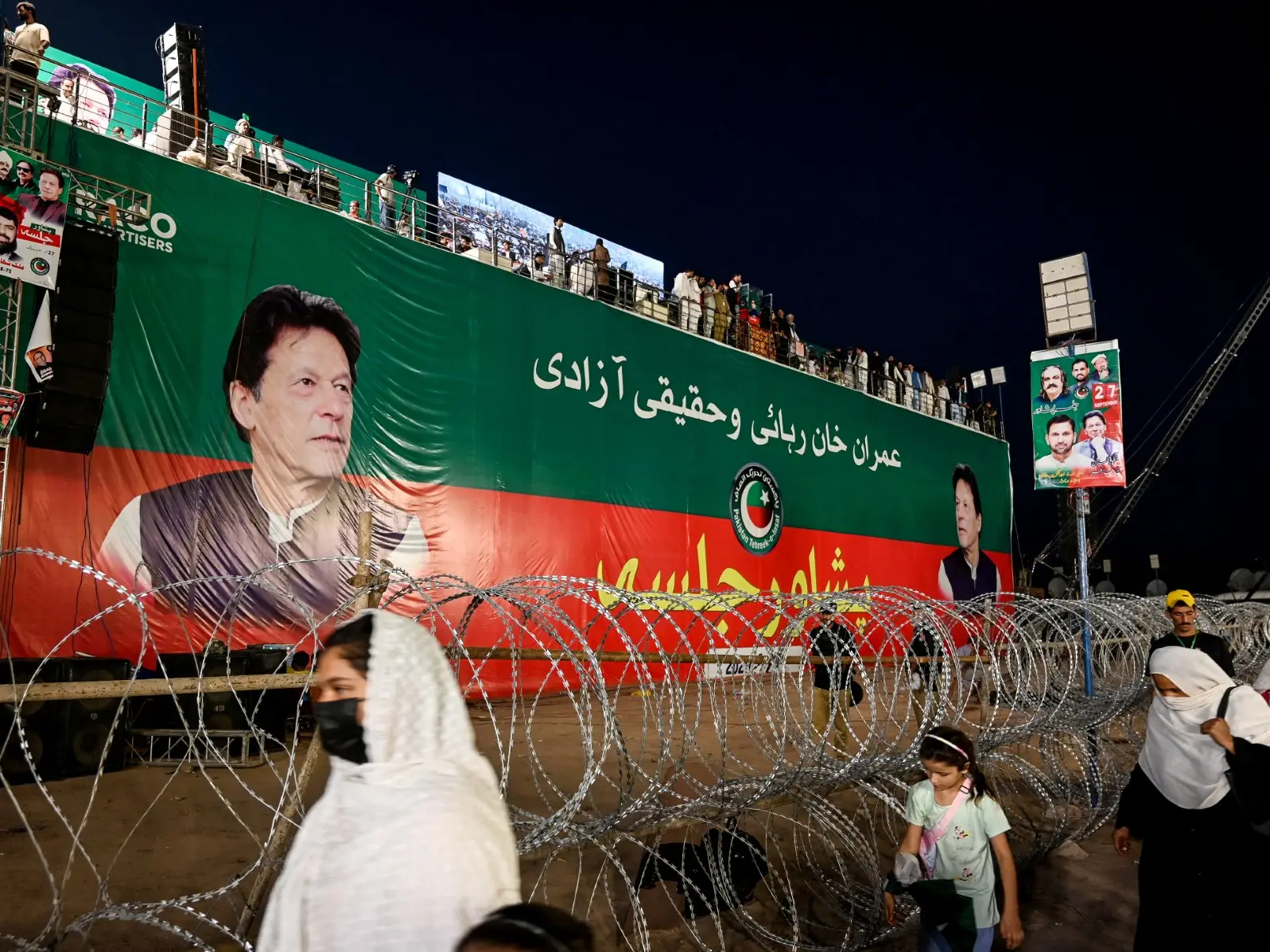
Pakistan's jailed former Prime Minister Imran Khan Photograph: (AFP)
Imran Khan’s son Sulaiman Isa Khan accused Pakistan’s military-led establishment of pushing the country towards dictatorship, citing his father’s prolonged detention and alleged mistreatment. His remarks came as Khan’s family and legal team raised fresh concerns over his health and custody
Pakistan's jailed former Prime Minister Imran Khan's son, Sulaiman Isa Khan, has slammed the military-led establishment for pushing the country deeper into dictatorship, stating the Tehreek-e-Insaf (PTI) founder's prolonged incarceration as a case in point. The elder son of Imran Khan alleged inhumane treatment being meted out to the former PM over the past several years. His son was speaking at a press conference organised to discuss Khan's illegal detention and ongoing health challenges. Sulaiman, alongside his brother Kasim Khan, International Counsel Jared Genser, and Advisor on International Affairs and International Media Sayed Bukhari, spoke out about the high-profile detention and the broader human rights situation in Pakistan.
"I would say, with some of the actions we've seen, I think yes, undoubtedly. You can see the influence of the military in a lot of the torture and the arbitrary detention of our father's general conditions. I don't think there's any doubt that the whole establishment is involved," Sulaiman told ANI during a virtual press conference. Echoing the family's deep concerns, Genser sharply criticised the state of democracy in Pakistan, placing the responsibility on military leadership. He accused Pakistan's Army Chief Asim Munir of leading an "authoritarian regime", arguing that the case of ex-PM Khan reflected a wider erosion of democratic institutions. "The actions that we're seeing taken on Imran Khan and his wife's cases are not the actions of a healthy, functioning democratic government," Genser said.
Imran Khan has been incarcerated at Rawalpindi's Adiala Jail since 2023. Imran Khan's family and international legal team have repeatedly raised concerns over his detention, treatment in custody and access to medical care.When asked about whether the current Pakistani regime was sliding towards dictatorship over the treatment towards Imran Khan, Sulaiman highlighted the visible escalation of military influence in the country's governance, adding that there was little doubt that the country's establishment was involved in "torture and the arbitrary detention" of their father's general conditions.
Also Read: The Verdict | When generals rule: Why Asim Munir’s rise has Pakistan asking hard questions
Imran Khan controversy in Pakistan
Trending Stories
&imwidth=280&imheight=210&format=webp&quality=medium)
&imwidth=280&imheight=210&format=webp&quality=medium)
&imwidth=280&imheight=210&format=webp&quality=medium)
&imwidth=280&imheight=210&format=webp&quality=medium)
&imwidth=280&imheight=210&format=webp&quality=medium)
&imwidth=280&imheight=210&format=webp&quality=medium)
&imwidth=280&imheight=210&format=webp&quality=medium)
&imwidth=280&imheight=210&format=webp&quality=medium)
&imwidth=280&imheight=210&format=webp&quality=medium)
&imwidth=280&imheight=210&format=webp&quality=medium)
&imwidth=280&imheight=210&format=webp&quality=medium)
&imwidth=280&imheight=210&format=webp&quality=medium)
&imwidth=280&imheight=210&format=webp&quality=medium)
&imwidth=280&imheight=210&format=webp&quality=medium)
&imwidth=280&imheight=210&format=webp&quality=medium)
&imwidth=280&imheight=210&format=webp&quality=medium)
&imwidth=280&imheight=210&format=webp&quality=medium)
&imwidth=280&imheight=210&format=webp&quality=medium)
&imwidth=280&imheight=210&format=webp&quality=medium)
&imwidth=280&imheight=210&format=webp&quality=medium)
&imwidth=280&imheight=210&format=webp&quality=medium)
&imwidth=280&imheight=210&format=webp&quality=medium)
&imwidth=280&imheight=210&format=webp&quality=medium)
&imwidth=280&imheight=210&format=webp&quality=medium)
&imwidth=280&imheight=210&format=webp&quality=medium)
&imwidth=280&imheight=210&format=webp&quality=medium)
&imwidth=280&imheight=210&format=webp&quality=medium)
&imwidth=280&imheight=210&format=webp&quality=medium)
&imwidth=280&imheight=210&format=webp&quality=medium)
&im=FitAndFill=(700,400)&imwidth=280&imheight=210&format=webp&quality=medium)
&imwidth=280&imheight=210&format=webp&quality=medium)
&imwidth=280&imheight=210&format=webp&quality=medium)
&im=FitAndFill=(700,400)&imwidth=280&imheight=210&format=webp&quality=medium)
&imwidth=280&imheight=210&format=webp&quality=medium)
&imwidth=280&imheight=210&format=webp&quality=medium)
&imwidth=280&imheight=210&format=webp&quality=medium)
&imwidth=280&imheight=210&format=webp&quality=medium)
&imwidth=280&imheight=210&format=webp&quality=medium)
&im=FitAndFill=(700,400)&imwidth=280&imheight=210&format=webp&quality=medium)
Uproar began in Pakistan after Pakistani Supreme Court's recent order on Imran Khan. The Supreme Court delivered an order on August 18 directing the government to move Khan from Adiala Jail to Shifa International Hospital in Islamabad within 48 hours. “We are mindful of the constitutional and legal obligation of the state, and consequently of the Supreme Court, to safeguard the life, health, dignity and security of persons in custody. A prisoner does not, by reason of his incarceration, cease to be entitled to humane treatment and necessary medical care,” the court said.
On Saturday (Aug 22), Khan was taken out of jail to the state-run Pakistan Institute of Medical Sciences (PIMS) in Islamabad for a brief medical examination instead of being transferred to the private Shifa International Hospital, as directed by the top court. Moreover, rather than being admitted to the hospital for treatment, Khan was taken back to the prison after the medical tests within a few hours, prompting PTI to express outrage.
PTI moved the Supreme Court against the government, alleging that authorities violated its order. Khan’s sister Uzma Khan, who was present during his examination at PIMS, told reporters that her brother appeared physically fit but claimed he had told her that he was “being repeatedly tortured in prison”.
“He repeatedly told me, ‘I have been subjected to injustice. I am being severely tortured.’ The Pakistani government blamed PTI for the transfer to the state-run facility instead of the private one ordered by the Supreme Court, citing heavy presence of party members outside the Shifa International Hospital.

