Who gets to judge the media? Trump's Press Secretary Karoline Leavitt remarks raises questions on journalistic freedom

&imwidth=600&imheight=450&format=webp&quality=medium "Who gets to judge the media? Trump's Press Secretary Karoline Leavitt remarks raises questions on journalistic freedom")
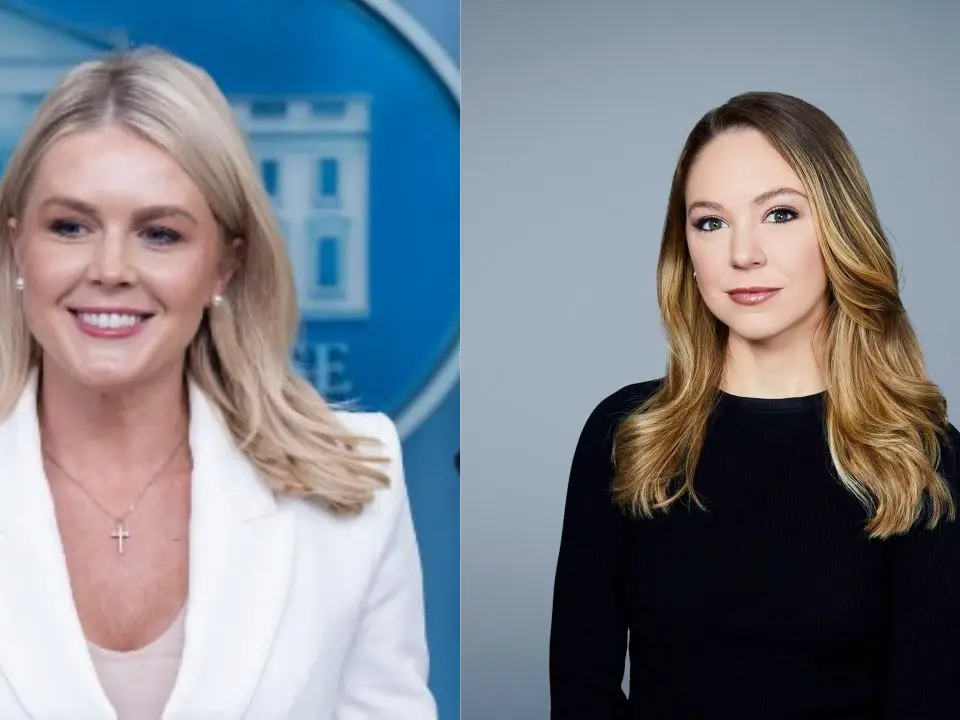
Karoline Leavitt (left) and Natasha Bertrand Photograph: (AFP/CNN)
Karoline Leavitt spent nearly two minutes ranting about Bertrand during her White House press briefing, accusing the CNN reporter of publishing a “false narrative” and having a history of reporting false information
On a stage meant to uphold the ideals of transparency and truth, the White House press briefing room has long been a symbol of America’s commitment to a free press. But on Thursday morning (June 26), that symbol took a hit. White House press secretary Karoline Leavitt made headlines not for policy clarifications or presidential announcements, but for publicly questioning the journalistic integrity of CNN national security reporter Natasha Bertrand. In doing so, Leavitt didn’t just single out a reporter—she triggered a deeper debate about where the line lies between government accountability and institutional intimidation of the press.
The incident
During the press briefing on Thursday (June 26), Leavitt launched a pointed attack on Bertrand, criticising her past reporting. During the briefing, White House press secretary Karoline Leavitt also called out CNN reporter Natasha Bertrand. She said, “This is a reporter who has been used by people who dislike Donald Trump to push fake and false narrative. She should be ashamed of herself. And that's not what reporting is. That's not what reporting is. Journalism is trying to find the facts and the truth.”
It’s not the first time a government official has taken issue with a reporter’s work, but the context matters. This wasn’t a private complaint or an offhand remark. It was a public rebuke from the White House podium—arguably the most powerful communications platform in the country—against a journalist from one of the nation’s largest networks.
The bigger picture
While Leavitt’s comments may have played well to certain partisan audiences who view mainstream media as inherently biased, they also represent something more troubling: the normalisation of public officials attacking individual reporters by name. In democracies, government and media are expected to operate in tension—each holding the other accountable. But when that tension devolves into targeted delegitimisation, we inch toward a dangerous erosion of democratic norms.
Trending Stories
)
)
)
)
)
)
)
)
&im=FitAndFill=(700,400))
)
)
)
)
)
)
)
)
)
)
)
)
)
)
)
)
)
)
)
)
)
)
)
)
)
)
)
)
&im=FitAndFill=(700,400))
)
Natasha Bertrand, who has reported extensively on intelligence and national security, is no stranger to controversy or criticism. But what distinguishes this episode is the public nature of the condemnation—and the power imbalance behind it. When someone in Leavitt’s position calls out a journalist during an official briefing, the chilling effect goes far beyond the individual. It sends a message to the broader press corps: tread carefully, or be next.
Is this justified scrutiny or institutional pressure?
Some may argue that calling out perceived media bias is fair game—after all, journalists aren’t above criticism. But that defense misses the point. The issue here isn’t whether reporters should be held accountable. They absolutely should. The question is: Who gets to do that, and how?
There are mechanisms for challenging inaccurate reporting—editorial rebuttals, fact-checks, ombudsman reviews, or even interviews to set the record straight. What shouldn't happen is the use of an official government pulpit to discredit specific journalists, especially those involved in covering sensitive political or security matters.
In this case, Leavitt’s attack on Bertrand wasn’t an offhand deflection. It was a deliberate attempt to question her credibility. The political optics are hard to ignore.
A pattern worth watching
This isn’t an isolated incident. Around the world, governments that wish to avoid scrutiny often begin by undermining the credibility of the press. We’ve seen this playbook before—in Russia, Turkey, Hungary, and elsewhere. Discredit the journalist, question the platform, and soon, the public no longer trusts any version of the truth but the one they’re handed.
In the US, press freedom is protected by the First Amendment, but legal protections mean little if public trust in journalism is steadily corroded by attacks from the highest levels of power.
The line we cannot cross
The freedom of the press is not just about protecting journalists from censorship—it’s about ensuring that no public official can dictate which questions are valid or which messengers are allowed to ask them.
Karoline Leavitt may believe she was defending the administration from media bias. But in doing so from the podium of the White House press room, she stepped into territory where free societies should never feel comfortable: where the government judges the legitimacy of the press. In the end, the story isn’t about Bertrand alone. It’s about the signal this moment sends. If calling out a journalist by name becomes normalised from the highest office in the land, then the next reporter may hesitate before asking the uncomfortable question—and that, more than any partisan debate, is the real threat to democracy.
(Disclaimer: The views of the writer do not represent the views of WION or ZMCL. Nor does WION or ZMCL endorse the views of the writer.)

