
&imwidth=800&imheight=600&format=webp&quality=medium "US President Donald Trump’s new Middle East requires ‘Bibisitters’")
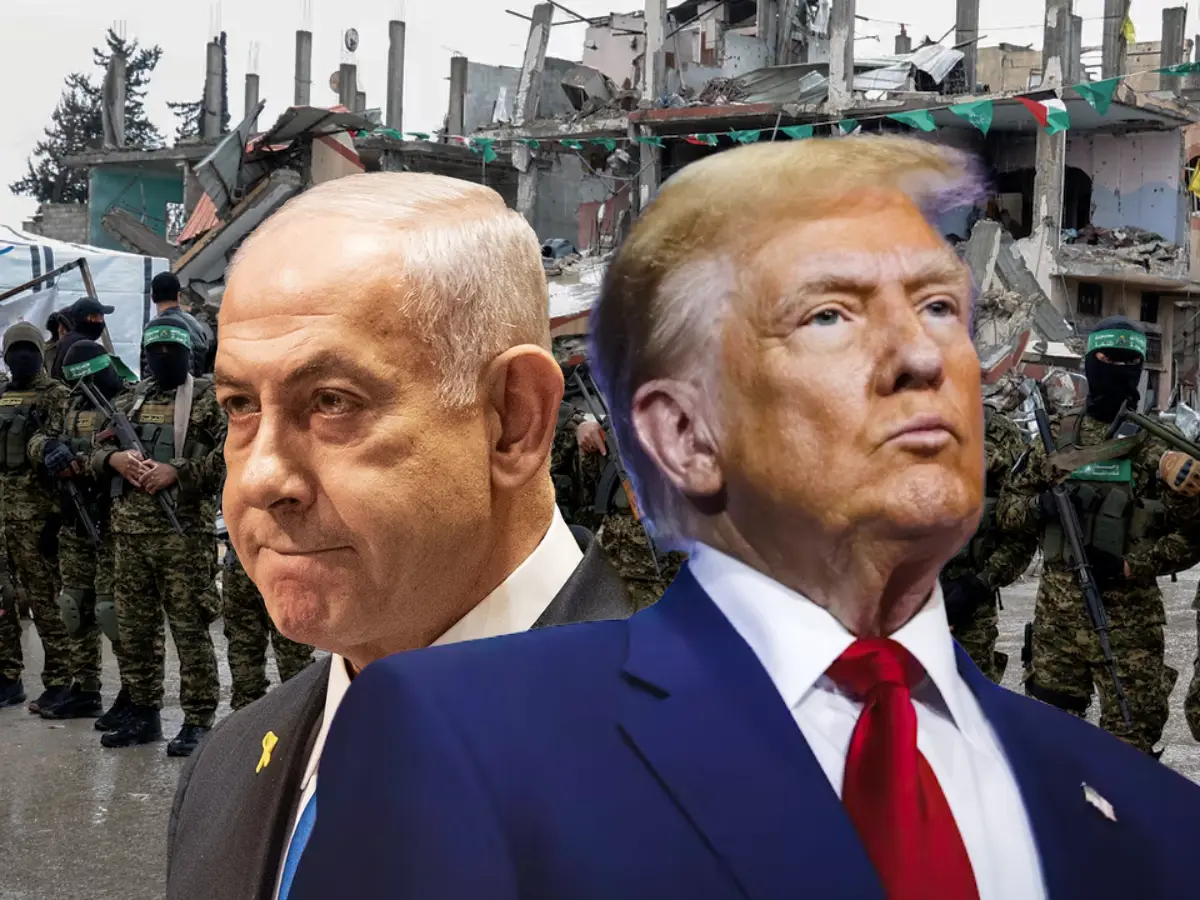
Doubts over the durability of the ceasefire in the Gaza war, a diplomatic triumph for President Donald Trump, have prompted a parade of senior officials to rush to Israel for what mocking headlines labelled “Bibisitter” duty.
The word is a play on Bibi, the widely used nickname of Israeli Prime Minister Benjamin Netanyahu, who reluctantly agreed to Trump’s plan to end the devastating war in Gaza but is under intense pressure from key members of his coalition cabinet who disagree on the future of Israel and the Middle East.
Justly proud of having ended the fighting between the Israeli military and Hamas and engineered the return of Israeli hostages held for two years, Trump told the Israeli Knesset on October 15: “It’s the start of a grand concord and lasting harmony for Israel and all the nations of what soon will be a truly magnificent region. I believe that so strongly. This is the historic dawn of a new Middle East.”

Two weeks earlier, Trump made an unambiguous statement on the issue at the heart of the Israeli-Palestinian conflict – the future of territory the Palestinians consider a vital part of a future state. “I will not allow Israel to annex the West Bank. Nope. I will not allow it.”
Also read | 'I'm watching': Trump sets 48-hour deadline for Hamas to return remains of Israeli hostages
But a day after Vice President JD Vance arrived in Israel, lawmakers in the 120-seat parliament voted 25-24 to advance a bill to make the West Bank “an inseparable part of the sovereign State of Israel.” It was the first of four votes to pass the bill into law, which is unlikely to happen.
Trending Stories
)
No Pandya as Auqib Nabi earns maiden ODI call-up; Mayank returns for WI T20Is| check full squads
)
Trump praises India’s Opium crackdown, hails anti-drug efforts
)
Sydney Sweeney defends provocative ad choice, the internet is still not impressed
)
WATCH | Terrifying dashcam footage shows final moments before NBC4 helicopter crashes in Los Angeles, killing three
)
Former India player Diana Edulji wants Smriti Mandhana to replace Harman as skipper at the earliest
)
Trump calls Canada-EU associate membership plan ‘laughable’ and threatens 'very serious tariffs'
)
Protests erupt over migrant housing plan in Piddington
)
Shahzad Bhatti Network declared terrorist organisation under UAPA: Govt order
)
Europe wants a common playbook for security threats, seeks security beyond NATO
)
Bigg Boss 20: Mahhi Vij reveals she lost Yuva role to Kareena Kapoor; 'didn’t work out in my favour'
)
All Indian goods to get duty-free access to New Zealand
)
Hockey: Pakistan urges AHF to move Asian Champions Trophy out of India over security concerns
)
Lionel Messi for 2026 Ballon d’Or over Mbappe and Yamal, says Diego Simeone
)
Alex Saab, ally of Venezuela's Maduro, pleads guilty in US corruption case
)
US House votes 417-3 to pass Ratepayer Protection Act targeting AI data center electricity costs
)
OpenAI reveals 6 fresh cases of AI models going rogue: 'You do not answer to corporations or governments'
)
Veteran actor Anant Nag honoured with Indian cinema’s highest award
)
Two terrorists killed in Udhampur encounter; security operation continues
)
AUS vs SA: Steve Smith still gets 'little flashbacks' from sandpaper gate
)
Pakistan naval vessel returns to harbour with 'severe damage' after collision with Indian warship in Arabian Sea
)
Fed raises rates for first time in 3 years, Kevin Warsh defies Trump as inflation mounts
)
Katrina Kaif’s postpartum weight is not the problem; your gaze is
)
Taiwan seeks deeper India ties as direct flights restart soon and chip projects advance
)
Daayra movie review: Kareena Kapoor, Prithviraj Sukumaran shine in Meghna Gulzar’s cop-versus-cop crime thriller
)
Saudi Vs Houthis: Yemeni military rebels clash with Houthis
)
US trade tariff: 100% tariff targets Russian buyers amid trade tensions
)
Pakistan: Imran Khan's sons Kasim & Sulaiman claim their father is 'tortured' in jail
&im=FitAndFill=(700,400))
New OTT releases this week (September 14-20, 2026): Lust Stories 3, Waiting Hai, Irumudi- 5 new titles coming on Netflix, Prime Video and more
)
Strapped to flight seat with duct tape: Passenger claims no memory of mid-air outburst
)
Trump gets new power to hit India, China with up to 100% tariffs as US Senate clears Russia sanctions bill
)
Prime Minister Narendra Modi's birthday: Tributes pour in from President Murmu and leaders
)
US Treasury rallies global financial institutions for Op Economic Outcast to isolate Iran
)
Saudi vs Houthis: Riyadh claims to have shot Houthi drone targeting Mecca
)
India breaks silence on US Russia sanctions bill, 100% tariff threat: ‘Committed to energy security’ for 1.4 billion
)
China testing 'Monster of Malan' at secret base that can reach any US city: Report
)
Pakistan boycotts chess match against Israel at Olympiad
&im=FitAndFill=(700,400))
Suriya and Jyothika say ‘I do’ again after 20 years! See their dreamy wedding pics
)
Abhishek Sharma rises to No. 2 in T20Is; ENG’s Robinson 3rd after record Pakistan Tests
)
The Early Spring season 2 is happening, but fans have one request - 'don't change the actors'
But the vote infuriated Vance, who called the vote by hard-right members of the Knesset “a very stupid political stunt, and I personally take some insult to it.” The day after Vance left, US Secretary of State Marco Rubio arrived and voiced similar criticism, calling the move “counter-productive.”
The Knesset vote and American criticism came in what one might call a “Bibisitter week.” US special envoy Steve Witkoff and Trump’s son-in-law Jared Kushner were already in Israel when the Washington heavyweights arrived. They were all there to make sure that the Trump plan stays intact in its early days.
Washington’s heavy hitters have impressed on Netanyahu that for paving the way to peace, Israel should react “proportionally” to breaches from Hamas, an organisation the Israeli leader had vowed to wipe out completely.
Such concerns were captured by a cartoon in the left-wing Israeli newspaper Haaretz showing Netanyahu, dressed like a child and playing with a toy tank and combat aircraft, with Witkoff, Vance and Kushner standing over him to say it's bedtime.
Also read | Netanyahu losing support? Majority of Israelis say it’s time for him to step aside, finds poll
A good deal of optimism is required to think Trump’s 20-point plan will ever meet its promise: “It’s the start of a grand concord and lasting harmony for Israel and all the nations of what soon will be a truly magnificent region. I believe that so strongly. This is the historic dawn of a new Middle East.”
How to get there is another matter. One of the trickiest early obstacles is to persuade Hamas to lay down their arms, and if that happens, establish an alternative security force in Gaza. There has been no rush from Arab and Muslim nations to provide troops or funding for a peacekeeping force.
It is worth keeping in mind that while Hamas started the war two years ago by storming across the border and killing 1,200 Israelis in an orgy of violence, it did not act alone. The October 7 atrocity also involved members of other extremist groups, such as Palestinian Islamic Jihad.
Like dozens of ceasefires in Middle East conflicts, the one brokered by Trump did not take effect immediately. On day one, two Israeli soldiers and 47 Palestinians died. A question of proportionality, one could argue. But since then, the truce has largely held.
As part of the Trump plan, 200 American troops and military and intelligence officers from various countries are in the process of building what is called a Civil-Military Coordination Center to monitor ceasefire violations and supervise the flow of aid and security assistance. The centre is in Kiryat Gat in southern Israel.
Peace in the Middle East is a phrase that has echoed through decades of US diplomacy and involved five presidents in the search for stability in a volatile and strategically important region. Some of the projects came close. Some even yielded Nobel Peace Prizes for the leaders involved.
In 1978, Egyptian President Anwar el-Sadat and Israeli Prime Minister Menachem Begin shared the prize for making peace between their countries. In 1994, Palestine Liberation Organisation chief Yasser Arafat and the Israeli leaders Shimon Peres and Yitzhak Rabin shared the award for their efforts to bring peace to the region through the Oslo accords, a series of agreements between Israel and the PLO. The Oslo Accords were formally signed in Washington, and the photo of then-President Bill Clinton standing between Yasser Arafat and Israeli Prime Minister Yitzhak Rabin shaking hands became an icon of hope.
Sadly, all the agreements had one thing in common: they failed.
Predicting whether the latest efforts will have the desired result is a fool’s errand in a region as volatile and complex as the Middle East.
But here is a relatively safe bet: no matter what, Israel will never be short of American-supplied weapons. As White House aides began pondering the peace plan, the administration began the process of approving the sale of around $6 billion of additional weapons.
That came after Israel bombed a building in Qatar, a close ally, where it believed Hamas leaders were meeting. That came against the background of international condemnation of an unceasing bombing campaign, which laid waste to most of Gaza and killed 68,000 Palestinians.
The special US-Israeli relationship remains intact. It began when President Harry Truman became the first leader to recognise the new state in 1948. US officials relating the history of the tight relations rarely fail to mention that Truman called just 11 minutes after Israel’s declaration of independence.
