

&imwidth=800&imheight=600&format=webp&quality=medium "Designing the beast: HAL and Safran unite to power India’s 13-ton copters")
For many years India has built helicopters with real skill. The harder task has always been building the engine inside them. An aero engine is no ordinary part. It is the costliest and most closely guarded technology on any aircraft. That is why the fresh contract between Hindustan Aeronautics Limited, Safran Helicopter Engines, and their joint company, SAFHAL, is far more than a business announcement. It is a serious step towards designing a powerful helicopter engine on Indian soil.
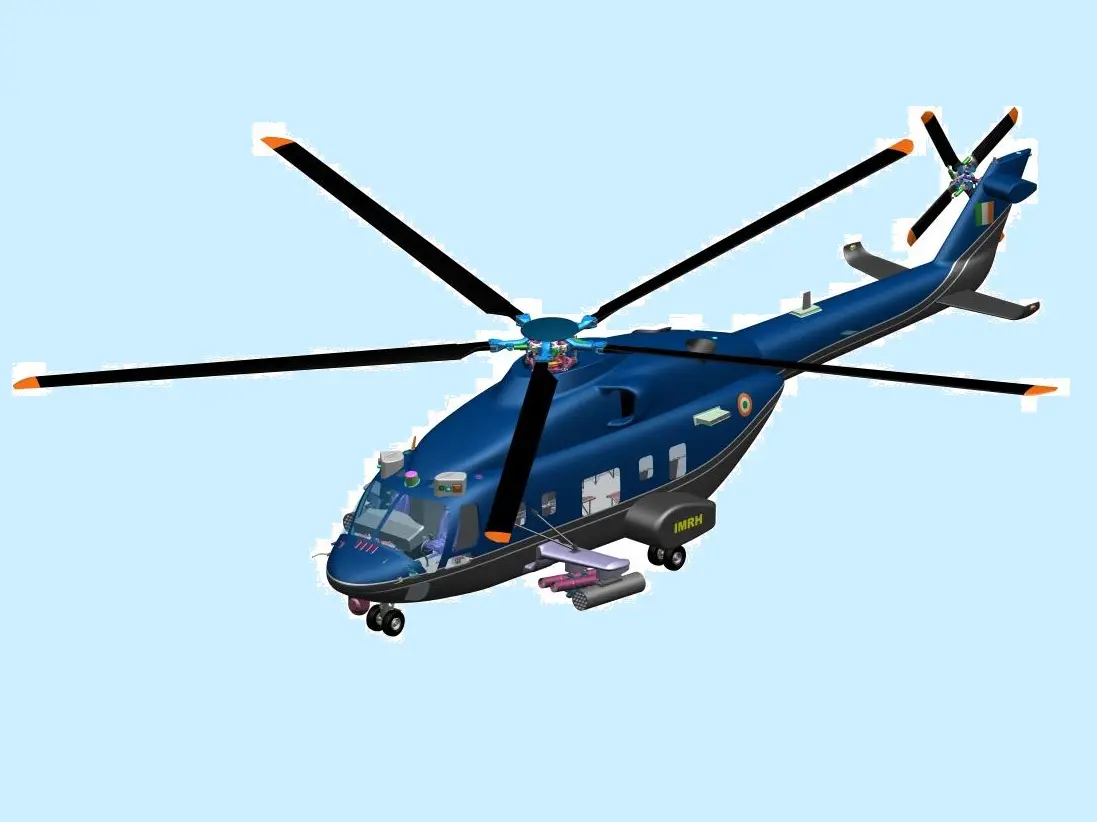
The engine is named Aravalli, after one of the oldest mountain ranges in the country. It belongs to the 3,500 to 4,000 shaft horsepower class, much stronger than the Shakti engines that today fly the Dhruv, Prachanda and Light Utility Helicopter. Aravalli will power two future HAL machines—the 13-ton Indian Multi-Role Helicopter, or IMRH, and its naval version, the Deck-Based Multi-Role Helicopter, or DBMRH. Both are twin-engine, so their success rests on this engine.
Signed on 26 August 2026, the contract covers the engine’s full life—design, development, manufacture, supply, and long-term support. HAL’s Director of Engineering and R&D, Ajay Kumar Shrivastava, and Olivier Savin of SAFHAL signed the papers before HAL Chairman and Managing Director Ravi K and Safran Helicopter Engines CEO Cédric Goubet.
India has worked with Safran for decades—first the Artouste engines of the Cheetah and Chetak, later the Shakti family for lighter helicopters. Those programmes taught Indian industry to manufacture, assemble and support engines, but never handed over the hardest skill, the original design of a high-power engine. Aravalli aims to change that. Indian engineers will sit with French engineers through design, testing and certification, gaining depth in the high-pressure compressor, power turbine, fuel and oil systems, accessory gearbox and the systems that keep an engine alive in heat, dust, salt air and thin mountain air.
Such learning cannot be bought from a catalogue; it must be earned on a real programme. Safran says this is the first time it is co-developing an engine of this power class—a shift from “you build what we designed” to “we design together.”
The IMRH fills a serious gap. The Air Force still depends on ageing Russian-origin Mi-17 helicopters, which cannot fly forever. A 13-ton Indian helicopter carrying troops, lifting loads, climbing mountains and working in punishing heat is a national need. The Navy’s DBMRH faces a harder life—ship decks, salt spray, tight space and rough seas. If India imports both helicopter and engine, dependence continues for decades. If it builds only the body, the dependence simply shifts from one box to another.
Trending Stories
&imwidth=180&imheight=135&format=webp&quality=medium)
US troop deaths in Iran war on rise? Pentagon reveals latest toll
&imwidth=180&imheight=135&format=webp&quality=medium)
Lula campaign accuses Meta of election interference after social media content blocked
&imwidth=180&imheight=135&format=webp&quality=medium)
100,000 strikes in 3 years: How October 7 redefined Israel's war
&imwidth=180&imheight=135&format=webp&quality=medium)
PM Modi inaugurates Rs 4,900 crore Chennai Metro Phase II stretch, takes ride with CM Vijay: VIDEO
&imwidth=180&imheight=135&format=webp&quality=medium)
‘Your people don’t even let us near it’: IAF chief’s blunt response on US F-35; India yet to decide on Russia’s Su-57
&imwidth=180&imheight=135&format=webp&quality=medium)
Saudi Arabia's King Khalid International Airport attack kills 12, injures 309; India calls it 'unacceptable'
&imwidth=180&imheight=135&format=webp&quality=medium)
‘Never-ending flow of cheap labour’: JD Vance hits back at Indian-origin Congresswoman over US green card curbs for major tech companies
&imwidth=180&imheight=135&format=webp&quality=medium)
HYBE’s Weverse Con India sets ticket sale date for March 2027 festival
&imwidth=180&imheight=135&format=webp&quality=medium)
Messi scores twice in Inter Miami return following final match for Argentina
&imwidth=180&imheight=135&format=webp&quality=medium)
CJP's Abhijeet Dipke, Ashutosh Ranka, Saurav Das released 22 hours after flight detention
&imwidth=180&imheight=135&format=webp&quality=medium)
'Unwarranted interference': India slams UN human rights office over remarks on Delhi protests
&imwidth=180&imheight=135&format=webp&quality=medium)
'Jantar Mantar not the story of India': BJP's Sambit Patra claims 'anarchists' tried to hold Delhi captive
&imwidth=180&imheight=135&format=webp&quality=medium)
3rd T20I Preview: Another run-fest on cards as India face West Indies in Indore
&imwidth=180&imheight=135&format=webp&quality=medium)
Nicolas Cage refuses AI waiver for Spider-Noir, hints at Amazon exit and True Detective role
&imwidth=180&imheight=135&format=webp&quality=medium)
Riyadh airport hit in missile attack, dozens injured; 5 in intensive care
&imwidth=180&imheight=135&format=webp&quality=medium)
At least 109 migrants, including 15 children dead as boat sinks off Djibouti, 116 go missing
&imwidth=180&imheight=135&format=webp&quality=medium)
'Spent Rs 2,000 cr to elect Trump': Elon Musk bought US President's loyalty by writing the biggest political cheque in human history
&imwidth=180&imheight=135&format=webp&quality=medium)
Powerful 7.7 magnitude earthquake strikes Panama, tsunami warning issued
&imwidth=180&imheight=135&format=webp&quality=medium)
US mid-term elections: What are PACs - Unique American System that lets corporates shape voting
&imwidth=180&imheight=135&format=webp&quality=medium)
Imran Khan released hours after Mumbai Police detain him during CJP protest
&imwidth=180&imheight=135&format=webp&quality=medium)
Nathan Lyon completes 1,000 Test runs at No. 10 to script rare cricket feat
&imwidth=180&imheight=135&format=webp&quality=medium)
Nepal flash floods swallow homes and bridges a month after devastating disaster
&imwidth=180&imheight=135&format=webp&quality=medium)
Sehwag sees reflection of himself in Sooryavanshi: ‘His thinking is similar to mine’
&imwidth=180&imheight=135&format=webp&quality=medium)
'Ouch!!! That must hurt': Kangana Ranaut hails Kamal Haasan's sharp reply to Elon Musk over Starlink row
&imwidth=180&imheight=135&format=webp&quality=medium)
Barry Manilow cuts short Las Vegas comeback show, cancels next concert over Bronchitis
&imwidth=180&imheight=135&format=webp&quality=medium)
Hamas used double agents, deceived Israel to carry out October 7 massacre
&imwidth=180&imheight=135&format=webp&quality=medium)
Bigg Boss 20: Who is Manish Goel? Meet the new wild card contestant on Salman Khan’s show
&imwidth=180&imheight=135&format=webp&quality=medium)
Portugal Federation confirms Cristiano Ronaldo’s return to national team despite suspension
&imwidth=180&imheight=135&format=webp&quality=medium)
Kim Kardashian brings glamour to Singapore Grand Prix while supporting boyfriend Lewis Hamilton
&imwidth=180&imheight=135&format=webp&quality=medium)
Ganesh Dust To Stardust trailer: Ganesh Acharya directs a tale of dreams and sacrifice | Watch
&imwidth=180&imheight=135&format=webp&quality=medium)
‘Time for Ukraine to get a new president’: Trump lashes out at Zelensky over Russia strikes
&imwidth=180&imheight=135&format=webp&quality=medium)
BTS’ RM raises privacy concerns over drones, lasers outside hotel amid Lima concert, urges fan respect
&imwidth=180&imheight=135&format=webp&quality=medium)
Thai queen becomes first reigning monarch to fly jet solothailand #queen #wion
&im=FitAndFill=(700,400)&imwidth=180&imheight=135&format=webp&quality=medium)
Food shortages, suicide attempts and more: USS Abraham Lincoln returns to US after 321 day deployment — What happened aboard the US carrier?
&imwidth=180&imheight=135&format=webp&quality=medium)
Rahul Gandhi calls Modi, Shah ‘cowards’ amid CJP protest crackdown in Delhi
&imwidth=180&imheight=135&format=webp&quality=medium)
‘Had he known, would have been here’: CJP Chief Abhijeet Dipke denied news of grandmother's death, family claims
&imwidth=180&imheight=135&format=webp&quality=medium)
Delhi Police arrest 4 men seen in viral video allegedly assaulting women protesters during CJP protest
&imwidth=180&imheight=135&format=webp&quality=medium)
Where are Abhijeet Dipke, Ashutosh Ranka, Saurav Das? CJP gives big update after flight detention
&imwidth=180&imheight=135&format=webp&quality=medium)
Putin conveys Iran’s proposal to Trump, offers to take Tehran’s enriched uranium
&im=FitAndFill=(700,400)&imwidth=180&imheight=135&format=webp&quality=medium)
Amitabh Bachchan turns 84: A look at Big B’s iconic dialogues that continue to win hearts
A civilian side exists too. This engine class can later serve offshore oil flights, utility work and VVIP travel. After production comes maintenance, repair and overhaul, where lasting jobs and real industrial strength are created.
HAL is no silent partner. It designs both helicopters, holds a 50:50 share in SAFHAL, and must turn drawings into machines the forces can trust. Under Chairman and Managing Director Ravi K, HAL is trying to grow from a production house into a design house. That road is tougher, because production can be planned while design brings risk, delay, failed tests and patient money. Ravi K has framed Aravalli as a step towards self-reliance in aero-engine technology and a stronger Indian aerospace ecosystem. His clear focus on design capability gives the programme direction and seriousness.
An engine succeeds only when many firms rise with it — alloy makers, casting units, precision machine shops, electronics companies, test facilities and repair workshops. Karnataka sits at the centre of this story. Programme information shared with industry says the Aravalli manufacturing set-up is expected at Tumakuru, where HAL already has a large helicopter base. If that plan holds, Tumakuru will not merely assemble airframes; it will work on compressors, turbines and test beds, giving young engineers in the state a chance to learn real engine technology.
Think of an engine as a small factory needing special alloys, finely cut blades, gearboxes, pumps, sensors, software and test cells. A long programme creates steady demand, and demand pushes companies to invest. Aravalli helps in five clear ways. It gives private firms a reason to enter high-end engine work. It trains engineers through design reviews, failure analysis and certification. It builds repair capability at home and saves foreign exchange. It gives HAL ownership of what it designs. And it prepares a team that will not start from zero on the next engine India needs.
None of this is automatic. Development work is expected to run into the early 2030s, and both helicopters still await full government clearance. Engine programmes usually take longer than first promised. Honestly seen, this contract is the starting gun, not the finish line.
The idea is simple. A helicopter without a dependable engine is only a beautiful body, and India long built the body better than the heart. The Aravalli hills are old, strong and still standing. This journey will also be long, but with HAL under Ravi K’s leadership and a manufacturing base expected in Tumakuru, it can build lasting skills, companies and confidence that will help India for many years to come.
