'Threads of cruelty': Caught between heritage, livelihoods and animal welfare - India's silk dilemma

&imwidth=600&imheight=450&format=webp&quality=medium "'Threads of cruelty': Caught between heritage, livelihoods and animal welfare - India's silk dilemma")
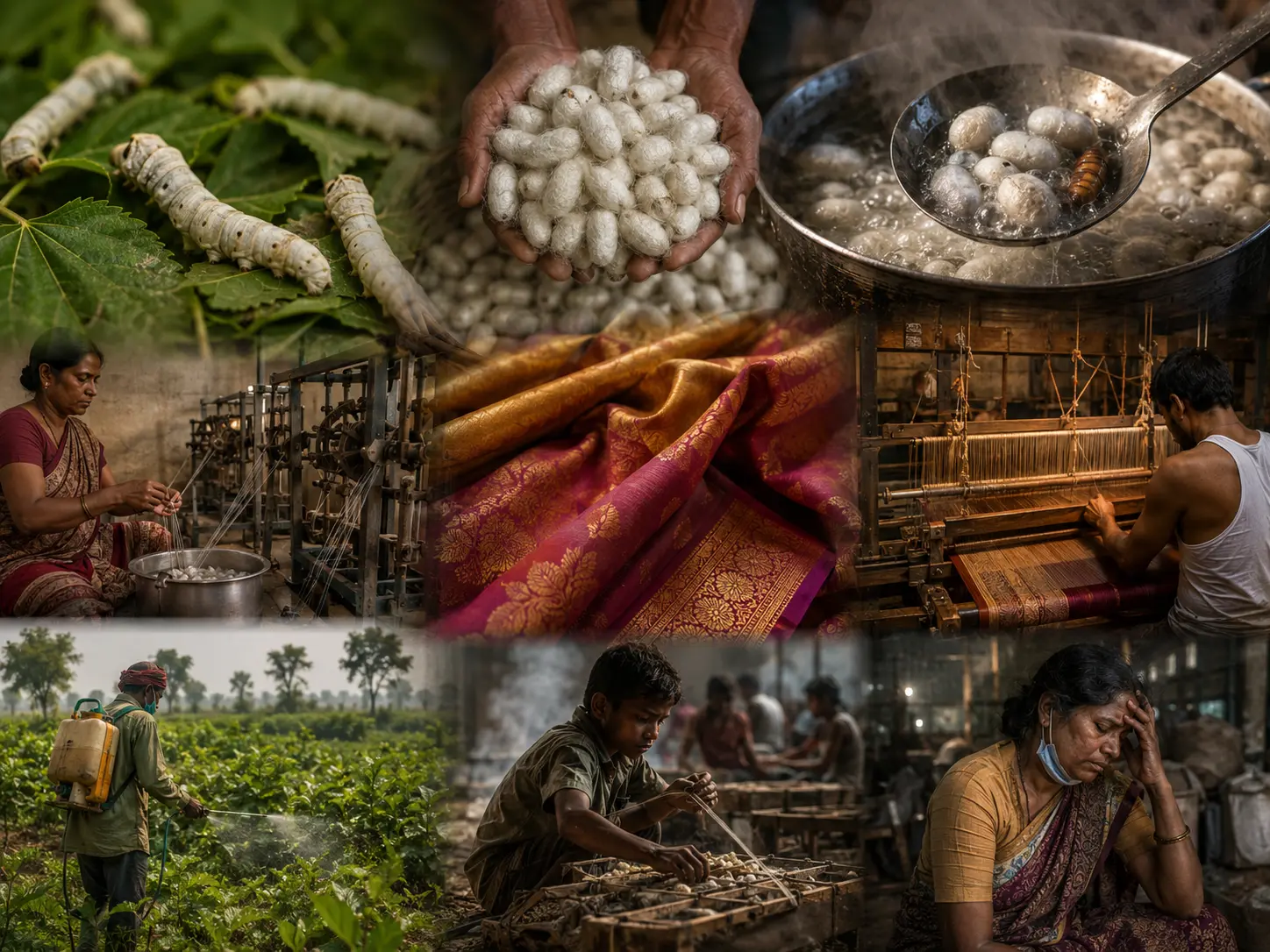
The hidden cost of silk: Inside a debate over tradition and animal welfare Photograph: (AI-Generated image)
Silk is one of India's most cherished textiles and remains deeply embedded in the country's culture, economy and diplomatic traditions. However, an undercover investigation by Reporters for Animals in West Bengal highlights the hidden cost of conventional silk production.
Every silk saree begins with a silkworm spinning a cocoon around itself. For most of those silkworms, that cocoon becomes a tomb. Few fabrics symbolise India's heritage quite like silk. From the royalty of the past to the traditions that defied ages to stay relevant even today, the luxurious "queen of textiles" remains woven into the fabric of Indian heritage. Revered for centuries and often used as a symbol of the country's craftsmanship, silk continues to feature prominently in India's diplomatic gifting tradition. In May 2026, Prime Minister Narendra Modi presented a Maheshwari silk fabric to the UAE Queen Mother and gifted silk stoles to Italian Prime Minister Giorgia Meloni. Hidden in the threads of the luxurious textile lies a cruelty that consumes the lives of tens of thousands of living beings... while remaining largely hidden from public view.
Threads of cruelty
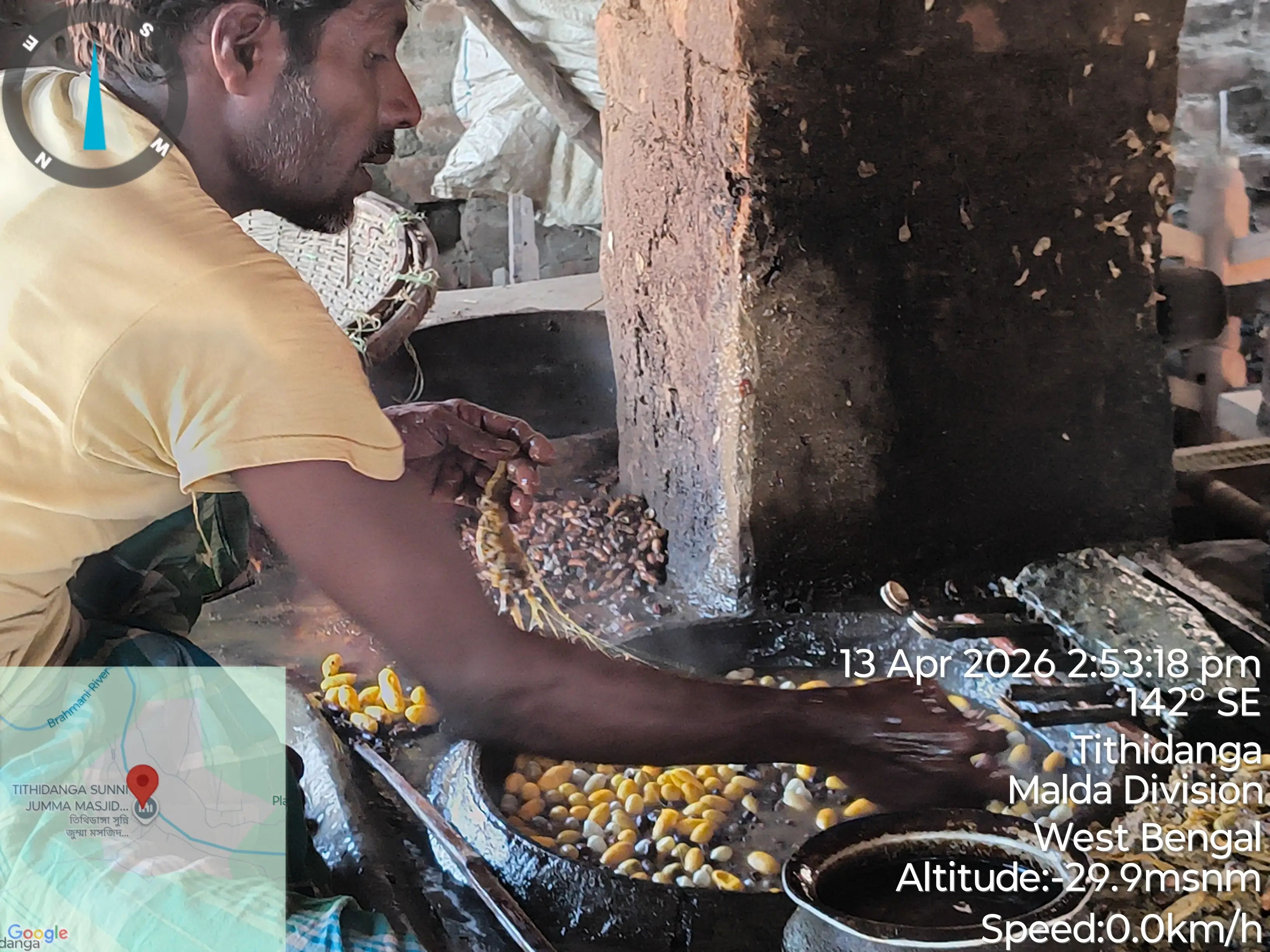
An undercover investigation by the India leg of Reporters for Animals in the Malda and Murshidabad districts of West Bengal, India, confirmed the harrowing process in which silk is produced.
Speaking to WION on the condition of anonymity, investigators from Reporters for Animals confirmed that approximately 6,000 to 10,000 cocoons are boiled alive to make just one silk saree. "To obtain long, continuous silk fibres, cocoons are collected before the moth can emerge. If the moth exits naturally, it breaks the silk filament, reducing its commercial value. As a result, the cocoons are boiled or steamed while the pupae remain inside," said RFA.
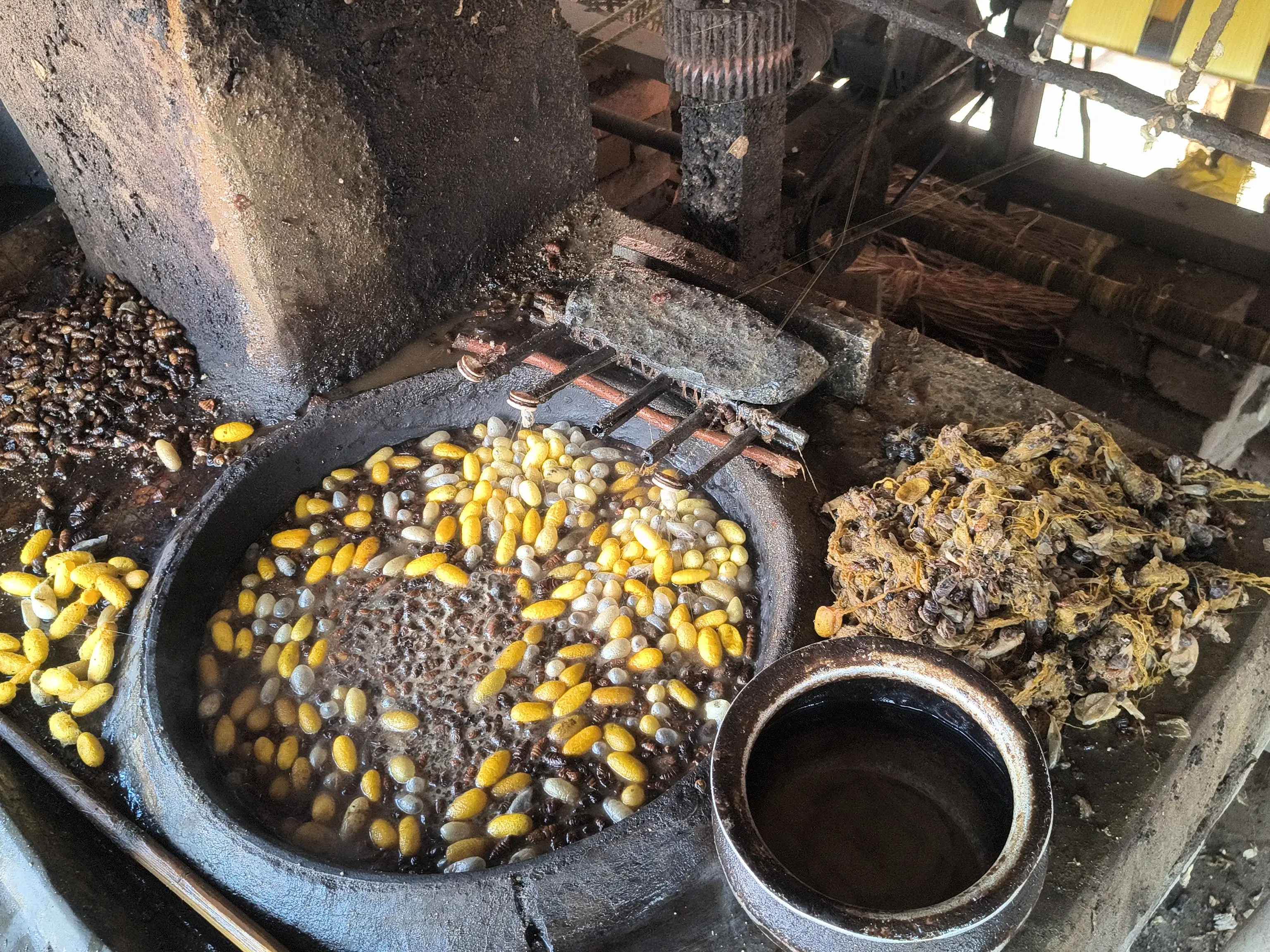)
The hidden cost of silk: Inside a debate over tradition and animal welfare Photograph: (AI-Generated image)
For those who don't know how silk is made, sericulture or the breeding of silkworms, is one of the primary steps in the process. The practice dates back at least 5,000 years and spread from China to India, Korea, Nepal, Japan and the West. Traditionally, silk making involves boiling cocoons of the silkworm to unravel the silk filaments.
The investigation found that despite non-violent varieties like Ahimsa Silk and Eri Silk being around for decades, the cruel process of boiling or steaming a cocoon even as the pupae remains inside continues to this day.
The livelihood
The inherent cruelty in the process of making conventional silk remains a well-known reality. Yet, India remains torn between the decades-old debate of human vs animal rights.
Any discussion of reform runs into a difficult reality: millions of Indians depend on sericulture and silk weaving for their livelihoods. As per the Government of India's Trade Portal, our nation is the second-largest producer of silk globally. The industry remains one of the largest foreign exchange earners for the country. The sericulture industry alone employs 9.76 million people across 52,360 villages.
However, "economic importance does not negate ethical responsibility," noted RFA. "Rather, it highlights the need for nuanced conversations that acknowledge multiple stakeholders while remaining honest about the realities of production," they said.
Trending Stories
)
&im=FitAndFill=(700,400))
&im=FitAndFill=(700,400))
)
)
&im=FitAndFill=(700,400))
)
)
)
&im=FitAndFill=(700,400))
)
)
)
)
)
)
)
)
)
&im=FitAndFill=(700,400))
)
)
)
)
)
)
)
)
)
)
)
&im=FitAndFill=(700,400))
)
)
Also read | Scientists discover world's largest 'whale graveyard' hidden 7km beneath the Indian Ocean
More than just humans vs animals
The ethical questions surrounding silk are not limited to silkworm welfare. The advocacy group also raised concerns about labour conditions across parts of the supply chain. The RFA investigation highlighted concerns extending beyond the treatment of silkworms themselves. Many studies and reports on the silk industry have raised serious concerns about how workers are treated. Problems include child labour, unfair or exploitative working conditions, and health risks at the workplace. What risks? People who work in reeling and processing silk often have to deal with very high temperatures and repetitive, physically demanding tasks. They may also suffer from breathing problems and come into contact with chemicals that are used during the growing and manufacturing of silk. These conditions can harm their health over time.
)
The hidden cost of silk: Inside a debate over tradition and animal welfare Photograph: (AI-Generated image)
Mulberry farming also creates environmental challenges. To support large numbers of silkworms, farmers often need intensive production, which can involve heavy use of pesticides. This raises concerns about damage to local ecosystems and risks to human health.
So, what can you as a consumer do?
RFA insisted that it "does not seek to erase centuries of tradition". Instead, the organisation said it was hoping to "illuminate realities that have remained largely invisible to the public". The organisation noted that consumers concerned about animal welfare could opt for less cruel alternatives like Eri Silk. "Silk will undoubtedly continue to occupy an important place within India's cultural and economic landscape. Its beauty, artistry and heritage remain undeniable. Yet beauty and scrutiny need not be mutually exclusive. Indeed, true appreciation of any craft requires an honest understanding of its origins," it noted.
For many Indians, silk remains inseparable from weddings, festivals and tradition. Yet the investigation raises a question that consumers rarely ask: how much do we really know about the journey from cocoon to cloth?

