Mountbatten had a hidden agenda behind choosing August 15 as India's Independence Day

&imwidth=600&imheight=450&format=webp&quality=medium "Mountbatten had a hidden agenda behind choosing August 15 as India's Independence Day")
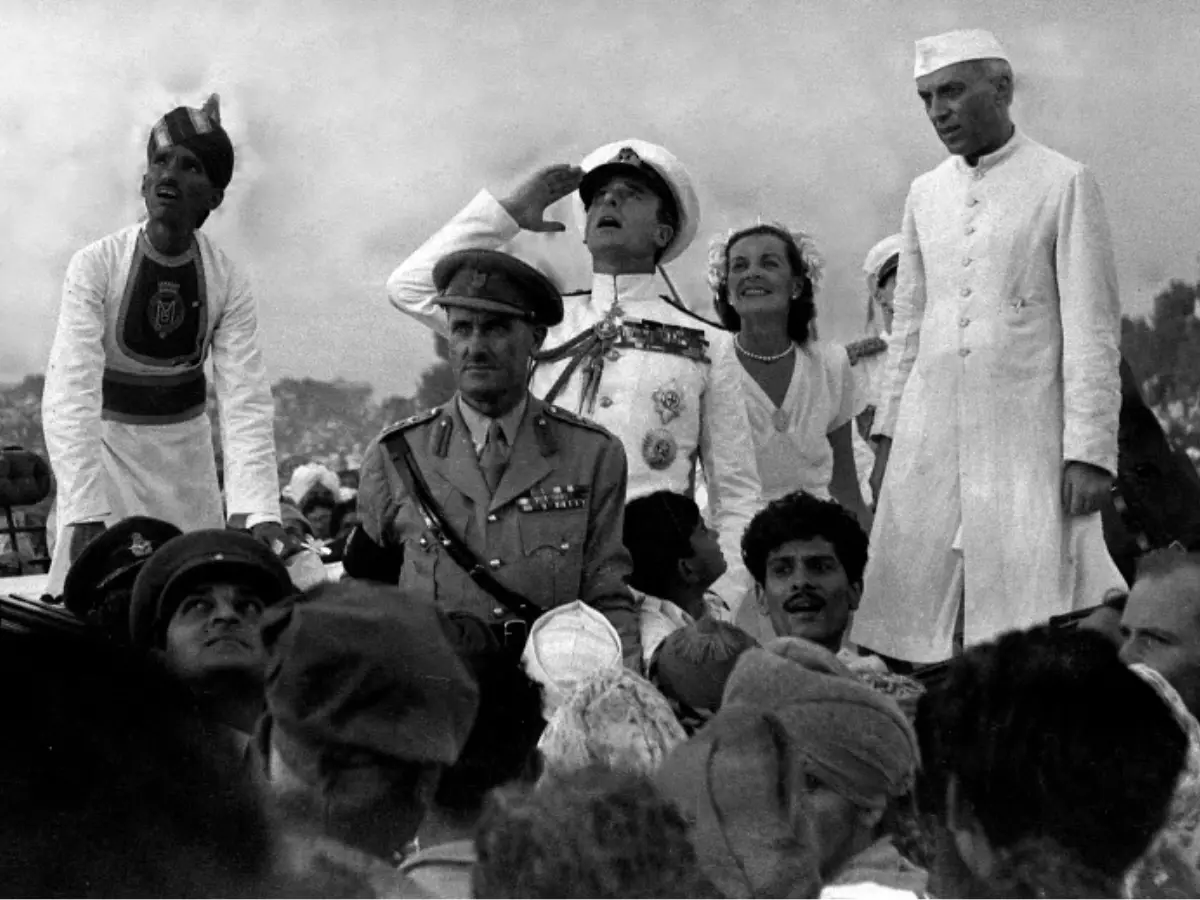
In this handout picture taken 15 August 1947, Mountbatten (C) gestures alongside Lady Edwina Mountbatten (2R) and Indian Prime Minister Jawaharlal Nehru (R) as they witnesses the raising of the Indian tricolour for the first time at India Gate in New Delhi. Photograph: (AFP)
Why was August 15 chosen as India's date of freedom? Lord Mountbatten came up with the date, changing 1948 as the proposed year to 1947. He didn't have a date in mind. But when a reporter asked him about it, he knew in that instance what it would be.
India will celebrate its 79th Independence Day on August 15. It was on this day that the country freed itself from the clutches of colonialism. But, do you know why this particular date was chosen as the official Independence Day of India? Lord Mountbatten, the last Viceroy of India, was entrusted with the responsibility of transferring power from the British to a new India. He chose August 15 as the date of transfer of power for several reasons. It was not random, and not based on any one particular factor. Mountbatten weighed his options and came up with August 15 as a way to not only make India free, but also keep something for himself as well. Clement Attlee, the Prime Minister of the United Kingdom at the time, advised King George VI to appoint Mountbatten Viceroy of India on 20 February 1947. He was told that it should be done by 30 June 1948. When Mountbatten arrived in India in March, he witnessed large-scale riots in the country. He ascertained that, looking at the condition of the country, it wouldn't be feasible to wait a year to grant freedom. So, he came up with a new plan. Also Read: Independence Day 2025: Exploring its history, theme, and national importance
Why did Mountbatten fast-track India's independence by a year?
Mountbatten knew he had to hasten the transfer of power if the British wished to get out of it with their reputation intact. He met with the Muslim League leader Muhammad Ali Jinnah to persuade him to support a united India. But Jinnah was adamant about creating a separate state for Muslims called Pakistan. Mountbatten accepted the fact that partition was inevitable, and now fixed a date for independence - August 15, 1947 - only five months after he landed in India. The ongoing violence in India became one of the reasons for speeding up the transfer of power. He recognised that a delay might lead to the collapse of the interim government as tensions escalated between the Congress and the Muslim League. He believed that the longer the wait, the more blood would be shed in riots across the country. Also Read: Mithun Chakraborty's threat to Pakistan's Bilawal Bhutto: 'BrahMos chalega'
Mountbatten, India's date with freedom and Japan
However, this is what the world was told. In reality, Mountbatten had another extremely personal reason for choosing August 15 as the date of India's independence. Mountbatten led the Burma campaign during World War II, which ended with the unconditional surrender of the Japanese Empire in August. According to Larry Collins and Dominique Lapierre's book 'Freedom at Midnight', the last viceroy of India wanted the date to coincide with "the most triumphant hours of his own existence". He drew an ironic parallel between the fall of Japan and the rise of a new democratic Asia. Mountbatten served as the Supreme Allied Commander of South East Asia Command (SEAC) to recapture Burma from the Japanese.
Mountbatten's Eureka moment
Trending Stories
&im=FitAndFill=(700,400)&imwidth=280&imheight=210&format=webp&quality=medium)
&imwidth=280&imheight=210&format=webp&quality=medium)
&imwidth=280&imheight=210&format=webp&quality=medium)
&imwidth=280&imheight=210&format=webp&quality=medium)
&imwidth=280&imheight=210&format=webp&quality=medium)
&imwidth=280&imheight=210&format=webp&quality=medium)
&imwidth=280&imheight=210&format=webp&quality=medium)
&imwidth=280&imheight=210&format=webp&quality=medium)
&imwidth=280&imheight=210&format=webp&quality=medium)
&imwidth=280&imheight=210&format=webp&quality=medium)
&imwidth=280&imheight=210&format=webp&quality=medium)
&imwidth=280&imheight=210&format=webp&quality=medium)
&imwidth=280&imheight=210&format=webp&quality=medium)
&imwidth=280&imheight=210&format=webp&quality=medium)
&imwidth=280&imheight=210&format=webp&quality=medium)
&imwidth=280&imheight=210&format=webp&quality=medium)
&imwidth=280&imheight=210&format=webp&quality=medium)
&imwidth=280&imheight=210&format=webp&quality=medium)
&imwidth=280&imheight=210&format=webp&quality=medium)
&imwidth=280&imheight=210&format=webp&quality=medium)
&imwidth=280&imheight=210&format=webp&quality=medium)
&im=FitAndFill=(700,400)&imwidth=280&imheight=210&format=webp&quality=medium)
&imwidth=280&imheight=210&format=webp&quality=medium)
&imwidth=280&imheight=210&format=webp&quality=medium)
&imwidth=280&imheight=210&format=webp&quality=medium)
&imwidth=280&imheight=210&format=webp&quality=medium)
&imwidth=280&imheight=210&format=webp&quality=medium)
&imwidth=280&imheight=210&format=webp&quality=medium)
&im=FitAndFill=(700,400)&imwidth=280&imheight=210&format=webp&quality=medium)
&imwidth=280&imheight=210&format=webp&quality=medium)
&imwidth=280&imheight=210&format=webp&quality=medium)
&imwidth=280&imheight=210&format=webp&quality=medium)
Japan had occupied Burma since 1942. Mountbatten organised and directed Allied military operations in the South East Asian theatre. He led British, Indian, and American troops in offensives launched against the Japanese in Burma to liberate it. He also played an important role in the recapture of key areas like Imphal and Kohima. Mountbatten revealed the date at a press conference, even though he himself did not know which date it would be. A journalist asked, "Sir, if all agree that there is most urgent need for speed between today and the Transfer of Power, surely you should have a date in mind?" Mountbatten said, "Yes, I have selected a date for the Transfer of Power," even though "the possible dates were still whizzing through his mind like the numbers on a spinning roulette wheel." Then, he had it. "It was a date linked in his memory to the most triumphant hours of his own" - Japan's surrender in Burma. And thus India had its date with freedom.