Navratri 2026: 9 days, 9 forms of Goddess Durga and 9 colours- Check the complete list

Navratri 2026 began on October 11. As devotees welcome nine days of devotion, festivities, and celebration in honour of Goddess Durga, take a look at the nine goddesses and the colours associated with each day.
Navratri 2026
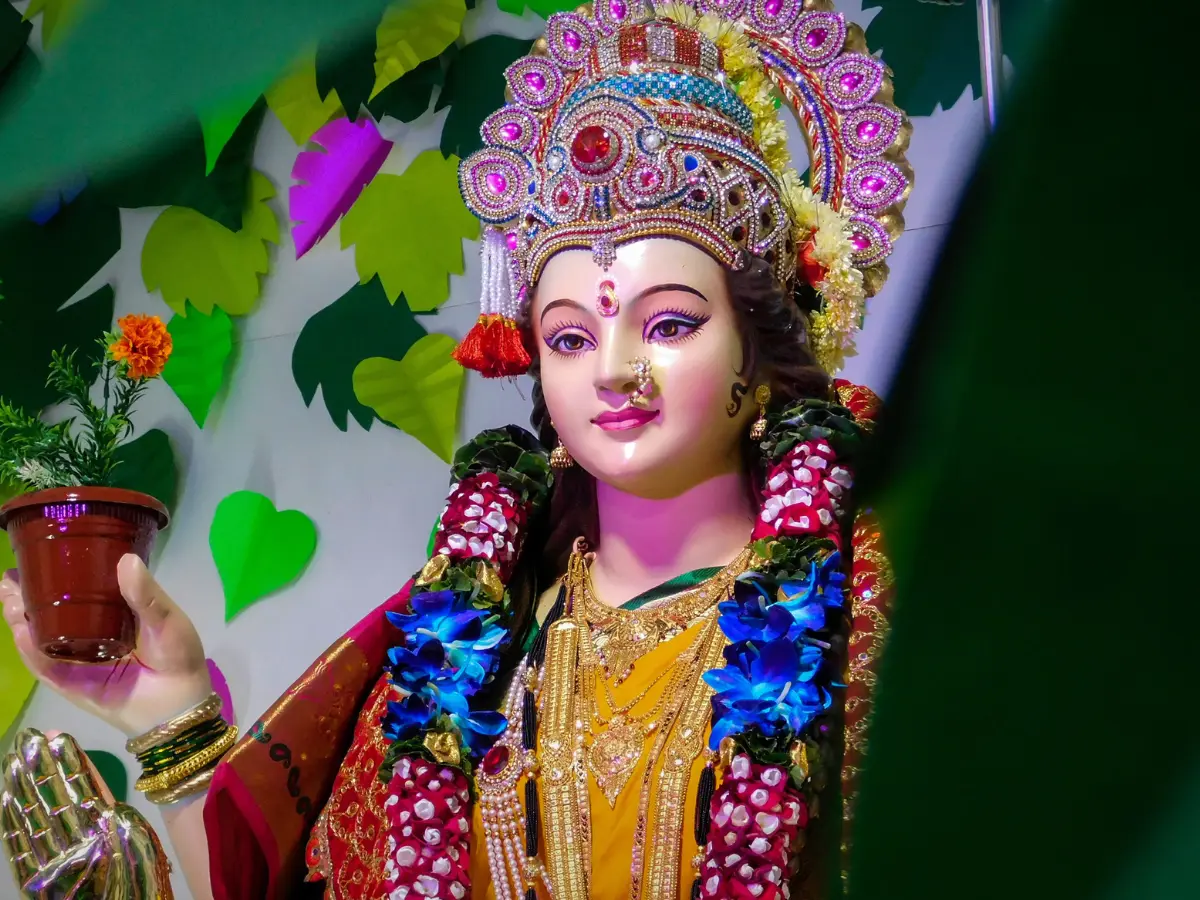
Finally, that time of year is here! Navratri 2026 began on October 11, taking everyone into nine divine days of devotion, vibrant celebrations, and the worship of Goddess Durga in her nine forms. Each day is linked to a specific colour and dedicated to a different aspect of the goddess. As devotees embrace these nine auspicious days with faith and festive fervour, here’s everything you need to know about the nine Navratri colours and the goddesses associated with each day in 2026.
Day 1: October 11, Maa Shailputri
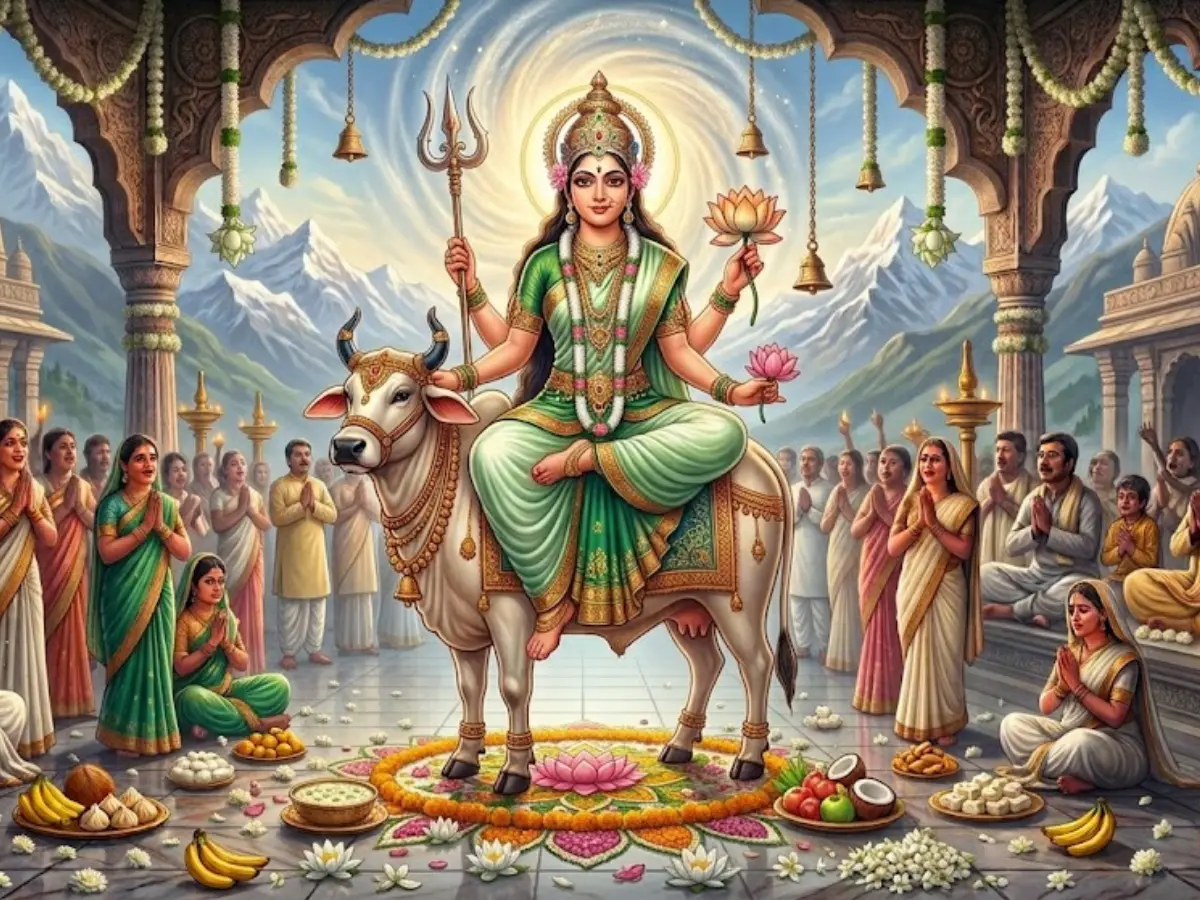
The first day of Navratri 2026 is dedicated to Maa Shailputri, the first form of Goddess Durga. She is the daughter of Himavat, the king of the mountains, and is shown riding a white bull named Vrishabha while holding a trident and a lotus. Wearing orange on this day symbolises energy, enthusiasm, positivity, and strength.
Day 2: October 12, Maa Brahmacharini
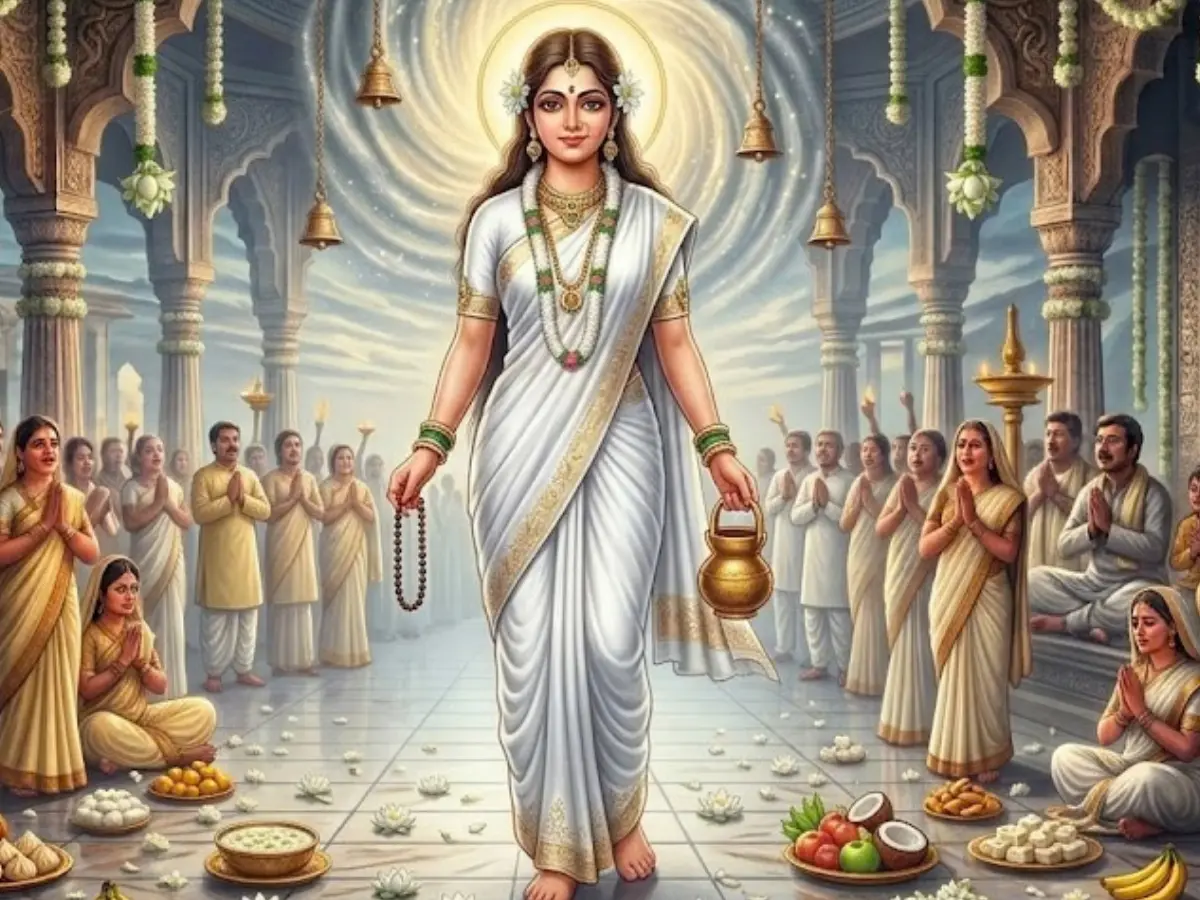
The second day of Navratri is dedicated to Maa Brahmacharini, the second form of Navdurga and the unmarried form of Goddess Parvati. Unlike the other forms of Goddess Durga, Maa Brahmacharini is traditionally depicted walking barefoot and without a ride. She holds a Japa Mala (prayer beads) in her right hand and a Kamandalu (water pot) in her left hand, symbolising penance, simplicity, discipline, and spiritual focus. Her colour is white, which represents peace, purity, and serenity.
Day 3: October 13, Maa Chandraghanta
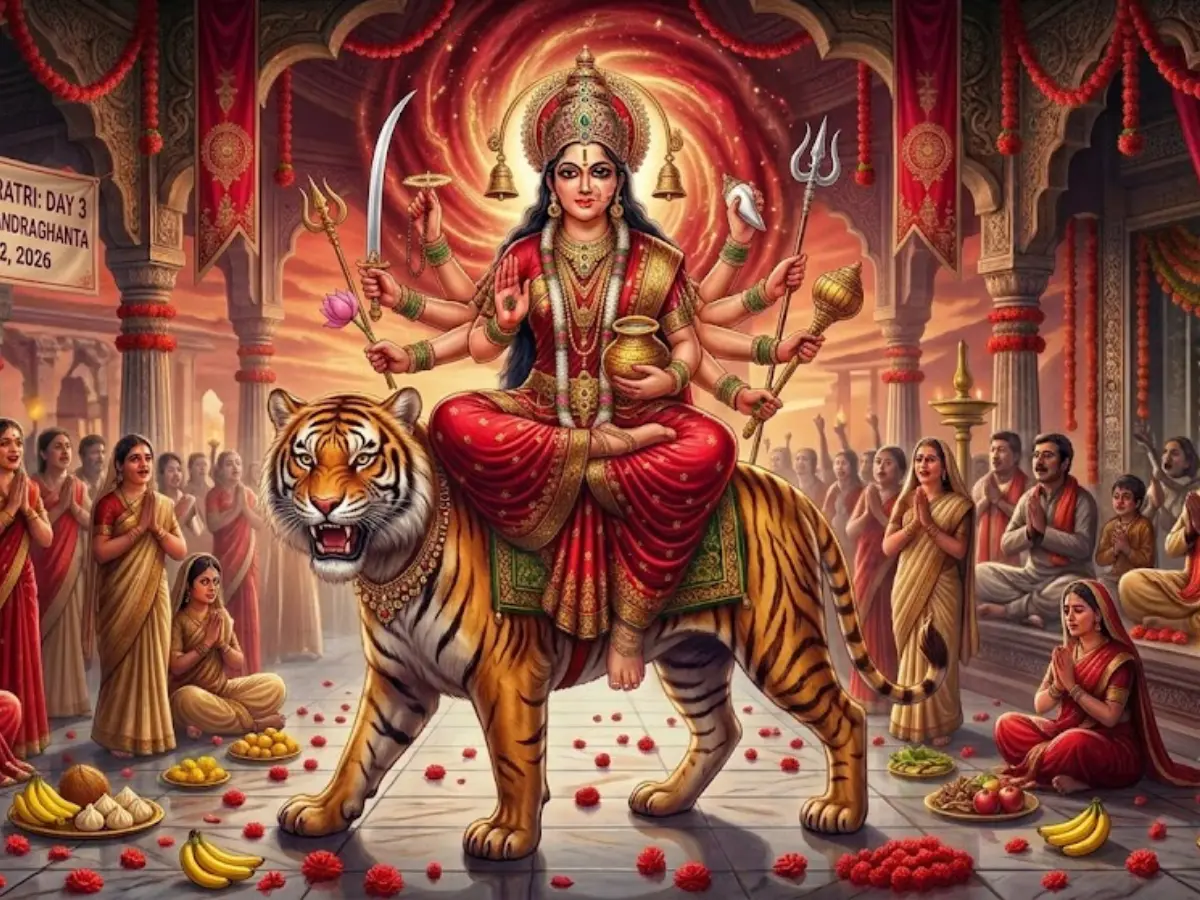
The third day of Shardiya Navratri is dedicated to Maa Chandraghanta, the fierce form of Goddess Durga. She wears a half-moon on her forehead shaped like a bell (ghanta), which gives her the name Chandraghanta. She traditionally rides a tiger, symbolising supreme fearlessness and untamed strength. Her colour is red, symbolising strength, passion, and immense power.
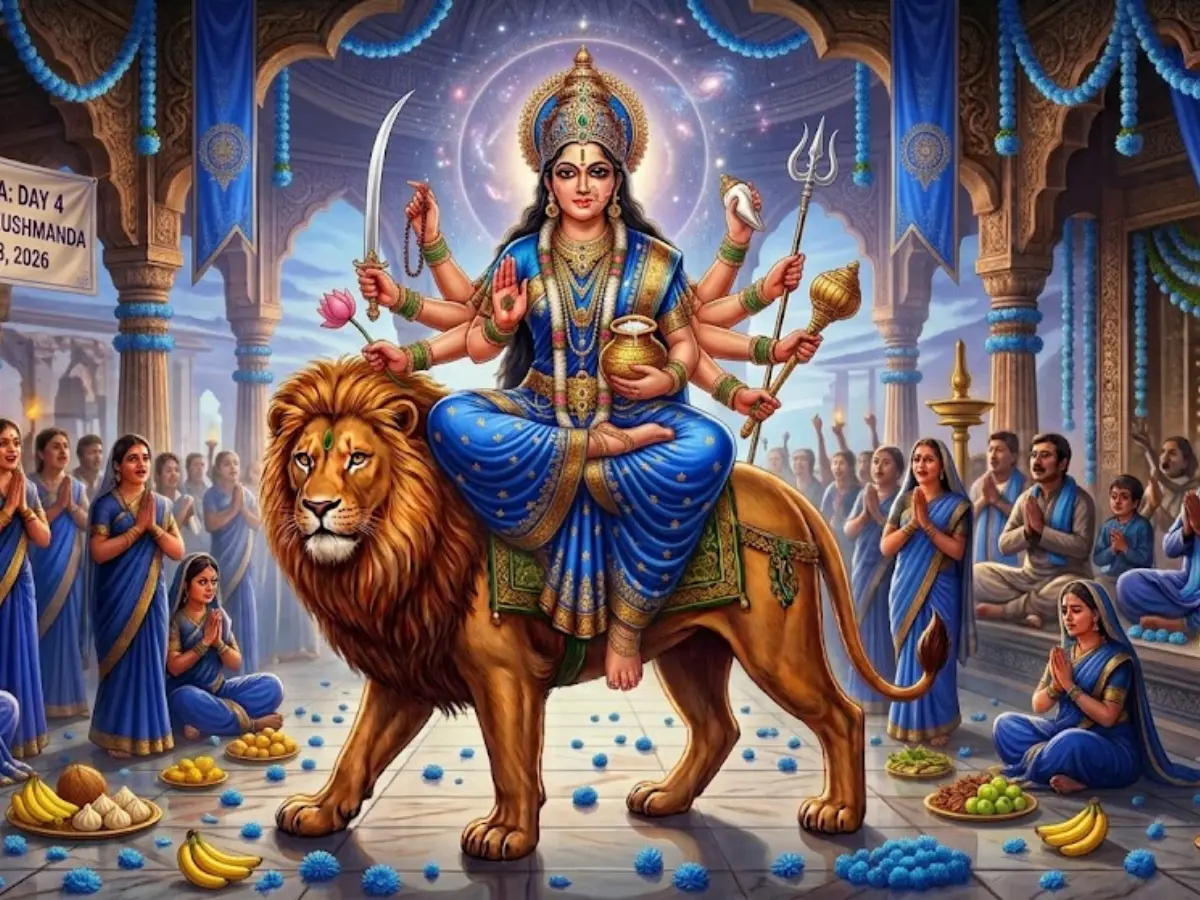
Day 4: October 14, Maa Kushmanda
The fourth day is dedicated to Maa Kushmanda, the fourth form of Goddess Durga. She is the creator of the universe and rides a lion. She is often depicted with eight arms (Ashtabhuja Devi), holding weapons, a rosary, a lotus, a bow, an arrow, a mace, and a pot of nectar or honey. She is associated with the colour royal blue and represents cosmic creation, vitality, and health.
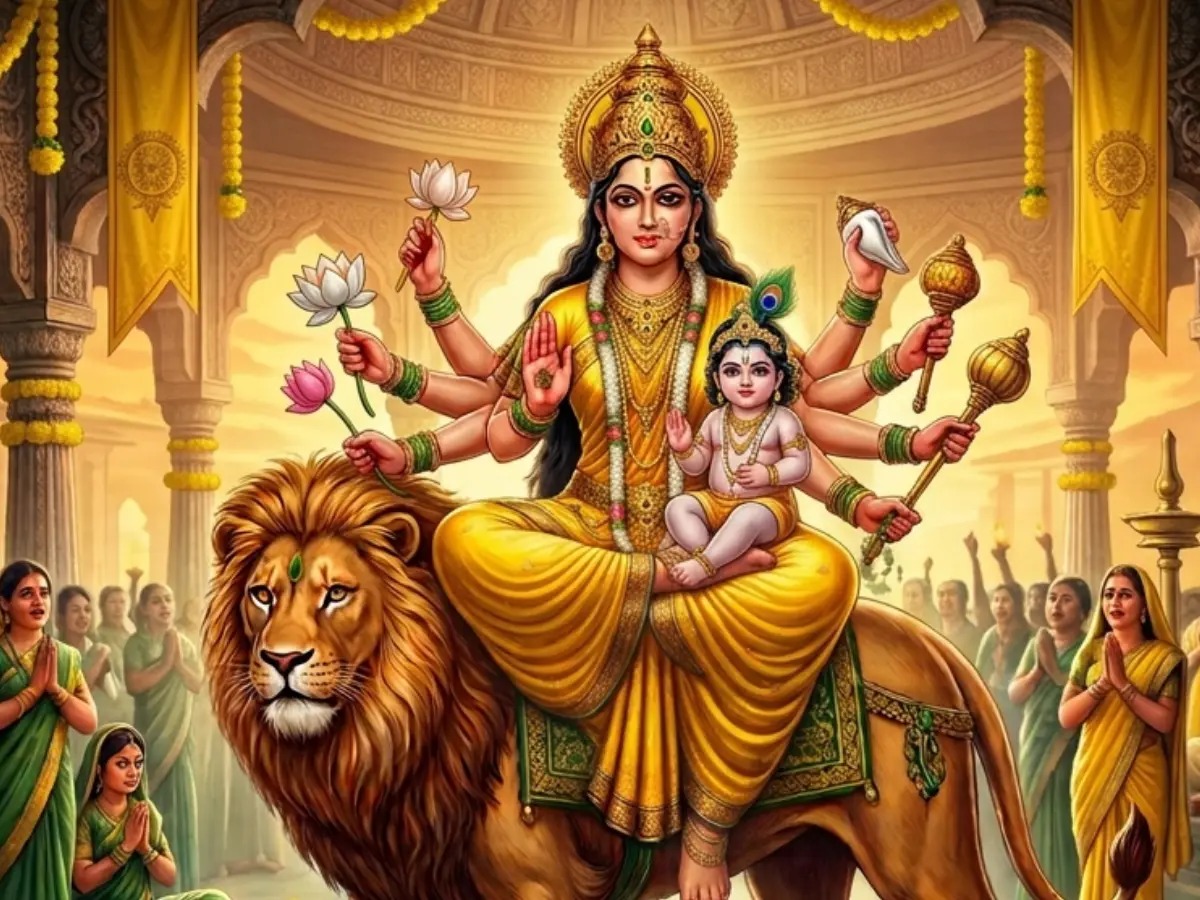
Day 5: October 15, Maa Skandamata
On the fifth day of Navratri 2026, devotees worship Maa Skandamata, the fifth form of Goddess Durga and the mother of Lord Kartikeya. She is traditionally depicted seated on a lion, holding her infant son, Lord Skanda, in her lap. Yellow is her colour, representing happiness, warmth, optimism, cheerfulness, and spiritual illumination.
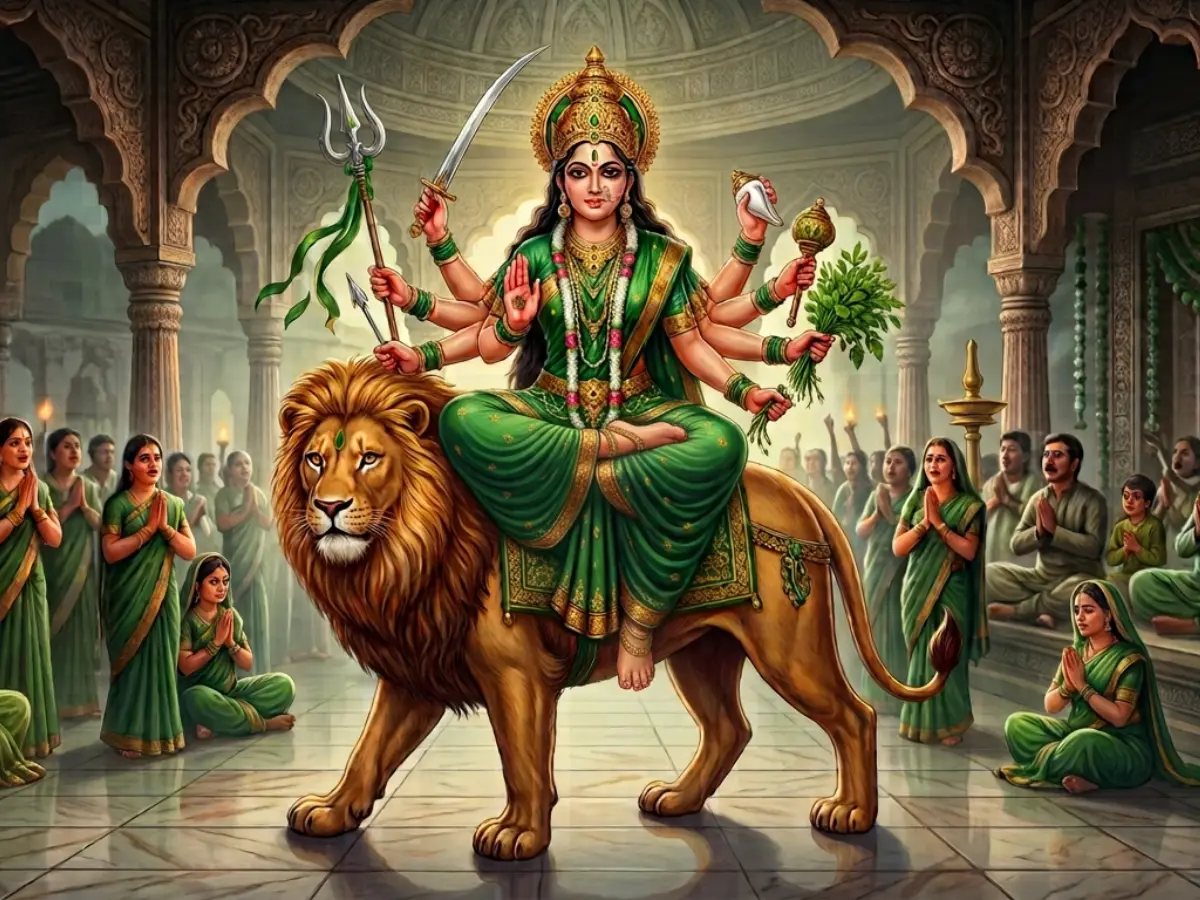
Day 6: October 16, Maa Katyayani
The sixth day is devoted to Maa Katyayani. Her vahana (vehicle) is a lion, symbolising her as a fierce warrior. The colour of the day is Green, which represents nature, growth, fertility, and harmony.
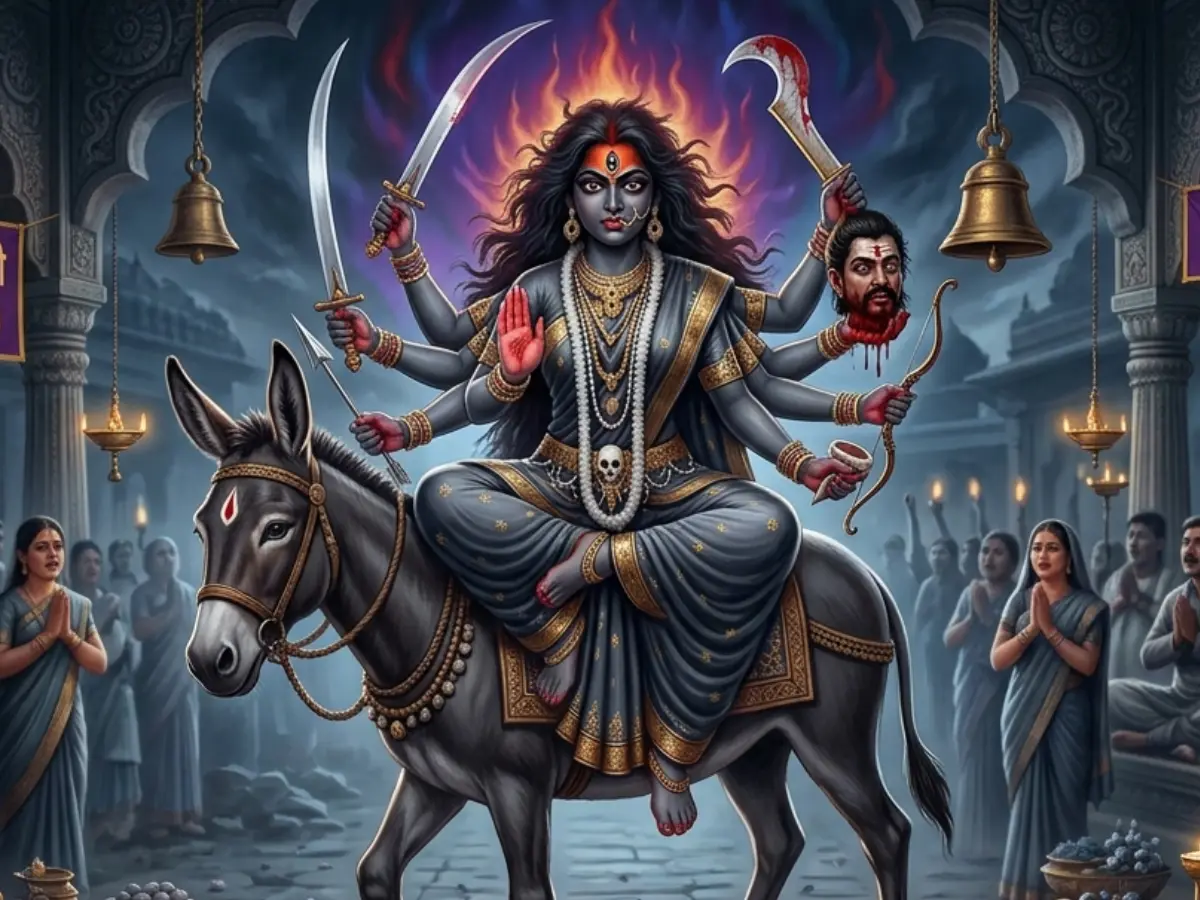
Day 7: October 17, Maa Kalaratri
The seventh day is devoted to Maa Kalaratri, the fierce form of Goddess Durga known for destroying fear, negativity, and obstacles. Her colour is grey, which represents balance, grounded emotions, absolute neutrality, and the inner strength needed to face life's darkest storms. She rides a donkey, which is known as Khara in Hindi.
Day 8: October 18, Maa Mahagauri
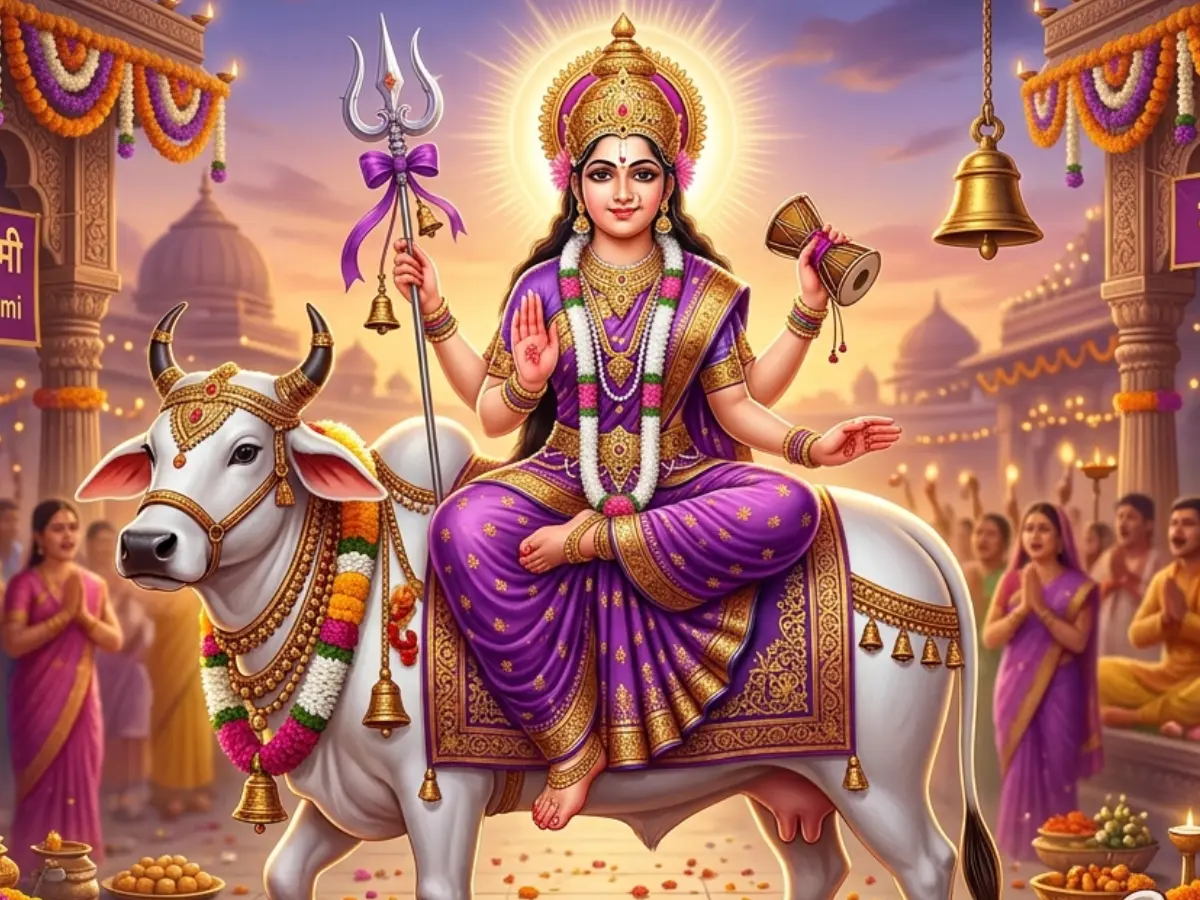
The eighth day of Navratri is devoted to Maa Mahagauri, the eighth form of Navdurga. She rides a white bull and carries a trident and a damaru (small drum). She symbolises purity, peace, and compassion, while the colour purple stands for love, harmony, and kindness.
Day 9: October 19, Maa Siddhidatri
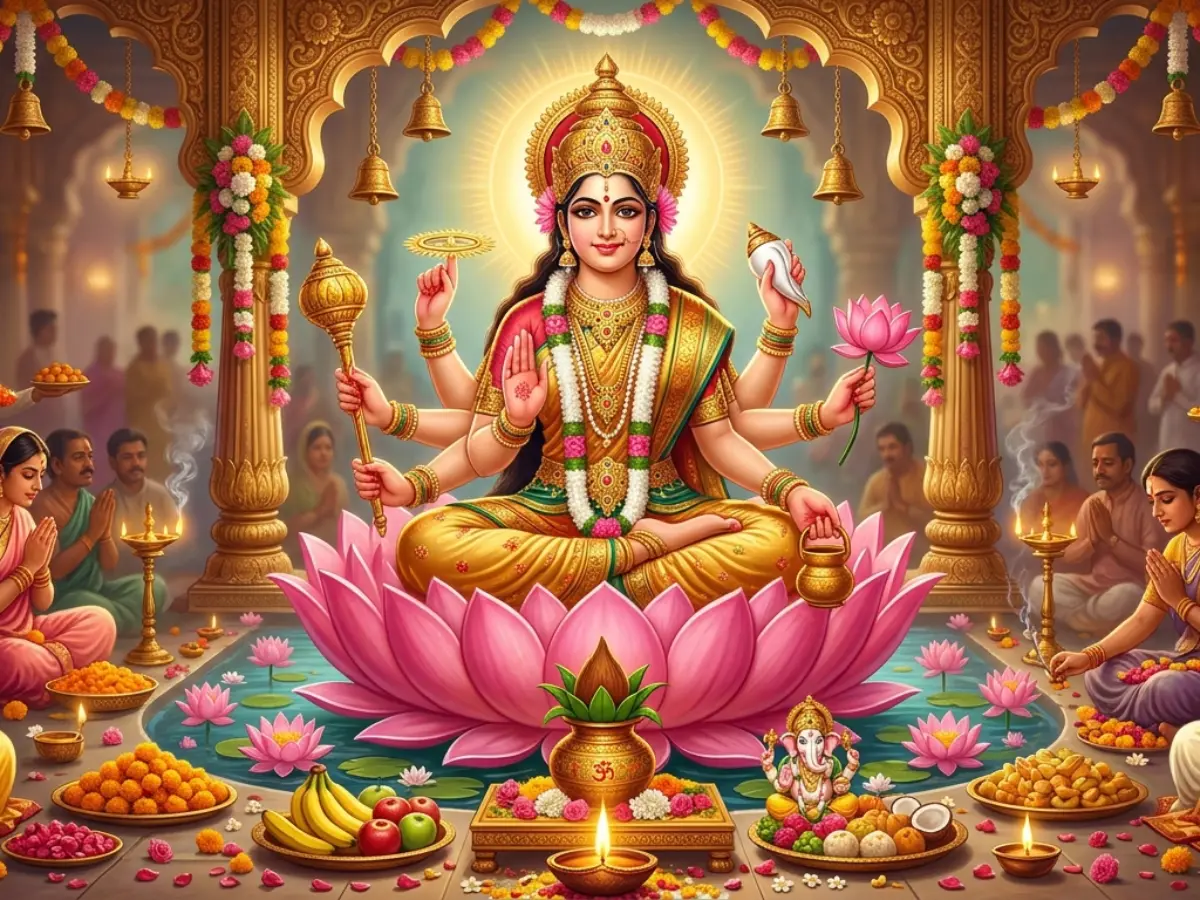
The ninth and final day of Navratri is devoted to Maa Siddhidatri, the ninth form of Navdurga. She is worshipped as the goddess of supernatural powers and spiritual wisdom. She is depicted sitting on a lotus and holding a conch (Shankha), a discus (Chakra), and a mace (Gada) in her hands. It is said that the deity is also known as Goddess Lakshmi, as she offers protection and fulfills the dreams, success, and wealth of her devotees.
)
)
)
)
)