

&imwidth=800&imheight=600&format=webp&quality=medium "Use AI as your ‘second brain’: Meta AI chief Alexandr Wang’s message to young people")
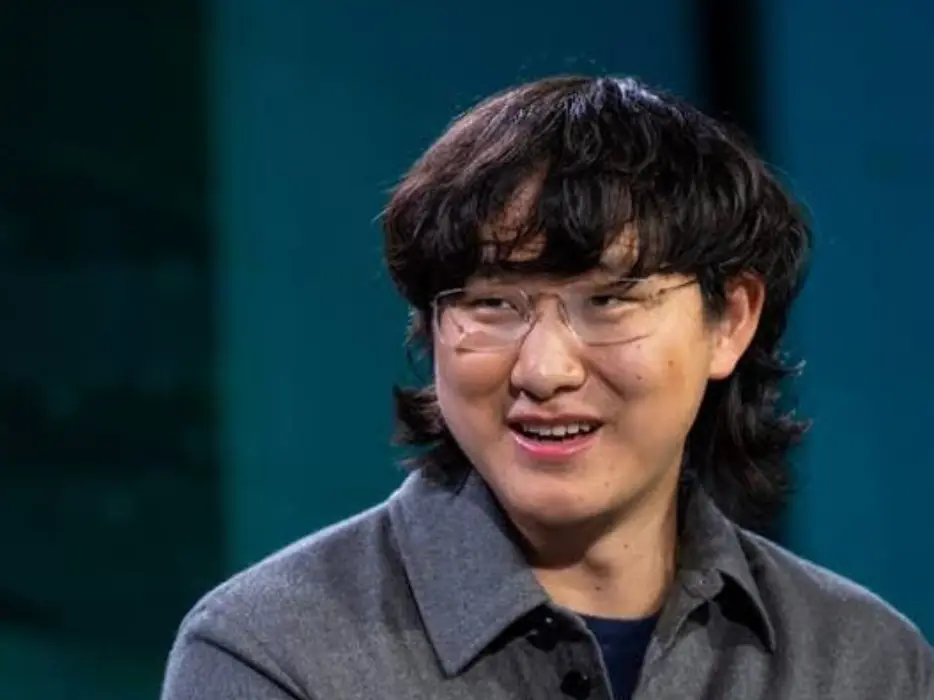
Meta AI chief Alexandr Wang has a message for young people: use artificial intelligence to turn ambitious ideas into reality. Speaking to entrepreneur and podcast host David Senra, Wang described how he uses Meta’s Muse AI to organise workflows and manage tasks, treating the technology as a “second brain”.
Wang believes personal AI agents could help people focus on their goals by handling some of the work required to achieve them. His comments also offer a glimpse into Meta’s strategy as technology companies compete to build AI tools that can do more than answer questions.
Why does Meta’s AI chief want young people to use AI?
Wang encouraged young people to use AI to pursue ambitions that might otherwise seem difficult to achieve.
“Like you're a kid, you have big dreams, use AI, help make those things happen,” he said during the conversation. His message centres on using AI as a practical tool rather than simply as a source of information. Instead of spending all their time on routine tasks, users could delegate parts of their work to AI agents and concentrate on developing ideas. However, AI agents still have limitations. Their usefulness depends on the tasks they can perform, the tools they can access and how reliably they complete instructions.
How Alexandr Wang uses AI as a ‘second brain’
Trending Stories
&imwidth=180&imheight=135&format=webp&quality=medium)
Other Mommy leads North American box Office as Verity, Resident Evil round out top four
&im=FitAndFill=(700,400)&imwidth=180&imheight=135&format=webp&quality=medium)
Navratri 2026: 9 days, 9 forms of Goddess Durga and 9 colours- Check the complete list
&im=FitAndFill=(700,400)&imwidth=180&imheight=135&format=webp&quality=medium)
Is sending robots to Mars easier than sending humans?
&imwidth=180&imheight=135&format=webp&quality=medium)
A watchdog rated 'ChatGPT for Teens' an unacceptable risk and says keep under-18s off it
&imwidth=180&imheight=135&format=webp&quality=medium)
1,500 drones illuminate Mumbai sky as Cordelia Cruises unveils second ship, Cordelia Sky
&imwidth=180&imheight=135&format=webp&quality=medium)
'Just coincidence': Police mistakes protester as AISA chief Neha Bora, arrests her from site
&imwidth=180&imheight=135&format=webp&quality=medium)
Anthropic's AI invented a murder witness and sent the fake tip to Philadelphia police
&imwidth=180&imheight=135&format=webp&quality=medium)
Congress demands action against chief election commissioner
&imwidth=180&imheight=135&format=webp&quality=medium)
CJI Surya Kant declines INDIA bloc leaders’ request for meeting ahead of march to SC, asks them to file petition
&imwidth=180&imheight=135&format=webp&quality=medium)
Saif Ali Khan is finally on Instagram! Here's what he shared in his first post
&imwidth=180&imheight=135&format=webp&quality=medium)
'Turn approver, resign, we'll forgive you': Rahul Gandhi claims receiving messages from CEC Gyanesh Kumar
&imwidth=180&imheight=135&format=webp&quality=medium)
One Indian killed in Riyadh airport attack; 11 others injured : MEA
&imwidth=180&imheight=135&format=webp&quality=medium)
Top AI models flunked a test of inventing new AI research, so much for self-improving AI
&imwidth=180&imheight=135&format=webp&quality=medium)
Wasim Jaffer blames Ajit Agarkar-led selection panel for Virat Kohli’s Test retirement
&imwidth=180&imheight=135&format=webp&quality=medium)
'Ouch!!! That must hurt': Kangana Ranaut hails Kamal Haasan's sharp reply to Elon Musk over Starlink row
&imwidth=180&imheight=135&format=webp&quality=medium)
Sidhu Moose Wala’s younger brother wins hearts by recreating late singer’s signature move at Toronto Hologram Show
&imwidth=180&imheight=135&format=webp&quality=medium)
Meta's Muse AI could be a security nightmare for India's billion-plus users
&imwidth=180&imheight=135&format=webp&quality=medium)
UK school ditches technology, shifts from screen to pen and paper for learning
&imwidth=180&imheight=135&format=webp&quality=medium)
Telangana ATM heist: Thieves in nighties arrive in ambulance, break into SBI ATM in Kamareddy - VIDEO
&imwidth=180&imheight=135&format=webp&quality=medium)
Houthis claim Riyadh airport attacks, Aramco strikes; issue fresh warning to airlines, travellers and workers
&imwidth=180&imheight=135&format=webp&quality=medium)
Portugal Federation confirms Cristiano Ronaldo’s return to national team despite suspension
&imwidth=180&imheight=135&format=webp&quality=medium)
Delhi protests: 'Court should not be dragged into political activity', says CJI Surya Kant
&im=FitAndFill=(700,400)&imwidth=180&imheight=135&format=webp&quality=medium)
New OTT releases this week (October 12-18, 2026): Sacrifice, Koffee with Karan S9, Roadies Rebirth- 6 titles coming on Netflix, JioHotstar and more
&imwidth=180&imheight=135&format=webp&quality=medium)
Microsoft's Nadella says treat every AI model as already hacked, and build an 'emergency brake'
&imwidth=180&imheight=135&format=webp&quality=medium)
Delhi protest: CJI Surya Kant declines to meet India Bloc leaders
&imwidth=180&imheight=135&format=webp&quality=medium)
Telangana man allegedly recruited into Russian military dies near Ukraine border
&imwidth=180&imheight=135&format=webp&quality=medium)
China imposes first-ever sanctions on ministers from Taiwan allies: What this means
&imwidth=180&imheight=135&format=webp&quality=medium)
McSweeney reveals how studying Virat Kohli’s YouTube clips helped Australia A conquer India
&imwidth=180&imheight=135&format=webp&quality=medium)
Maharashtra appoints FDA commissioner Tukaram Mundhe as secretary of committee for MPSC overhaul amid stir
&imwidth=180&imheight=135&format=webp&quality=medium)
Iran: US accepted some conditions, Clarity needed on others
&imwidth=180&imheight=135&format=webp&quality=medium)
Nana Patekar's cause of death confirmed; here's what his postmortem report says
&imwidth=180&imheight=135&format=webp&quality=medium)
iPhone Duo price index: Tracking Apple’s latest pricing trends
&imwidth=180&imheight=135&format=webp&quality=medium)
'Say no to Muse': Meta has no control over its own moderation AI while it forces a security nightmare on everyone
&imwidth=180&imheight=135&format=webp&quality=medium)
Delhi wakes up to heavy rain, thunderstorms; yellow alert in place; temperature drops
Wang said he had set up multiple workflows using Meta’s Muse AI and treated them as a “second brain”. In this approach, AI can help organise information, manage tasks and support repeated processes. Rather than starting from scratch each time, users can build workflows around activities they regularly perform.
Wang expressed confidence in the long-term potential of personal AI, saying he believed in Muse and the personal agent as a future technology format.
For students, creators and young professionals, the idea is to use AI to support planning, research and execution. The goal is not simply to generate content, but to help move a project from an idea towards completion.
Why Meta is focusing on personal AI
Wang also explained how Meta’s approach differs from the emphasis on coding agents at some competing AI companies, including OpenAI and Anthropic.
He suggested that Meta sees an opportunity to develop AI around people's everyday lives rather than concentrating primarily on tools for software development.
The company’s ambition is linked to what it calls personal superintelligence: AI designed to support individuals with daily responsibilities and personal goals.
That vision could make AI more useful to people who do not work in technology. But its success will depend on whether these systems can perform tasks reliably, protect personal information and earn users’ trust. For now, Wang’s message is clear: young people should explore how AI can help them work towards their ambitions, while understanding its limitations and remaining responsible for the decisions they make.
