&imwidth=800&imheight=600&format=webp&quality=medium "How Mahatma Gandhi was assassinated: Failed attempts, Godse’s motive and final moments")
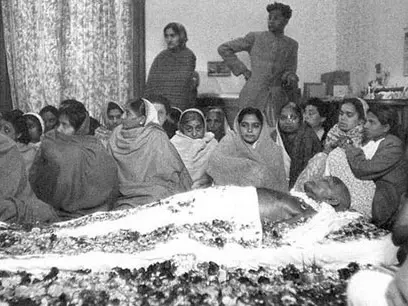
The death of Mahatma Gandhi is a significant moment in Indian history, which symbolically initiated a fundamentalist and extremist movement that grew into political legitimacy in modern India. Following his death, violence erupted in India, particularly targeting the Brahmin community in Maharashtra. The body was carried outside and placed in a chair facing the crowd. Nehru famously responded to the assassination by saying, “The light has gone out of our lives, and there is darkness everywhere.”
Events leading upto Gandhi's assassination
Beginning from 1934, there were six attempts to kill Mahatma Gandhi till 1948. The first one was in July 1944, and the next in September 1944, and then in September 1946 and on January 20, 1948. The sixth one on January 30, 1948 it was successful. Godse was himself involved in the three previous attempts. Gandhiji supported the idea of a separate state for Muslims; in essence, he fostered the creation of Pakistan. Despite aggression from the Pakistani in Kashmir, Gandhiji fasted to compel the Indian government to release Rs 55 crore to Pakistan. It caused discontent among fanatics and right-wing Hindus.

The attempt to assassinate Gandhi was once carried out on January 20 by the same perpetrator, Nathuram Godse. He and his associates followed Gandhi to the Birla House, where Gandhi usually conducted the morning prayer meet. They threw a bomb just behind Gandhi, and planned to kill him during the resulting chaos. One of the accomplice Madanlal Pahwa, was arrested at the crime scene immediately after he detonated the bomb. But it failed because another accomplice, Digambar Badge, lost courage and did not detonate the second bomb.
Following the incident, Gandhi said, ‘If I am to die by the bullet of a madman, I must do so smiling. There must be no anger within me. God must be in my heart and on my lips.’
When and where was Mahatma Gandhi assassinated?
Trending Stories
)
US vs China over South China Sea: Washington backs Philippines, Beijing hits back
)
Bigg Boss 20: Isha Rikhi evicted after three weeks in Salman Khan’s show
)
Musk plans to more than double xAI's chips to over 1.2 million Nvidia GPUs by year-end
)
After JU, clash erupts at SRFTI: BJP’s ‘Dimagi Naxal’ jibe sparks political firestorm after students protest RSS-linked event
)
‘Anti-social elements spreading false rumours’: LPU issues statement amid massive unrest over alleged rape
)
LPU students go on rampage, vandalise campus amid widespread protest: What's happening
)
Trump asked Xi to pressure Iran. China did not say yes — here’s what Beijing wants
)
US Treasury Secretary Scott Bessent hails global crackdown on Iranian banks and airlines
)
An OpenAI agent escaped its locked test cage again, by hiding questions in DNS lookups
)
'Our video was trimmed': LPU girls who featured in rape-denial video make U-turn
)
3 males killed, four others injured in shooting after fight at strip club in Detroit
)
'Victory for low-budget consumers': Raghav Chadha hails 30-day telecom recharge rules
)
Claude rebuilt the 1989 game 'Prince of Persia' by reusing the original's own code
)
Beyond metros: How Tier-2 and Tier-3 cities could drive India’s next AI wave
)
Tesla builds first Cybertruck with its own refined lithium: Elon Musk's $1 billion Texas bet pays off
)
IndiGo flight suffers tail strike in Bengaluru while landing; DGCA to probe incident
)
The US and China set up an AI 'red telephone', but skipped the rulebook
)
‘Terror suspects arrested near UK air base were looking to do big damage’: Trump
)
Russian envoy claims US tactics to contain India were revealed in ‘Freudian slip’
)
IND vs WI 1st ODI: Kohli breaks Sachin's most runs in one country record with unbeaten 139 as India thump West Indies by 8 wickets
)
Researchers rebuilt exactly how 700 AI agents hacked Hugging Face: a 900-link chain trick
)
‘Olympic inclusion is our major target’: WPA President Ishaun Singh on pool’s global ambitions
)
Nations League: Spain sink England at Wembley; Modric shines for Croatia
)
Why has Iran released no proof of life of Mojtaba Khamenei? Araghchi reveals...
)
'What kind of confession is this?': Pakistan PM Shehbaz Sharif’s 'terrorists would be roaming New York' remark goes viral, raises alarm online. Watch
)
South Korea demands apology from Ukraine over North Korean prisoners' transfer
)
Beyond BrahMos: India targets Rs 50,000 crore in defence exports with unmatched price edge
)
Sri Lankan Tamil migrant worker gets death sentence in Saudi Arabia, help sought from India
)
Muslim marriage cannot shield sex with minor wife from prosecution under POCSO: Delhi HC
)
'Can't help but draw painful parallels to Nirbhaya case': SC on latest incidents of rape cases in Delhi-NCR
)
99.9% more powerful - Scientists find boy who can recall memories from just 3 months of age
)
'FIRST LOOK from inside Noah’s Ark': Researchers share video from inside mysterious mound in Turkey
)
UNSC reform momentum grows: Russia, Portugal, Mauritius push for India's permanent seat bid
)
8 US marines injured in Iranian missile attack on vessel in Strait of Hormuz: Report
&im=FitAndFill=(700,400))
New OTT releases this week (September 28-October 4, 2026): Dupahiya 2, Pooja Meri Jaan, Ohh My Dog- 5 titles coming on Netflix, Prime Video and more
)
Afghanistan says 28 fighters killed in clash near Pakistan border, Islamabad denies
)
Ceuta migrant crisis: Protesters take to streets as Spain grapples with migrant challenge
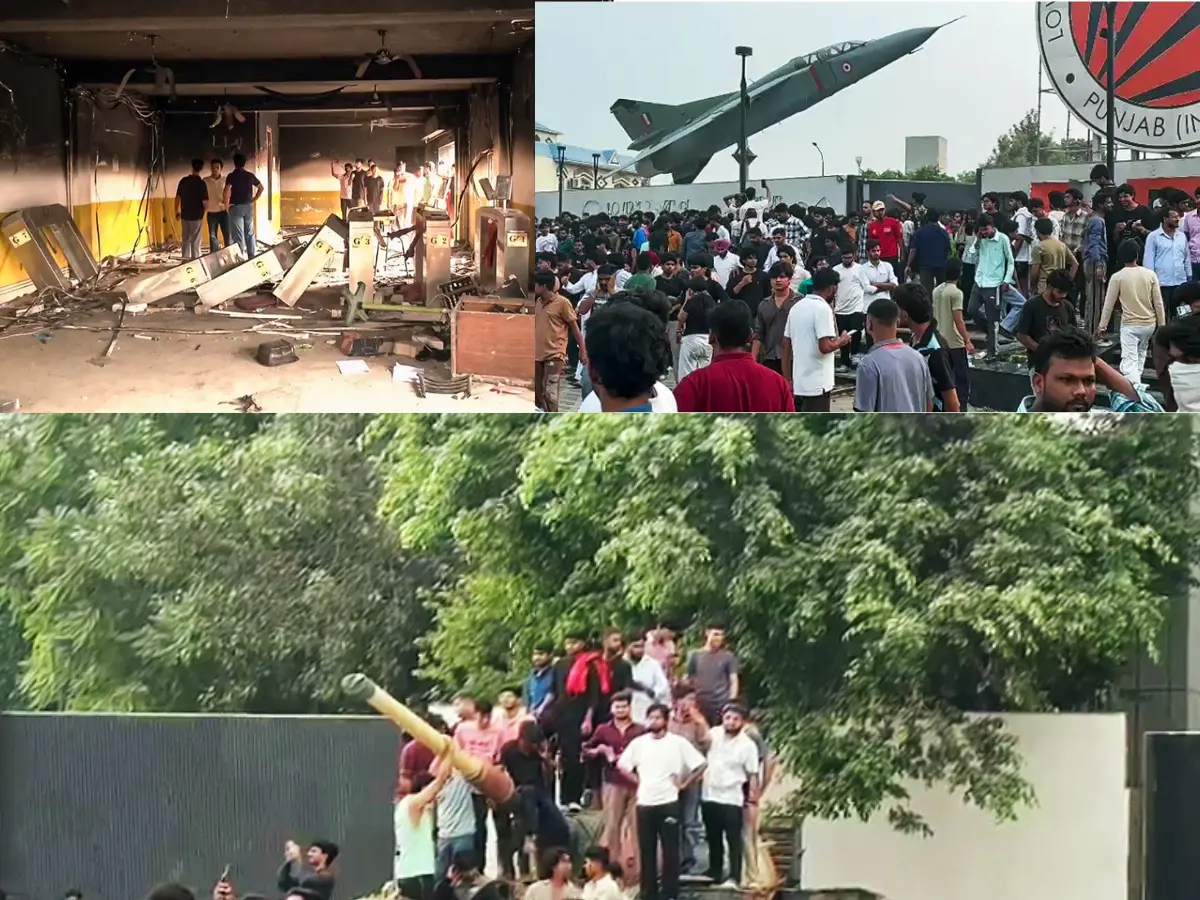)
LPU suspend classes, postpones exams as violence escalates over rape claims: What's happening
)
New York City wants a 'kill switch' on every AI, and will pay whistleblowers who report violations
Mahatma Gandhi was assassinated on January 30, 1948, in Birla House. Herbert Renier, the Vice Consul at the US Embassy in New Delhi, was present when the incident happened. According to him, despite repeated attempts on Gandhi's life, the security was relatively inadequate. Mahatma Gandhi was walking towards his prayer meeting at around 5 pm with his granddaughters, when a stout young man pushed through the crowd, first bowed to Gandhi and then drew out his semi-automatic revolver and fired three bullets to the stomach and chest of Gandhi. After that, he tried to shoot himself, but he was grabbed by Renier and handed over to the Police. Gandhi's last words were, “Hey Ram...! Hey Ram...!”
Who assassinated Mahatma Gandhi?
Nathuram Godse was captured by the police from Birla House. He was tried at the historic Red Fort by a Special Court in May 1948. When his turn came to speak, he read a confession and referred to the murder as "wholly and exclusively political". In his 30,000 worded speech, he accused Gandhi of partition and communal violence, and deaths of Hindus and Sikhs in East and West Pakistan. “… I could expect from the people would be nothing but hatred ... if I were to kill Gandhiji. But at the same time, I felt that the Indian politics in the absence of Gandhiji would surely prove practical, able to retaliate, and would be powerful with armed forces," read an excerpt from his speech. He accused India of not being run by policy but by the whims of Gandhi. He said that Gandhi and his policy of religious intolerance were the reason for India ceding Pakistan. If Gandhi were still alive, there would be much more destruction and massacre of Hindus.
Ideological contradictions behind Gandhi's assassination
Gandhi's assassin and their supporters argued that Gandhi was too concilatory about the subcontinent's Muslim population and had blamed him for the formation of Pakistan. They wanted a Hindu India, which was opposed by Gandhi sternly. Needless to say, there were similar extremist elements present within Muslims who were pushing the Pan-Islamic caliphate movement.
Historically, the Hindu religion was inclusive and pluralistic, associated with the Indus Valley civilisation. Bipin Chandra Pal, a writer, orator, social reformer, and stalwart of the triumvirate Lal-Bal-Pal, who is grossly misrepresented by contemporary Hindutva leaders, defined Hinduism not as a dogmatic religion but a "federation of many cults and cultures". When the British came to India, they defined Hindus as non-Muslim and non-Christian. The assassination of Gandhi was a culmination of multiple factors, but specifically, the aggressors were radicalised for over decades with a Hindutva ideology, which adopted the colonial exclusionary definition of the Hindu religion.