&imwidth=800&imheight=600&format=webp&quality=medium "Who was Lala Lajpat Rai? The firebrand freedom fighter who challenged British rule fearlessly")
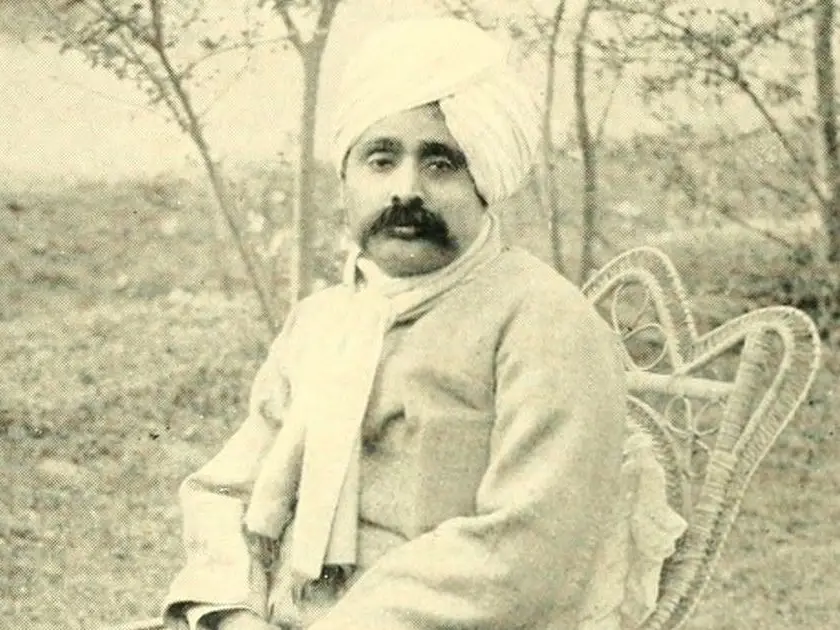
Lala Lajapat Rai, popularly known as the Punjab Kesari, was one of the legendary triumvirate- Lal-Bal-Pal. He was one of the most fearless leaders alongside Bal Gangadhar Tilak and Bipin Chandra Pal, who formed a radical, firebrand Indian nationalism which confronted British colonialism head-on. He dedicated his life to the selfless service of the nation.
Lala Lajpat Rai was born in an educated Aggarwal family of Punjab. He was drawn to a creative revivalist movement in India Arya Samaj, which tried to revive the Vedic teachings with the slogan "Go back to the Vedas". They were deeply disturbed by the inadequacy of the traditional “Moderate” politics, which they call “political mendicancy”. Lala Lajpat Rai founded the Dayanand Anglo-Vedicschool in Lahore, which later became the centre of the nationalist thought and cultural and social reform. According to historian RC Mazumdar, it was “the precursor of the Civil Disobedience Movement of Mahatma Gandhi.”
Challenging the British Authority

Lala Lajpat Rai rose to prominence during the anti-partition movement in Bengal of 1905. He then became a vocal critic of the British constitutional reform. To punish his growing involvement with the freedom movement, he was given the toughest prison sentence in Mandalay (now Myanmar) in 1907 without trial. In 1920, he was elected the President of the Indian National Congress and was later elected as the President of the All India Trade Union Congress.
Later Life of Lala Lajpat Rai
Trending Stories
)
Why asking questions could be more important than memorising answers
)
Osama Bin Laden ‘planned’ to target India, CIA reveals dozens of declassified documents
)
'Iran won't surrender': Pezeshkian sends blunt message to US while attending BRICS Summit in India
)
BRICS Summit 2026: Global leaders of BRICS nations attend main open session
)
Celine Dion makes emotional stage comeback after six years: 'I'm so delighted to see you'
)
PM Modi and China's Xi offered to help resolve Russia-Ukraine war: Kremlin
)
Why dehydration is the hidden cause of travel fatigue on long flights
&im=FitAndFill=(700,400))
Meet top 5 batters fastest to 3000 runs in T20Is
)
Top 5 places to visit in Goa beyond its famous beaches
)
'He is popular...': Malaysian PM Anwar Ibrahim's praise for PM Modi during bilateral meeting | WATCH
)
BRICS Summit 2026: PM Modi, Xi reach key consensus on ties, China to assume BRICS chairmanship in 2027
)
BRICS Summit 2026: Consensus on joint declaration, diplomatic win for India
)
Trump says Canada eager to reach a deal, it could come ‘fairly soon’ if Ottawa treats US farmers better
)
‘Partners, not rivals’: Xi outlines four point plan for stronger India-China ties
&im=FitAndFill=(700,400))
Why Chinese PL-15 air-to-air missiles use dual-pulse motors compared to European interceptors
)
Could staying indoors all day affect your health?
)
BRICS Summit 2026: PM Modi addresses Day 2 of 18th BRICS summit
)
Who is the smiling man beside Modi, Putin and Xi at BRICS Summit 2026?
)
800 million years old - Scientists discover 'fingerprints' of supercontinent Gondwana in ancient rocks
)
Why going digital does not always mean becoming more efficient
&im=FitAndFill=(700,400))
Why do air defence missiles explode near their target instead of hitting it?
)
War is making Russia stronger? How Ukraine is shaping Moscow’s next generation of weapons
)
Migration protests return to Portsmouth as rival demonstrations face off
)
From severe mobility problems to recovery: Madhuri the elephant’s journey of wildlife care
)
BRICS Summit day 1: New Delhi declaration adopted with full consensus, big diplomatic win for India
)
Did Iran President Pezeshkian touch feet of Hindu spiritual leader at Delhi event as shown in viral video?
)
9-year-old Chennai prodigy clears Cambridge IGCSE grade 10 exams
)
Why does your body need time to adjust after a long journey?
)
BRICS Summit 2026: PM Modi to hold bilateral with leaders of seven countries
)
Ramanathaswamy temple takes centre stage as PM Modi welcomes world leaders at BRICS
)
Houthis launch cross-border strike on Saudi Arabia as Yemen war escalates
)
BRICS Summit 2026: Chinese president Xi Jinping departs from New Delhi after attending BRICS summit
)
Why does your skin need protection from UV rays?
)
How does the loss of forests affect the way wildlife lives and moves?
)
IND vs AFG, 1st T20I: When and where to watch live streaming in India?
)
Why do wild animals need quiet places to survive?
)
Bigg Boss 20: Qazi Touqeer gets a special ‘rockstar’ moment from Salman Khan
)
Humans may lose control of AI: Anthropic CEO calls for slowdown, Altman, Musk back him
After the failure of the Non-Cooperation movement and the communal violence that resulted in India, specifically the Kohat riot. Rai started to be actively involved in the Hindu Mahasabha. He was already part of the pressure group that supported the cause of Hindu nationalism. Rai's politics became more complex compared to the simplistic Savarkarite Hindutva. Historian Vanya Vaidehi Bhargav defines Rai’s politics as “the complex reasoning that can undergird an intellectual position which can imagine a ‘communal’ politics as an instrument to establish a ‘secular’ Indian nation, however risky this may be”. It was more in reaction to the Pan-Islam Caliphate movement, both of which saw Modern India not as an amalgam of two civilisations, but a failure of itself. However, in contrast to Savarkarite Hindutva, Rai was a pluralist who advocated for social reform and worked to protect the political and economic rights of Hindu from colonial and communal threats.
While leading a movement on October 30, 1928, in Lahore against the Simon Commission, the protesters were met with a violent crackdown, during which he was fatally injured. Despite being injured, he addressed a crowd that evening, famously stating: "I declare that the blows struck at me today will be the last nails in the coffin of British rule in India". He succumbed to the injuries 18 days later on November 17, 1928. However, his death radicalised the likes of Bhagat Singh, Rajguru, and Sukhdev and set off a chain of events, which led to the assassination of Assistant Superintendent John P. Saunders and the execution of Bhagat Singh, Rajguru, and Sukhdev.