Kashmir’s handicraft industry hit hard as West Asia tensions cancel global exhibitions

&imwidth=600&imheight=450&format=webp&quality=medium "Kashmir’s handicraft industry hit hard as West Asia tensions cancel global exhibitions")
Kashmir’s handicraft industry hit hard as West Asia tensions cancel global exhibitions
During 2024–25, Kashmir’s export figures stood at ₹2,607 million, reflecting a continued decline from ₹3,570 million recorded in 2022–23. According to official data, nearly 80,000 people in the region are engaged in carpet manufacturing.
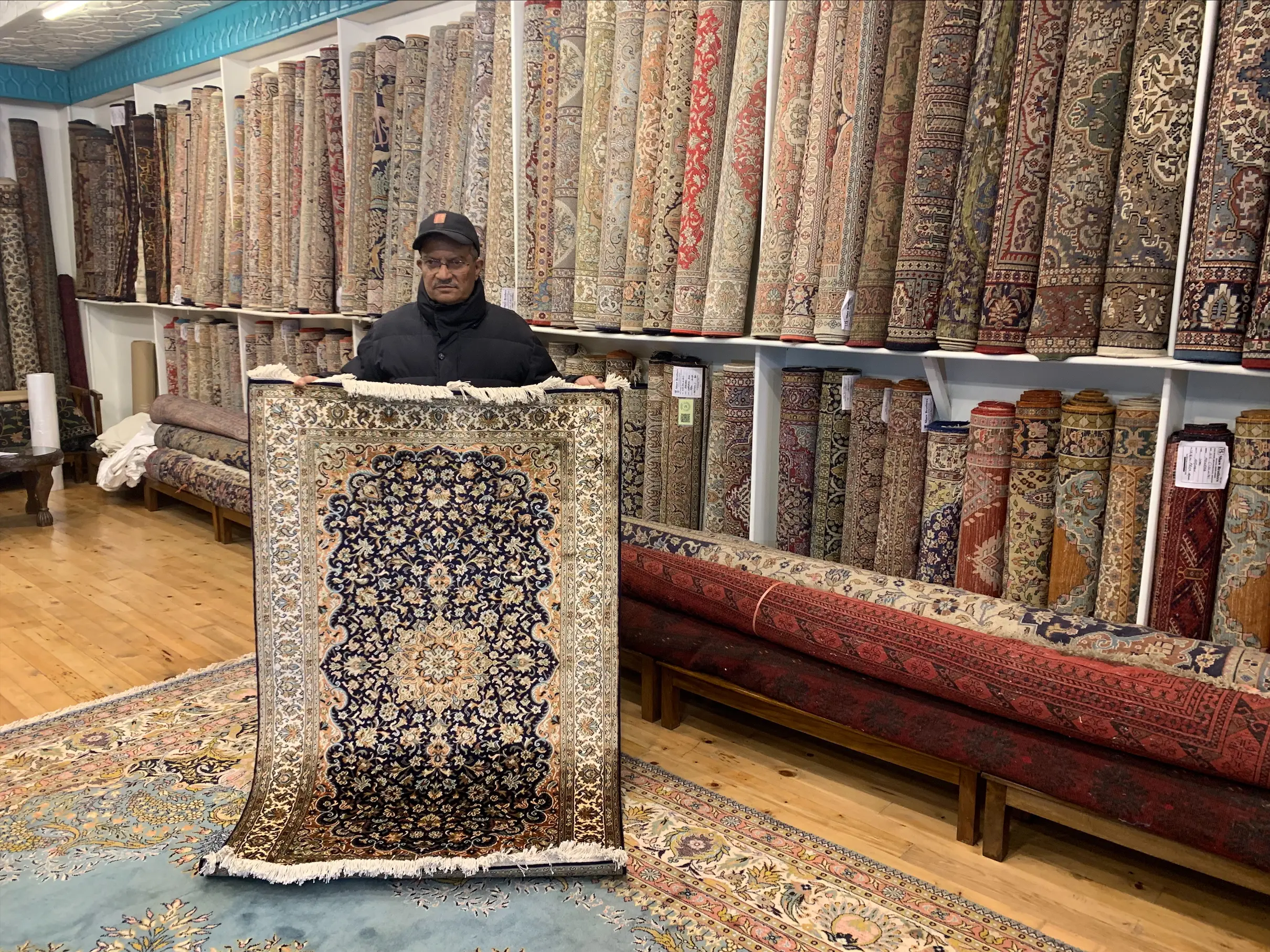
The ongoing conflict in the Middle East involving Iran, Israel, and the United States is having far-reaching global repercussions, and the Kashmir Valley is not immune to its impact. The region’s handicraft industry, renowned for its exquisite silk carpets and Pashmina products, is facing significant setbacks. In particular, three major international exhibitions scheduled to be held in China, the UAE, and Europe have been either cancelled or postponed due to the escalating tensions. These disruptions have dealt a substantial blow to artisans and traders, severely affecting business opportunities and export prospects.
''In view of the prevailing geopolitical tensions and ongoing conflict, the event organisers have informed the Council of the postponement of key international events. The Copenhagen Lifestyle Expo, originally scheduled from 22–26 April 2026 at FORUM in Copenhagen, Denmark, is now likely to be held in August 2026. Similarly, the Qinghai International Carpet Exhibition, which was to take place from 10–14 June 2026 in Qinghai, China, is expected to be rescheduled to July 2026,'' said an order copy of The Carpet Export Promotion Council (CEPC) of the Ministry of Textiles.
''The ongoing West Asia conflict has significantly impacted Kashmir, particularly the handicraft industry. We had planned three major exhibitions in China, the UAE, and Denmark but all have been postponed. Around 600 orders have already been cancelled. This period is usually our peak export season, when Kashmiri carpets are shipped across the globe. Unfortunately, the situation in West Asia has disrupted everything, forcing these exhibitions to be called off. Europe remains one of our largest markets, and a substantial portion of our carpets is sold internationally rather than domestically. We are hopeful for a swift resolution to the conflict. Meanwhile, we have reached out to the authorities, from the Chamber of Commerce to the Ministry of Textiles, to ensure that our exporters and the artisans who craft these carpets are protected from further impact.” said Tariq Ghani, President, Chamber of Commerce.
During 2024–25, Kashmir’s export figures stood at ₹2,607 million, reflecting a continued decline from ₹3,570 million recorded in 2022–23. According to official data, nearly 80,000 people in the region are engaged in carpet manufacturing. Over the long term, however, the sector has witnessed substantial growth, with production and exports rising from ₹845.5 million in 1990–91 to a peak of ₹8,215 million in 2015–16.
Trending Stories
)
)
)
)
)
)
)
)
)
)
)
)
)
)
)
)
)
)
&im=FitAndFill=(700,400))
)
)
)
&im=FitAndFill=(700,400))
)
&im=FitAndFill=(700,400))
&im=FitAndFill=(700,400))
)
“The war has had a massive impact on Kashmir’s handicraft industry, which was already under strain after the Pahalgam attack. There have been widespread cancellations of exhibitions, and currently, we are relying mostly on local tourists as buyers, with virtually no significant orders coming in. The situation has severely affected the entire sector, and everyone associated with it is bearing the brunt. A large number of orders have been cancelled not only those linked to the Kashmir Government Arts Emporium, but also those handled by private dealers, the full extent of which will become clearer in the coming days. Additionally, several of our export-related exhibitions have also been cancelled, further deepening the crisis.” said Farooq Ahmad, Carpet Dealer.
If the West Asia conflict is not resolved soon, its impact will further weigh heavily on Kashmir’s handicraft industry. Traders, artisans, and everyone associated with this sector will be the worst affected.