India builds its first homegrown satellite battery; Nirmala Sitharaman celebrates breakthrough

&imwidth=600&imheight=450&format=webp&quality=medium "India builds its first homegrown satellite battery; Nirmala Sitharaman celebrates breakthrough")
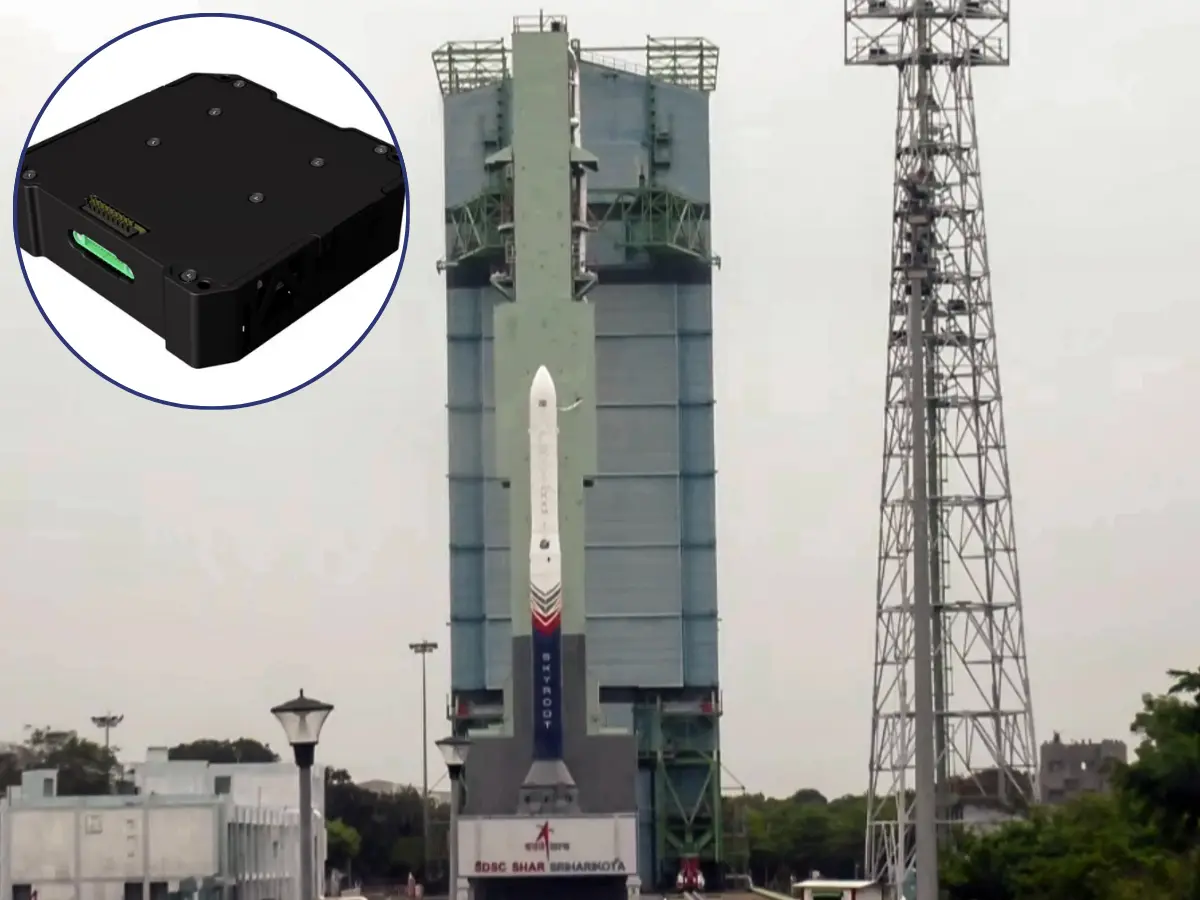
India no longer needs to import this key satellite component, says Nirmala Sitharaman Photograph: (Combination created using images from ANI and TakeMe2Space)
Finance Minister Nirmala Sitharaman has hailed the development of PowerBank-50, described as India's first indigenously developed satellite battery by space startup TakeMe2Space. The breakthrough could reduce dependence on expensive imported battery systems.
Finance Minister Nirmala Sitharaman on Friday (Jul 31) praised Hyderabad-based space startup TakeMe2Space after its PowerBank-50 became India's first indigenously developed satellite battery to earn the coveted 'flight heritage' status.
Sharing the development on X, Sitharaman wrote: "Brilliant!" while highlighting that Indian satellite manufacturers had long depended on imported battery systems. "Until now, Indian satellite builders mostly had to import this critical component at high cost and long waiting times."
The recognition comes after the battery pack completed its maiden mission aboard Skyroot Aerospace's Vikram-1 rocket during Mission Aagaman, which was launched on July 18.
The mission marked another milestone for India's private space sector as Vikram-1 became the first privately developed Indian rocket to reach orbit, making India only the third country, after the United States and China, where a private company has achieved orbital launch capability.
Also read | India's GPS has a satellite problem: Government says NavIC no longer working. All you need to know
What 'flight heritage' means
Onboard Vikram-1, a single PowerBank-50 unit supplied power to Cosmoserve Space's experimental payload mounted on the rocket's Orbital Adjustment Module (OAM) at an altitude of 450 km. According to the company, the battery performed as designed despite enduring launch vibrations and the harsh conditions of space, including vacuum, radiation and extreme temperature fluctuations.
The successful mission gives the battery "flight heritage", a key certification in the satellite industry that proves a component has operated successfully in space.
Trending Stories
)
)
)
)
)
)
&im=FitAndFill=(700,400))
)
)
)
)
)
)
)
)
)
)
)
)
)
)
)
)
)
&im=FitAndFill=(700,400))
)
)
)
"Every satellite mission lives or dies by its power system, which is why nobody wants to be the first to fly a new battery," said Ronak Kumar Samantray, founder and CEO of TakeMe2Space.
"Flying on the first private Indian rocket to reach orbit, and performing flawlessly at 450 km, is the strongest validation a product can earn. PowerBank-50 is now space proven, made in India, and ready for every satellite builder in the world."
Why the milestone matters
In the satellite industry, components without flight heritage often struggle to find customers because satellite operators, launch providers and insurers prefer systems that have already been tested in orbit.
The hurdle is especially high for batteries, which must survive violent launch conditions before reliably powering spacecraft through repeated cycles of sunlight and darkness in space.
TakeMe2Space said the mission validated the battery's high-energy-density lithium-ion cells, intelligent battery management system, onboard heaters and aluminium flight enclosure, elevating it from a ground-qualified product to one proven in orbit.
Cheaper satellites, wider benefits
The company says PowerBank-50 stores more than 50 watt-hours of energy in a unit weighing just 380 grams, roughly the size of a paperback book. It can power everything from CubeSats to microsatellites, offers an operational life of up to five years in low-Earth orbit, and is available off the shelf for ₹1,04,900, significantly cheaper than comparable imported battery packs.
Until now, Indian satellite developers largely relied on imported battery systems that were expensive and often involved long procurement timelines. Notably, an affordable, flight-proven battery made in India could lower the cost of satellite missions for startups, universities and research institutions, ultimately enabling more satellites for applications such as weather forecasting, disaster warnings, agriculture, navigation, communications and Earth observation.

