
&imwidth=800&imheight=600&format=webp&quality=medium "India's GPS has a satellite problem: Government says NavIC no longer working. All you need to know")
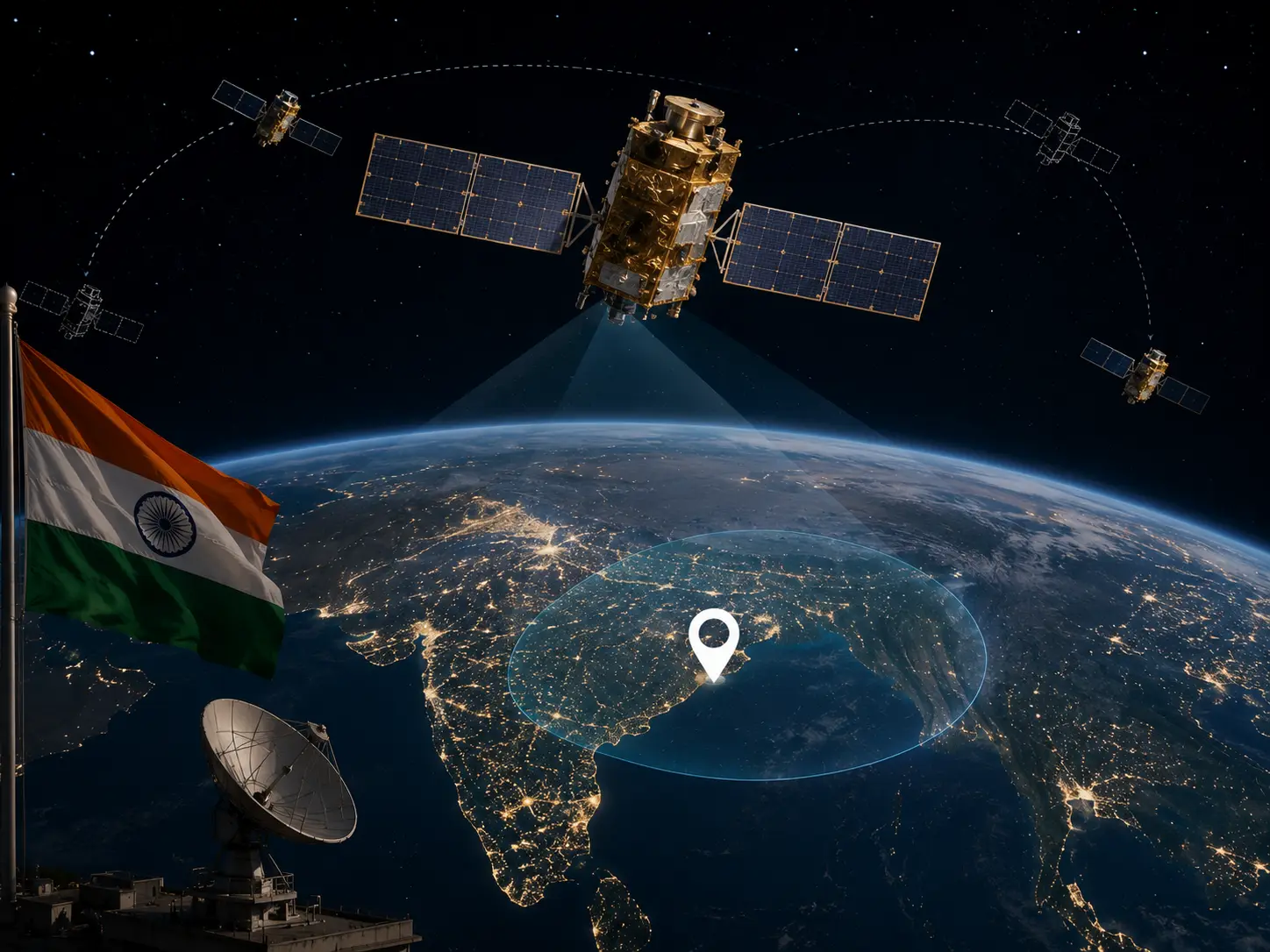
India's indigenous satellite navigation system NavIC is currently unable to provide standalone positioning services, the central government told the Parliament on Wednesday. This is because the number of operational navigation satellites has now fallen below the minimum required.
In a written reply in the Lok Sabha, Union Minister of State for Space Dr Jitendra Singh said only three satellites in the NavIC constellation are presently capable of providing Positioning, Navigation and Timing (PNT) services.
The operational satellites are IRNSS-1B, IRNSS-1I and NVS-01, following the completion of the 10-year mission life of IRNSS-1F.

Why isn't NAVIC working for standalone navigation now?
Standalone positioning allows a navigation system to determine a user's location using only its own satellites, without relying on other global satellite navigation systems such as GPS.
Trending Stories
)
Did India risk its US trade deal despite softer stance at BRICS?
)
Pakistan puts Pak Rs 70 lakh bounty on UN terrorist Masood Azhar; move draws skepticism in Delhi
)
First naval drone battle? Ukraine says Sargan 3000 sank Russian unmanned boat
)
Practical Magic 2 breaks Spidey spell over North American box office
)
'Huge destructive power': North Korea calls its latest missile launches 'live-fire drill' even as US dismisses 'immediate threat'
)
‘Let’s go’: Newly declassified videos show dramatic rescue of US Air Force officers downed in Iran
)
Delhi’s balancing act: BRICS serves as a stage for West Asia diplomacy
&im=FitAndFill=(700,400))
Why European Meteor missiles use ramjet engines compared to standard US solid rockets
)
‘India did extremely well’: South African President Cyril Ramaphosa praises BRICS leadership
)
Iran, India agree to deepen humanitarian and political ties, President Pezeshkian says
)
‘Want to reset ties with India, have engagement based on mutual interests,’ says Bangladesh minister
)
Trump says Canada eager to reach a deal, it could come ‘fairly soon’ if Ottawa treats US farmers better
)
Turkish Airlines plane flies through a storm three times, triggering severe turbulence
&im=FitAndFill=(700,400))
Why Chinese PL-15 air-to-air missiles use dual-pulse motors compared to European interceptors
)
China thinned Himalayan troop presence in 2025, India defence report says; terms border situation 'stable'
)
800 million years old - Scientists discover 'fingerprints' of supercontinent Gondwana in ancient rocks
)
Russia proposes to build 360 kmph Ivolga FG trains in India: What happened on sidelines of BRICS
)
Israeli minister calls to strip Gaza film directors of citizenship
)
China discovers vast gold and silver 'mine' in the Pacific with unheard-of deposits
)
Russian drone hits Warsaw-bound train near Polish border, Zelensky accuses Moscow of ‘deliberate’ targeting
)
War is making Russia stronger? How Ukraine is shaping Moscow’s next generation of weapons
)
Plane carrying prominent figure crashes at Libya’s Misrata airport: Report
)
Veteran Bollywood actress Nafisa Ali shares health update as Stage 4 cancer progresses, starts targeted therapy
)
NEET-UG to move to computer-based test soon, NTA DG says ‘CBT is the future’
)
Woman removes all her clothes on American Airlines flight, performs 'indecent acts'; arrested
)
Liam Neeson sparks romance rumours after holding hands with Stella Stocker at TIFF 2026
&im=FitAndFill=(700,400))
New OTT releases this week (September 14-20, 2026): Lust Stories 3, Waiting Hai, Irumudi- 5 new titles coming on Netflix, Prime Video and more
)
Indian importers urge Bangladesh to lift export ban on 'Hilsa' fish ahead of Durga Puja
)
Video of Pakistani lawmaker struggling to read English tribute to Jinnah goes viral - WATCH
)
Did China give Iran intel before US base strike that killed 3 troops? Trump says, 'You’re right...'
)
Meghan Markle shares first glimpse of family life with Prince Harry and children in UK
)
Crude oil prices jump more than $107 per barrel following Houthi attacks on Saudi
)
Women's Asia Cup 2026: India denied trophy once again despite winning the title
)
Humans may lose control of AI: Anthropic CEO calls for slowdown, Altman, Musk back him
However, NavIC currently lacks the minimum number of satellites required to provide that service.
"To provide basic positioning service, a minimum of four operational satellites are required in orbit. Hence, the NavIC constellation cannot provide standalone positioning service; however, timing service is functional," Singh said.
While location services have been affected, NavIC's timing service continues to operate normally, according to the government.
No operational risk, says Centre
Despite the reduced constellation, the government said users are not facing operational vulnerabilities because NavIC is now used alongside other global satellite navigation systems in a multi-constellation Global Navigation Satellite System (GNSS) environment.
This allows receivers to combine signals from GPS, Galileo, GLONASS and NavIC for navigation.
The government also said the Armed Forces use multi-constellation GNSS, including NavIC, to meet operational requirements.
So, is NAVIC useless now?
No, to restore the constellation, ISRO has lined up a series of replacement satellites. The minister revealed that NVS-03 is ready for launch, while NVS-04 and NVS-05 are in advanced stages of development.
The upcoming missions are expected to restore NavIC's standalone navigation capability and strengthen India's second-generation regional navigation network.
ISRO's recent setbacks
The latest update comes as ISRO works to expand and modernise NavIC after facing setbacks in recent years. The space agency successfully launched NVS-01 in 2023 as part of the second-generation NavIC constellation.
However, the subsequent NVS-02 mission encountered propulsion-related issues that prevented the satellite from reaching its intended operational orbit.
Once the planned satellites are launched and commissioned, ISRO expects to rebuild the constellation and improve the reliability of NavIC, which provides positioning, navigation and precise timing services across India and regions extending roughly 1,500 kilometres beyond its borders.

