Historic Raghunath Mandir reopens in Srinagar after 36 Years, rekindling hope and communal harmony

&imwidth=600&imheight=450&format=webp&quality=medium "Historic Raghunath Mandir reopens in Srinagar after 36 Years, rekindling hope and communal harmony")
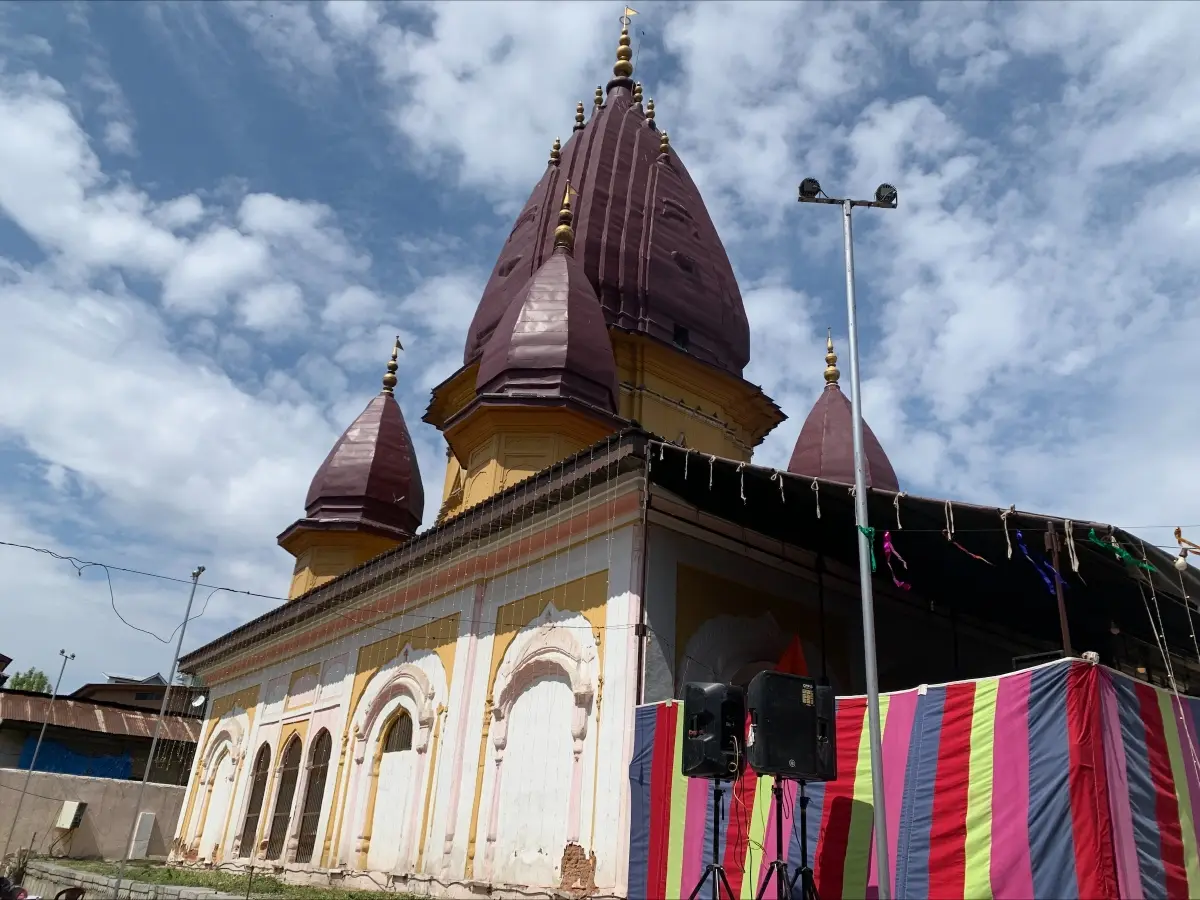
Raghunath Mandir, Srinagar Photograph: (WION)
The Raghunath Mandir Committee marked the occasion with a grand celebration and special Puja on the occasion of Ram Navami.
After a gap of more than thirty-six years , the historic Raghunath Mandir in downtown Srinagar has reopened, marking a moment of cultural and emotional significance for the region.
Located in the Habba Kadal area of Srinagar City , the temple was built in 1857and is among the oldest in the Kashmir Valley. Its reopening comes 36 years after it fell silent due to the mass exodus of Kashmiri Pandits and the start of Insurgency in the Valley. The opening symbolizes revival of heritage and communal harmony.
The Raghunath Mandir Committee marked the occasion with a grand celebration and special Puja on the occasion of Ram Navami. Organisers described the event as an expression of gratitude, adding that installation of the temple idols is planned in the coming months.
'“This temple was built by Maharaja Gulab Singh in 1857 and is one of the oldest in the area, modelled after the Raghunath Temple in Jammu. Ram Navami was once celebrated here with great fervour, but for the past 36 years, we could not hold any celebrations as the temple had fallen into a dilapidated state. Today, after its renovation, we are grateful that the administration heard our concerns and made this reopening possible. We began with prayers and hope this sends a larger message that if this temple can reopen after decades, others can be revived as well, '' said Bharat Raina, President, Raghunath Mandir Committee.
He further added, ''This occasion also reflects the spirit of brotherhood between communities. We have been here for the past four days, and our Muslim neighbours have stood by us throughout. It feels like the right time for the return of Kashmiri Pandits to the Valley. Above all, we seek peace.”
The temple has been reconstructed under the government’s Smart City initiative, restoring its structure while preserving its historical essence.
Trending Stories
)
)
)
)
)
)
&im=FitAndFill=(700,400))
)
)
)
)
)
)
)
)
)
)
)
)
)
)
)
)
)
)
)
)
)
)
)
)
)
)
&im=FitAndFill=(700,400))
)
&im=FitAndFill=(700,400))
)
)
)
)
)
)
Members of the Kashmiri Pandit community travelled from different parts of the country to attend the opening. They were joined in large numbers by members of the local Muslim community, reflecting a shared sense of belonging and unity.
“If you look at the history of this area, especially as it was 36 years ago, it was full of life with people from both communities living side by side. Processions of Kashmiri Pandits would pass through these streets, and we would stand along the roads to welcome them. The banks of the Jhelum River were a shared space where we met every morning. There was such deep brotherhood that no one could distinguish who was a Pandit and who was a Muslim. No one should misunderstand; there is no divide in our society. We have always lived together, and we will continue to do so.” said Abdul Rashid, A Local.
Many people at the event grew emotional as they recalled life in the area decades ago, when Hindus and Muslims celebrated festivals together. The banks of the Jhelum River, they said, once served as a common space for such shared festivities.
The reopening of the temple is being seen not only as the revival of a religious site but also as a hopeful reminder of Kashmir’s long-standing tradition of communal harmony.
