From cinema to care: Filmmaker Medha Jaishankar champions AI health tech for marginalised women

&imwidth=600&imheight=450&format=webp&quality=medium "From cinema to care: Filmmaker Medha Jaishankar champions AI health tech for marginalised women")
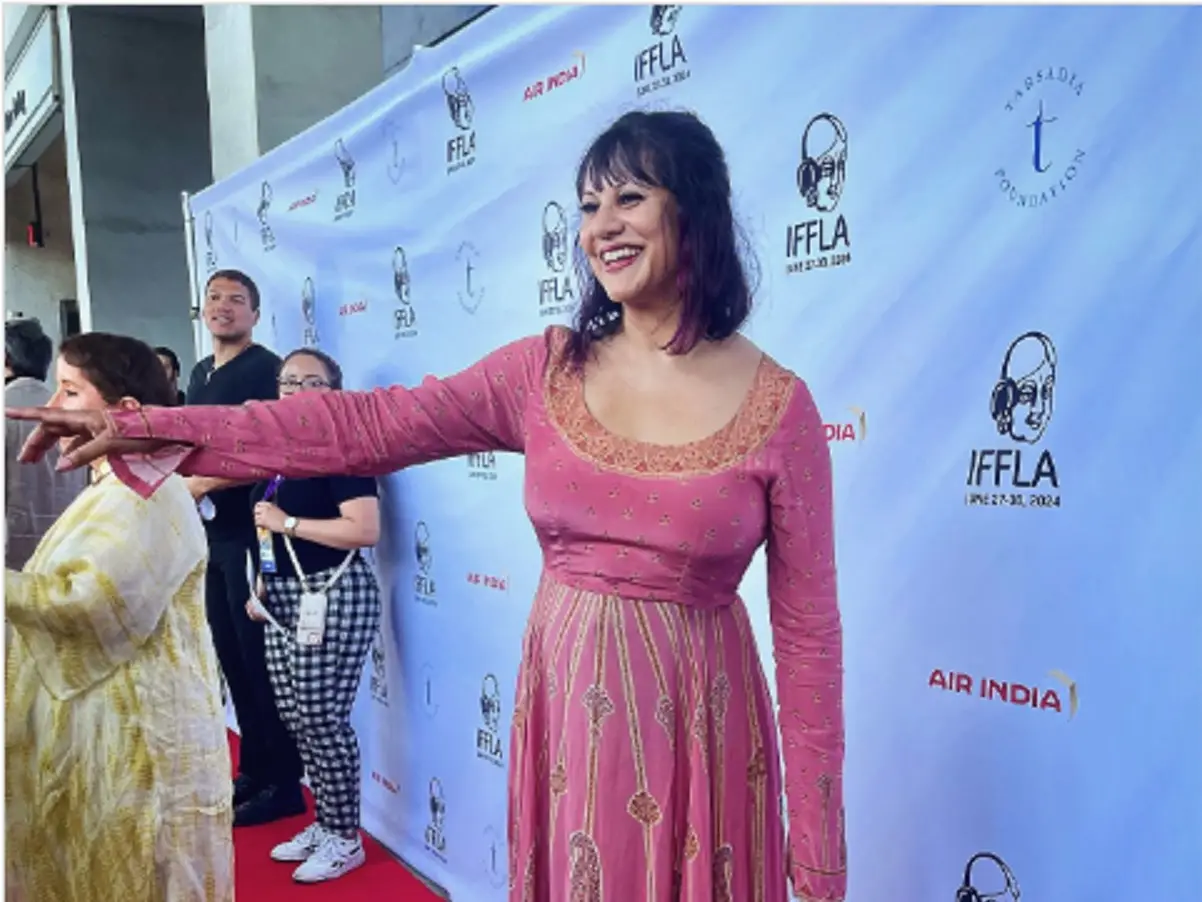
Filmmaker Medha Jaishankar says real change comes when women’s lives are put truly in centre.
Aaroogya prepares to expand beyond India into other low- and middle-income countries with stretched women’s health services. The foundation operates with a cross-continental team in California and India, adapting its tools to local public health systems.
New Delhi: Medha Jaishankar, a Los Angeles-based filmmaker known for producing features like ‘He Went That Way’ (starring Jacob Elordi and Zachary Quinto) and ‘Please Don’t Feed the Children’, has joined the advisory board of Aaroogya AI Foundation. The move coincides with the Indian organisation’s plans to take its AI-powered women’s health platform international.
A member of the Pacific Council on International Policy, Medha brings expertise in storytelling, international advocacy, and emerging technologies. Her personal connection to women’s health issues, including family experience with breast cancer, drew her to the cause.
The Datta sisters, Priyanjali and Shyanjali, founded (and now lead) the Aaroogya AI Foundation after their own family’s health struggles. Their mother was diagnosed with Essential Thrombocytosis, a rare blood disorder, and Shyanjali was born with a rare condition that required multiple surgeries. These experiences inspired them to create accessible, compassionate healthcare solutions. The name “Aaroogya” comes from Sanskrit for holistic well-being.
Priyanjali, a former medical student turned tech entrepreneur and product growth leader, co-founded the initiative. Shyanjali serves as CEO and has been instrumental in scaling operations. The sisters hail from Meghalaya and started the work in 2017, well before AI became mainstream. Aaroogya has built AAHA, a voice-based multilingual AI agent that lets community health workers screen women through natural conversation, triage symptoms, and flag serious conditions like breast cancer, PCOS, or anaemia.
So far, it has screened over 137,000 women, trained more than 4,000 health workers, contributed to 23,740 early diagnoses and boosted treatment adherence to 87%. Its MyHealthline platform supports frontline workers in low-resource areas, delivering proactive care that the organisation says generates three times the social return on investment.
Medha Jaishankar praised the Datta sisters for building a system that truly “sees” women. She said, “They turned their personal pain into a platform that is saving lives at scale. I joined Aaroogya’s board because this work deserves to reach every corner of the world, and I know what it is to need a system that actually sees you.”
Trending Stories
)
)
)
)
)
)
)
)
)
)
)
)
)
)
)
)
)
)
)
)
)
)
)
)
&im=FitAndFill=(700,400))
)
)
)
)
)
)
&im=FitAndFill=(700,400))
)
)
&im=FitAndFill=(700,400))
)
)
Explaining further, she said, “Women’s health deserves to be at the centre, everywhere. Aaroogya is proof that when you truly centre women’s lives, real change follows. I am honoured to help carry that message forward.”
Aaroogya prepares to expand beyond India into other low- and middle-income countries with stretched women’s health services. The foundation operates with a cross-continental team in California and India, adapting its tools to local public health systems while emphasising ethics, empathy, and privacy.
Women’s health remains a significant challenge in many parts of the world, with late diagnoses and limited access to screening contributing to high mortality rates in low- and middle-income countries. Supporters see AI tools like Aaroogya’s as a potential way to bridge gaps where doctors and specialists are scarce.