‘Bail is rule, jail is exception’ even in UAPA cases: SC grants bail to narco-terror accused

&imwidth=600&imheight=450&format=webp&quality=medium "‘Bail is rule, jail is exception’ even in UAPA cases: SC grants bail to narco-terror accused")
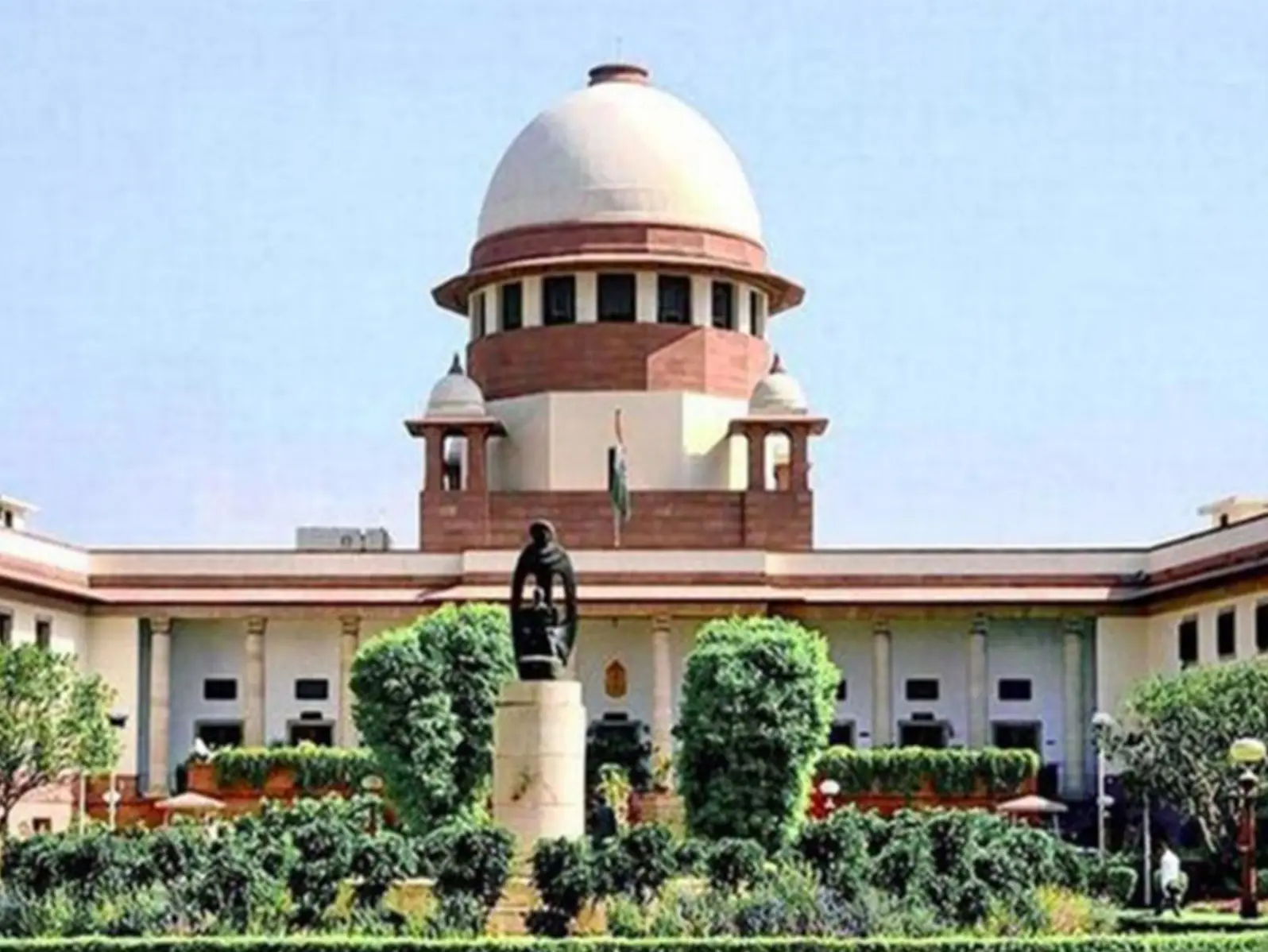
Supreme Court of India Photograph: (ANI)
The Supreme Court observed that “bail is the rule, jail the exception” even under UAPA, granting bail to a J&K man accused in a narco-terror case linked to cross-border trafficking.
The Supreme Court of India on Monday (May 18) reiterated that “bail is the rule and jail is the exception” even in cases filed under the stringent Unlawful Activities (Prevention) Act (UAPA). The court delivered the ruling while granting bail to a Jammu and Kashmir man accused in a high-profile narco-terror case linked to cross-border drug trafficking and terror financing.
A bench of Justices BV Nagarathna and Ujjal Bhuyan granted relief to Handwara resident Syed Iftikhar Andrabi, who has been facing trial in a case investigated by the National Investigation Agency (NIA). The top court directed Andrabi to surrender his passport and mark attendance at a local police station every 15 days.
The case was registered in 2020 under various sections of the UAPA and the IPC. According to the NIA, Andrabi was allegedly part of a cross-border syndicate involved in smuggling heroin from Pakistan into Jammu and Kashmir and using the proceeds to fund terrorist activities. They added that Andrabi and co-accused Abdul Momin Peer had travelled to Pakistan in 2016-17 and maintained links with terror operatives of Lashkar-e-Taiba and Hizbul Mujahideen.
The Supreme Court observed that Section 43D(5) of the UAPA, which imposes strict conditions for granting bail, cannot be used to justify indefinite incarceration and must remain subject to Articles 21 and 22 of the Constitution that guarantee personal liberty and protection against arbitrary detention.
“Bail the rule and jail the exception is a constitutional principle flowing from articles 21 and 22, and the presumption of innocence is the cornerstone of any civilised society governed by the rule of law,” the bench said. “We have no manner of doubt in stating that even under the UAPA, bail is the rule and jail is the exception. Of course, in an appropriate case, bail can be denied having regard to the facts of that particular case,” it added.
The bench also clarified that the landmark 2021 KA Najeeb judgment remains binding law and cannot be diluted by lower courts. In that case, the apex court had ruled that a prolonged delay in the trial can be a valid ground for granting bail even under the UAPA.
Trending Stories
&im=FitAndFill=(700,400))
&im=FitAndFill=(700,400))
&im=FitAndFill=(700,400))
)
&im=FitAndFill=(700,400))
)
)
)
)
)
&im=FitAndFill=(700,400))
)
)
)
)
)
)
)
)
)
)
)
)
)
)
)
)
)
)
&im=FitAndFill=(700,400))
)
)
)
The court also expressed disapproval of a two-judge bench ruling in the Gulfisha Fatima case related to the Delhi riots, saying it failed to properly follow the principles laid down in the KA Najeeb verdict.

