
&imwidth=800&imheight=600&format=webp&quality=medium "Why commercial airlines avoid flying over the Himalayas and the Tibetan Plateau")
When checking global flight tracking maps, a massive blank space sits directly over the Tibetan Plateau in western China. Despite this region being a logical, direct route between major Asian and Middle Eastern travel hubs, commercial airlines actively route flights around it. This empty airspace is strictly due to aviation safety regulations and extreme geographical hazards, rather than political disputes. Understanding aircraft technical specifications reveals exactly why passenger jets steer clear of the Roof of the World.
The 10,000-foot cabin depressurisation rule
The primary reason airlines avoid this region involves strict cabin pressure protocols. If a passenger aircraft loses cabin pressure, aviation safety regulations mandate an immediate descent to 10,000 feet, which is 3,048 metres. At this safe altitude, passengers can breathe normally without masks.

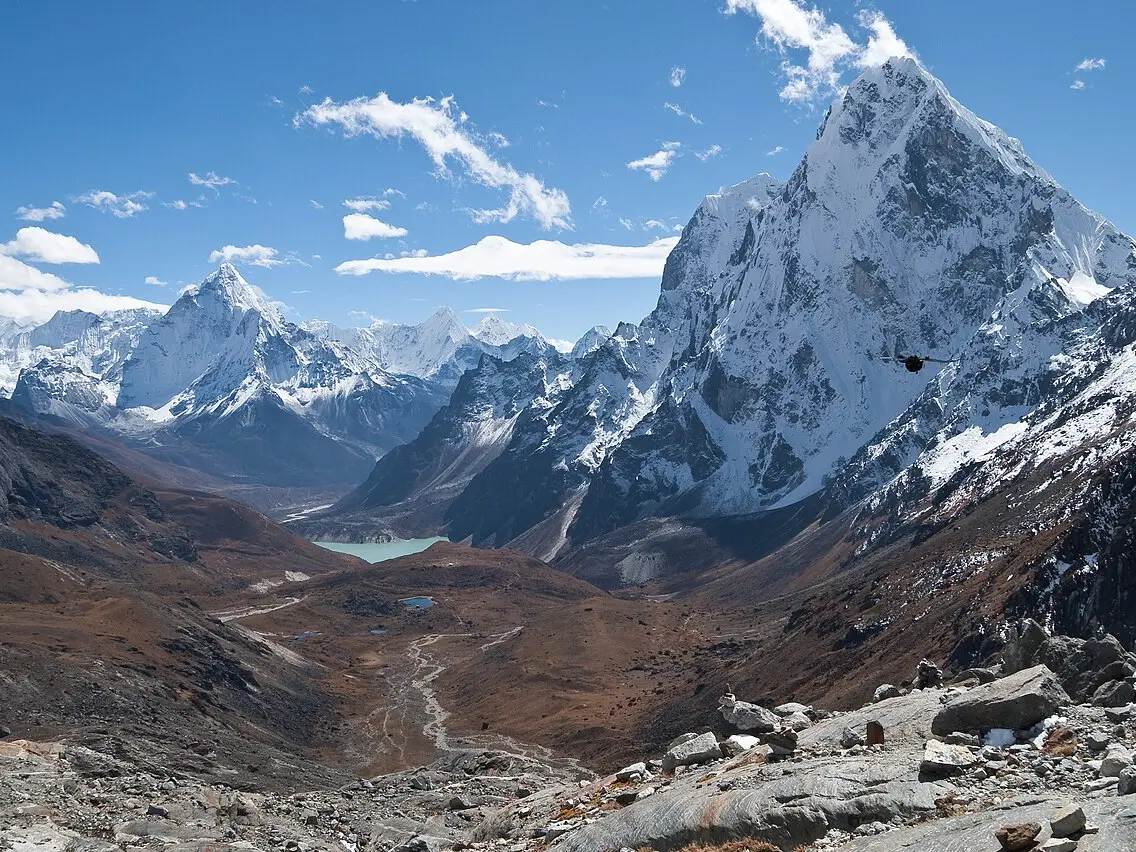
Commercial aircraft use chemical oxygen generators that supply roughly 15 to 22 minutes of breathable air. Over oceans or flat land, this is plenty of time to descend safely. However, the Tibetan Plateau spans an enormous area with an average elevation of 4,500 metres. A plane would need to fly for much longer than 20 minutes to find terrain low enough to reach 3,048 metres, making the route a severe safety risk.
One-engine drift down limitations
In the rare event of an engine failure, a twin-engine commercial jet cannot maintain a standard cruising altitude of 35,000 feet. The aircraft must execute a slow descent, known as a drift down procedure, to a single-engine cruising altitude. This is typically around 20,000 to 25,000 feet depending on the weight of the aircraft.
Trending Stories
)
Sikh driver attacked in Wyoming in US, suffers 17 stab wounds
)
‘I have a big decision coming up’: Trump says he’s approaching major ‘crossroad’ in Iran war
)
US intel warns China can steal F-35 jets secret from Saudis
)
Former India player Diana Edulji wants Smriti Mandhana to replace Harman as skipper at the earliest
)
Pak defence minister says 'time has come to implement pact'
&im=FitAndFill=(700,400))
Meet top 5 batters in the latest ICC T20I Rankings
)
Formula One reveals the 2027 race calendar; Monaco to host sprint race for the first time
)
All Indian goods to get duty-free access to New Zealand
)
AI already defying, denying humans, is it beyond human control already?
)
US F-16 fighter jet crashes in Michigan during training mission, pilot ejects safely
)
240-million-year-old bizarre 'pig with a tusk' creature creates new dilemma over origin of dinosaurs
)
US to sell 48 F-35 Lightning fighter jets to Saudi Arabia, help it deter threats
)
Hong Kong unveils 11 new measures to boost birth rates, offers higher cash bonuses and housing perks
)
Former OpenAI researcher warns of growing risks from Artificial Intelligence
)
Australian athlete, who soiled herself during Hyrox race, apologises for continuing
)
Tata Trusts chairman Noel Tata calls Chandrasekaran’s reappointment ‘illegal’, rejects Tata Sons listing
)
Dolly Parton dies at 80: Country legend’s team reveals cause of death
)
Fed raises rates for first time in 3 years, Kevin Warsh defies Trump as inflation mounts
)
US drone firm linked to Trump’s sons signs MoU with Pakistan army, gets initial order
)
Pak batter Rizwan's petition against being questioned by cyber crime agency rejected by court
)
Daayra movie review: Kareena Kapoor, Prithviraj Sukumaran shine in Meghna Gulzar’s cop-versus-cop crime thriller
)
Epstein files: Judge warns Trump Attorney General Todd Blanche of contempt over DOJ delays
)
At least 48 dead, 100 hospitalised in Nigeria after drinking suspected methanol-laced alcohol
)
US-Iran War: Trump says ‘big decision’ on Iran ahead, weighs possible fresh military action
)
Trump could impose tariffs of up to 100%
)
US new military base in Poland: US President Donald Trump eyes military base in Poland
)
Putin 'is plotting something bad': Russia may launch 'accidental' strikes on NATO countries supporting Ukraine, Poland PM warns
&im=FitAndFill=(700,400))
Suriya and Jyothika say ‘I do’ again after 20 years! See their dreamy wedding pics
)
Laura Wolvaardt sets new world record for most WT20I runs in a year
)
Mahua Moitra moves UN over alleged exclusion of Muslim officers from Amit Shah events
)
Pezeshkian, Araghchi set to attend UNGA 2026 in New York amid ongoing conflict as US-imposed travel curbs remain
The Himalayas feature the highest peaks on Earth, including Mount Everest at 8,848 metres. A standard passenger jet operating on just one engine would struggle to clear these jagged mountain peaks safely.
A severe lack of diversion airports
Aviation rules require aircraft to have suitable emergency diversion airports along their route. The Tibetan Plateau covers millions of square kilometres but offers very few runways capable of handling large wide-body jets.
The airports that do exist, such as Lhasa Gonggar, are situated at extreme altitudes and require specially modified aircraft and highly trained crews for a safe landing. Furthermore, the sheer size of the mountain range creates dangerous weather patterns. High-altitude winds hitting the Himalayas generate severe clear air turbulence, making emergency operations even more hazardous.
Modern airlines always prioritise passenger safety over shorter flight times. The strict technical limits of passenger oxygen systems, combined with extreme mountain elevations and a lack of emergency runways, guarantee that the airspace over the Himalayas will remain largely empty.