Looking for the world's most photogenic lake? This might be it

&imwidth=600&imheight=450&format=webp&quality=medium "Looking for the world's most photogenic lake? This might be it")
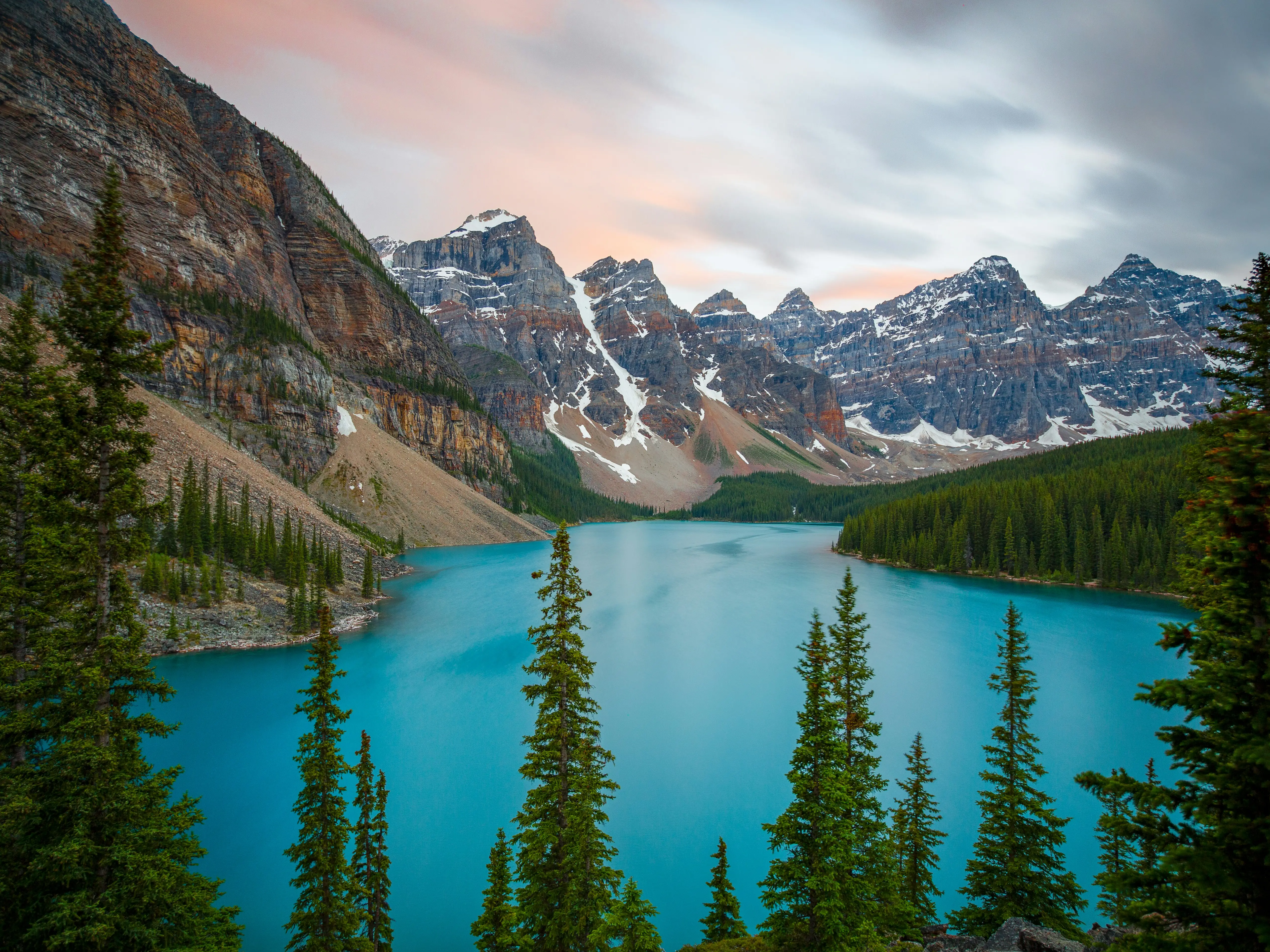
Moraine Lake Photograph: (Unsplash)
Moraine Lake in Canada's Banff National Park is widely considered one of the most photographed lakes globally. Located at an elevation of 1,884 metres, its glacially fed waters are famous for their turquoise colour. Visitors must now use mandatory shuttle services to access the location.
Many travellers consider Moraine Lake, located in Canada's Banff National Park, to be the most photographed body of water globally. Known for its turquoise colour and steep mountain surroundings, it consistently ranks among top travel locations. However, planning a visit to this high-altitude area requires strict preparation due to recent changes in access rules and seasonal closures. Here is what you need to know before visiting.
The glacial waters and Ten Peaks
The lake sits in the Valley of the Ten Peaks at an elevation of 1,884 metres. Its colour is a direct result of its glacial source. As surrounding glaciers move, they grind against the bedrock to create fine sediment known as rock flour. This sediment flows into the water and reflects blue light. According to historical records from the Bank of Canada, the viewpoint from the nearby Rockpile Trail was featured on the reverse side of the Canadian $20 bill issued in 1969.
Strict vehicle bans and transit logistics
Accessing the lake is no longer as simple as driving up to the shore. According to the latest guidelines from Parks Canada, personal vehicles are strictly banned from Moraine Lake Road to reduce traffic congestion and protect the local ecosystem. Tourists must use either licensed commercial operators or the official Parks Canada shuttle service. A standard adult shuttle ticket costs approximately Rs 765, with an additional online booking fee. These shuttles depart exclusively from the Lake Louise Ski Resort Park and Ride area.
Short operating season and backcountry rules
Trending Stories
)
)
)
&im=FitAndFill=(700,400))
)
)
)
)
&im=FitAndFill=(700,400))
)
)
)
)
)
)
)
)
)
)
)
)
)
)
)
)
)
)
)
)
)
)
)
)
)
&im=FitAndFill=(700,400))
)
)
)
&im=FitAndFill=(700,400))
)
Due to heavy snowfall and avalanche risks during the winter, access is heavily restricted for most of the year. The road and shuttle services officially operate only between 1 June and 12 October. Beyond the parking area, the entire region is classified as a backcountry zone. Official Parks Canada reports state that there is absolutely no cellular service, running water, or Wi-Fi available at the lake itself. Visitors must arrive entirely self-sufficient, carrying adequate food, water, and appropriate cold-weather clothing.
If you plan to visit this photographed location, advance planning is strictly required. You must book your transit tickets months ahead through the official online portals. Arrive prepared for unpredictable alpine weather and ensure you have offline maps downloaded before leaving your accommodation.
