

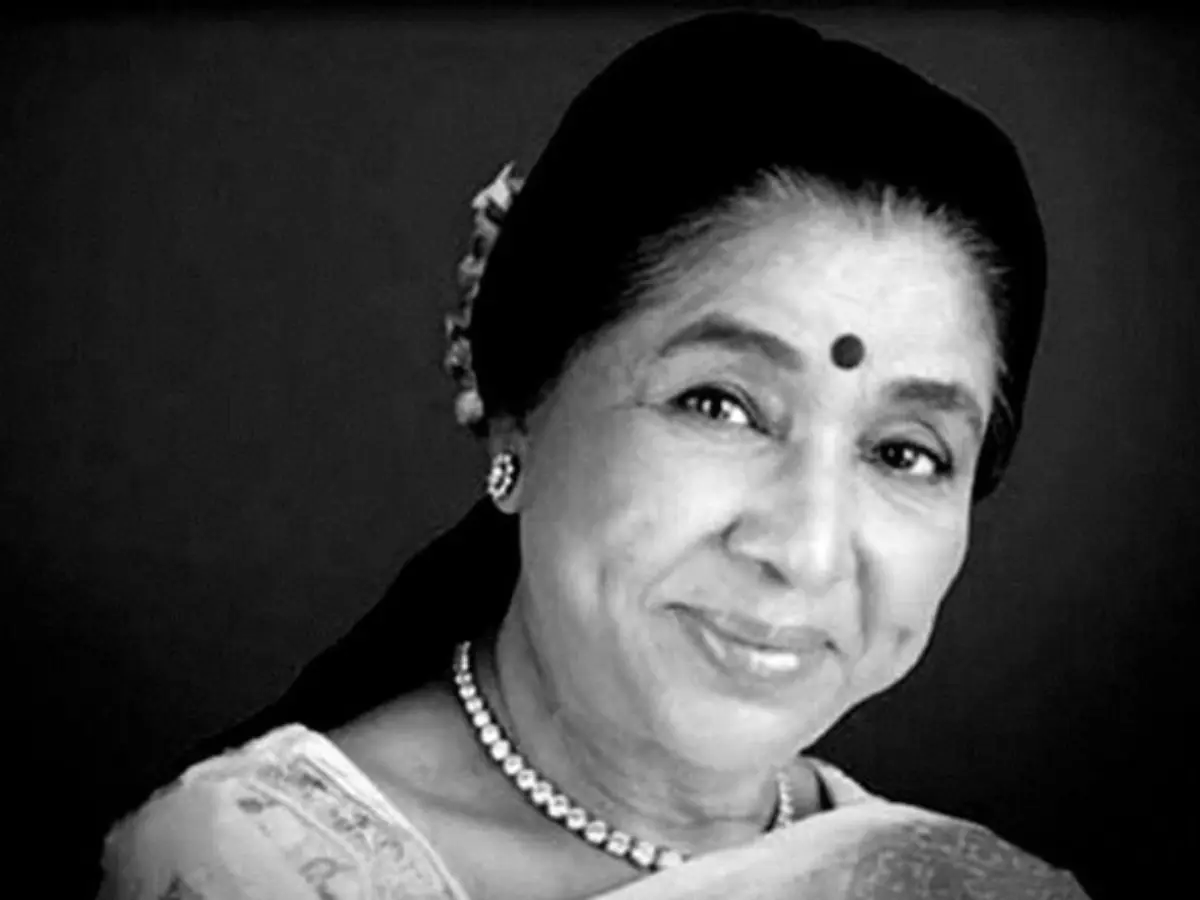
&imwidth=800&imheight=600&format=webp&quality=medium "Remembering Asha Bhosle: The queen of versatility who defined 80 years of Indian cinema")
Everyone who loves Hindi film music has a favourite Asha Bhosle song. For a classical music lover, there is a Piya Baawari from Khubsurat, for those who love ghazals, there are songs like Inn Aankhon Ki Masti and Dil Cheez Kya Hai, for the 90s kids, her pop songs Janam Samjha Karo and Rangeela Re are instant recalls. Bhosle’s work connected with one and all, transcending age, genre and languages.
As she breathed her last on Sunday, the 92-year-old legend left behind a musical legacy that will remain timeless for years to come. Her music, her ability to adapt to changing times, her style of singing the same line of a song in five different ways each time, her mastery over genres like ghazal, pop, and cabaret will remain an text book example of versatility for singers for years.
Early beginnings and breaking out of the looming shadow of Lata Mangeshkar
It wasn’t a smooth start for Asha Mangeshkar. Born to Dinanath Mangeshkar, a stage actor and a musician, Asha and her siblings were exposed to music from a young age. She was 9 when she lost her father, and by 10, she started supporting her elder sister Lata Mangeshkar in running the household.
At 16, when she eloped with a much older Ganpatrao Bhosle, it put a strain not only on her personal relations with elder sister Lata Mangeshkar, but also a dent in her brimming career in playback music.
In the 1940s and 50s, Lata Mangeshkar and Geeta Dutt dominated the Hindi playback scene and sang for almost all leading heroines. Bhosle struggled to find songs that would feature the heroine. Instead, she sang for the other female characters and even the vamps. Bhosle sang innumerable songs for the vamp, the other woman. Some of Helen’s iconic songs, like O Haseena Zulfon Wali and Piya Tu, were sung by Bhosle.
Trending Stories
&imwidth=180&imheight=135&format=webp&quality=medium)
Viral video shows cross falling on Colombia priest, no official confirmation | WATCH
&imwidth=180&imheight=135&format=webp&quality=medium)
Rafale Marine fighter begins flight trials in Goa ahead of Indian Navy induction
&imwidth=180&imheight=135&format=webp&quality=medium)
Ranbir Kapoor apologises for Dussehra speech slip, clarifies remark at Ramayana event
&imwidth=180&imheight=135&format=webp&quality=medium)
Meta slapped with $25 billion fine in New Mexico over Facebook data practices, company plans appeal
&imwidth=180&imheight=135&format=webp&quality=medium)
WATCH: Woman IPS officer fires several rounds of AK-47, ignites debate online
&imwidth=180&imheight=135&format=webp&quality=medium)
EU probes Booking.com under Digital Services Act
&imwidth=180&imheight=135&format=webp&quality=medium)
Pakistan signs another defence pact even as Makkah Alliance shows no teeth. This time, it's with Qatar, Indonesia, Turkey
&imwidth=180&imheight=135&format=webp&quality=medium)
Ilhan Omar breaks silence over alleged marriage to her brother; Trump thinks it's 'really good answer'
&imwidth=180&imheight=135&format=webp&quality=medium)
US-Iran war: Bibi, Trump gamble on new Iran war to save themselves in polls
&imwidth=180&imheight=135&format=webp&quality=medium)
From Agni-V to Project Kusha: How are India’s indigenous missile systems and defence shield reshaping modern warfare
&imwidth=180&imheight=135&format=webp&quality=medium)
'It's a crime not to see this scene': Tehran puts Trump 'behind bars'
&imwidth=180&imheight=135&format=webp&quality=medium)
Will Rohit and Kohli play ODI World Cup 2027? BCCI president Manhas says board 'not in a position to comment'
&imwidth=180&imheight=135&format=webp&quality=medium)
Why websites around the world are suddenly going offline? What you need to know about PHP
&imwidth=180&imheight=135&format=webp&quality=medium)
US midterms 2026: What polls and prediction markets indicate about Congress
&imwidth=180&imheight=135&format=webp&quality=medium)
'You are a dummy, you are a stupid person': Trump loses temper with CNN, ABC reporters after questions about Russia sanctions
&imwidth=180&imheight=135&format=webp&quality=medium)
China's dancing robot turns violent bodyguard, lifts cars and fights intruders - Watch
&imwidth=180&imheight=135&format=webp&quality=medium)
16-foot doomsday fish in Chile triggers fears that the next earthquake is coming
&imwidth=180&imheight=135&format=webp&quality=medium)
US to get 850 F-35 stealth fighter jets under 10-year Pentagon-Lockheed deal
&imwidth=180&imheight=135&format=webp&quality=medium)
Are the US and Israel preparing for another major attack on Iran? Here's what report claims
&imwidth=180&imheight=135&format=webp&quality=medium)
Priyanka Chopra celebrates Dussehra 2026 with Nick Jonas and daughter Malti Marie | See pics
&im=FitAndFill=(700,400)&imwidth=180&imheight=135&format=webp&quality=medium)
New OTT releases this week (October 19-25, 2026): Gajab Raat to Chaar Yaar-8 titles to watch during Dussehra week on Netflix, Prime Video and more
&imwidth=180&imheight=135&format=webp&quality=medium)
‘I caution the president...’: Trump’s ex-press secretary warns after Zacharia’s exit
&imwidth=180&imheight=135&format=webp&quality=medium)
'Father of all bombs' vs 'mother of all bombs': Iran threatens US with new weapon as Trump hints at MOAB strike
&imwidth=180&imheight=135&format=webp&quality=medium)
Diljit Dosanjh's Oct 30 Delhi show hits roadblock, Delhi Police denies permission
&imwidth=180&imheight=135&format=webp&quality=medium)
Australia police arrest former national 100m champ Jake Doran for alleged child abuse
&imwidth=180&imheight=135&format=webp&quality=medium)
'Gyanu must go': CJP's Saurav Das, Ashutosh Ranka after release, despite Jantar Mantar protest undertaking
&imwidth=180&imheight=135&format=webp&quality=medium)
Kolkata airport: CISF detects ₹1.13 crore in US dollars hidden in bags of 2 Bangkok-bound passengers
&imwidth=180&imheight=135&format=webp&quality=medium)
Feds obtain DNA evidence that could prove Ilhan Omar married her brother: Report
&imwidth=180&imheight=135&format=webp&quality=medium)
US midterms 2026: Trump's approval rating hits record low as Democrats gain ground
Instead of mimicking the prevailing style, Bhosle leaned to pivot. She leaned into the technical difficulty of those questionable songs, developing a sharper, more rhythmic, and textured voice that could handle fast tempos and westernised beats. The result was a unique voice and style that people swooned over.
The Other Mangeshkar
While Lata Mangeshkar became the voice of India, her sister Asha became the rebel. Funny how life imitated their career choices, the two sisters dominated Indian music and created their unique style. Mangeshkar remained the leading voice of Indian heroines, but Bhosle created her own niche; one could sing a cabaret number with equal ease, just like she could sing a classical number.
The architects of her songs
Music director OP Nayyar's association with Bhosle is part of Hindi film lore. He was the composer who first gave Bhosle her own identity. Amid rumours of a relationship, Bhosle and Nayyar created some of the most iconic hits of the 1950s and 60s. These timeless classics remained Bhosle’s biggest hits of all time. The composer-singer duo first collaborated in 1954 for a film called Mangu and in the next two decades created songs like Aaiye Meharbaan picturised on Madhubala (Howrah Bridge, 1958) and Yeh Hai Reshmi Zulfon Ka Andhera, (Mere Sanam, 1965). They also recorded songs for many hit movies like Tumsa Nahin Dekha (1957), Ek Musafir Ek Hasina (1962) and Kashmir Ki Kali (1964).
Nayyar and Bhosle parted ways in 1972. Bhosle by then had created a name for herself not just by singing sirenish songs but also songs for the female lead of a film. Other music composers like SD Burman, Madan Mohan, Khayyam and RD Burman also tapped into her versatility and created iconic hits. RD Burman and Bhosle eventually married in 1980. It was the second marriage for the two and was opposed by many. But their partnership remained until Burman’s untimely death in the 1990s.
RD Burman and Asha Bhosle together created music in the 1970s, which was then unheard of in Hindi cinema. Burman was instrumental in bringing Western tunes to Hindi songs. Dum Maaro Dum, Piya Tu Ab To Aaja needed special voice modulations which only Bhosle could bring.
When Khayyam approached her for Umrao Jaan, the singer was sceptical and hesitant, but, known to take up challenges, she rehearsed and came back to deliver classics like Dil Cheez Kya Hai and Inn Aankhon Ki Masti.
Reinventing in the 1990s
Well in her 60s at that time, Bhosle became a household name and connected with the younger generation with her pop albums. She first remixed some of her and RD Burnman’s hit songs, soon after the composer’s demise. The move was criticised by many, including composer Khayyam, who felt it was unnecessary to touch classics. But Asha Bhosle was always synonymous with thinking out of the box. The classics, reloaded and remixed, reached the younger audience and made her popular once again. Around the same time she also collaborated with Leslie Lewis and created songs like Janam Samjha Karo.
Imagine the range- songs like Abhi Na Jaao Chodkar, Mera Kuch Saman, Piya Tu Ab To Aaja and Janam Samjha Karo – all were by the same singer.
At 65, she sang with a new composer like AR Rahman and did playback for a 20-something Urmila Matondkar in Rangeela. The songs, fresh and very western, felt tailor-made for Asha Bhosle’s voice.
Experimenting and living with the times came naturally to her. Asha Bhosle was one of the first Indians to fetch a Grammy nomination. A Guiness Book Of World Record holder for recording the maximum number of songs, Bhosle sang in several languages other than Hindi and found success especially in Bengali films.
She was a cook whose biryani and Goan fish curry were loved by industry insiders. She had even admitted that had she not been a singer, she would have been a chef.
Bhosle can easily be called a chameleon of Indian music. No other artist could hold such a strong influence with her music across ages the way she did. She defined music across genres and ages and was perhaps the only Indian singer who never shied away from experimenting. She was someone who constantly pushed boundaries.
In the last few years, fans missed seeing her on stage. She did do a concert tour in 2023 in Dubai, but remained away from the public eye in recent years. But she lived through her music and will continue to dominate the playlists of innumerable fans across the world.
She didn't just sing for films; she provided the soundtrack to the evolution of the modern Indian woman—from the traditional to the rebellious to the modern.
“Abhi na jao chhodke Asha ji, ke dil abhi bhara nahi…”

