No women, no business: Afghanistan's economy feels the impact

&imwidth=600&imheight=450&format=webp&quality=medium "No women, no business: Afghanistan's economy feels the impact")
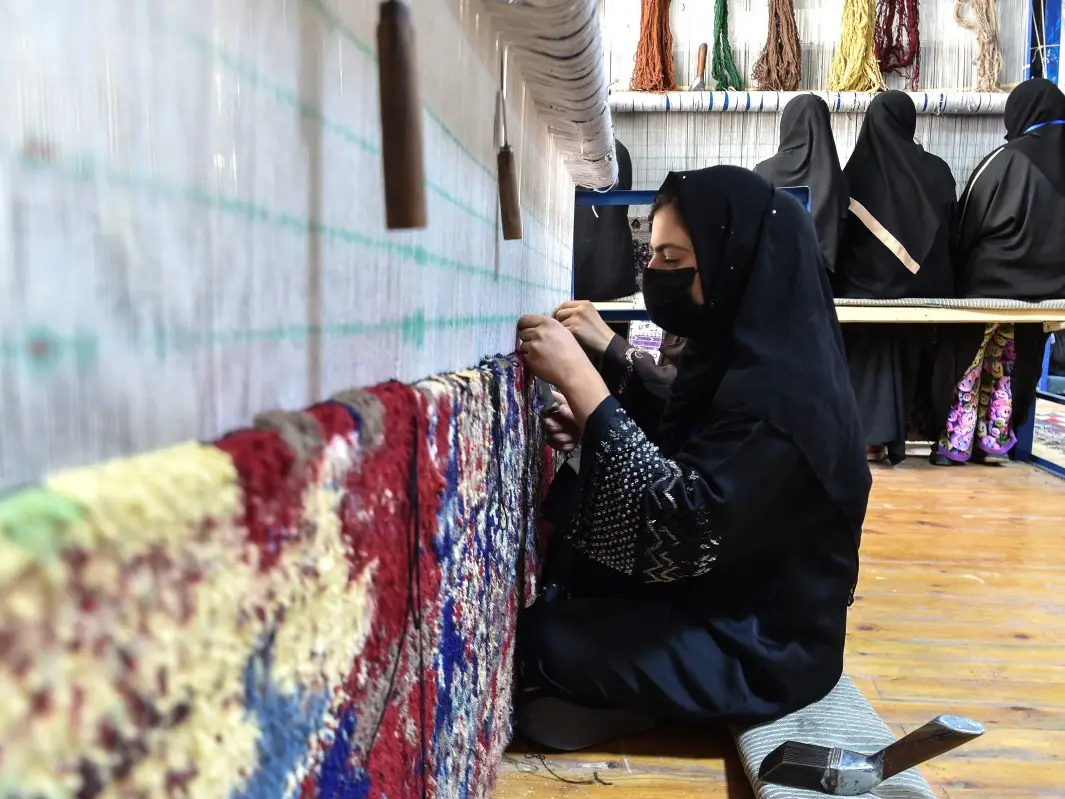
Afghan women work at a carpet factory in the Nahr-e-shahi district of Afghanistan's Balkh province on July 6, 2026. Photograph: (Credit: AFP)
As the Taliban intensifies restrictions on female mobility and education, a comprehensive UN assessment reveals that erasing women from public and private sectors is costing Afghanistan over $1 billion annually, crippling its domestic markets and public healthcare systems.
Businesses in Afghanistan's western city of Herat are reporting a sharp decline in sales after many women stopped visiting markets following a recent crackdown on dress code violations. Shopkeepers say female customers, who make up the majority of shoppers in the city are now staying home out of fear of being detained by the Taliban's morality police.
Traders estimate their business has fallen significantly, with some reporting sales have dropped by nearly 50 per cent. Farshid Karimi, a rickshaw driver, spoke to news agency AFP regarding the broader business impact.
“Before, women were free, they could come here comfortably to do shopping and then go home. There was no restriction. They could freely take the rickshaw to go around,” he said.
“Now, as the restriction has been imposed, they cannot go out, so there's no work for us. Two months ago, I used to earn a profit of 600 AFS ($9.24) after fuel cost, but now, we can earn only 300 to 350 AFS that we have to use for fuel,” he added.
Trending Stories
)
)
)
)
)
)
)
)
)
)
)
)
)
)
)
)
)
)
)
)
)
)
)
)
)
)
)
)
)
)
)
)
)
)
)
&im=FitAndFill=(700,400))
)
The latest enforcement drive began in early June, when dozens of women were detained over allegations that they failed to comply with official dress codes requiring body-covering garments. The crackdown has changed daily life in Herat, with many women saying they now leave home only when absolutely necessary. Some have stopped attending classes, meeting friends, or going shopping altogether.
Ramin Ghafoori, a shopkeeper in Herat said, 'Since those incidents occurred...after that, currently the markets have stopped. We held a meeting inside the market a few days ago, you might have seen that the market was closed due to this reason. Because there was no market, there were no women in the market. The rent of the shop was high, and we could not afford that and then due to our market being closed.'
'The market revolves around women. If there is no woman, there is no bazaar,' he added.
The impact extends beyond retail. Auto rickshaw drivers say their daily earnings have fallen from around $9 to about $4 as fewer women travel across the city. Tailors, transport operators and restaurant owners are also reporting lower business activity.
The slowdown in consumer spending comes as Afghanistan continues to grapple with a fragile economy, shrinking foreign aid and a worsening humanitarian crisis. Since returning to power in 2021, the Taliban has imposed wide-ranging restrictions on women's education, employment, and public life.
Nazeer Ahmad Azimi, a shopkeeper, said, “The restrictions imposed in Herat also has a 50 per cent impact. Because men are all busy with work, because the economy of Afghanistan's people is weak. A man cannot come for a day to buy a pair of sandals, whether it's for men or women, he'll be in further loss.”
Economists say limiting women's participation in society also weakens private sector activity, which is essential for long-term economic recovery. The United Nations has previously estimated that excluding women from economic and public life could cost Afghanistan's economy around $1 billion every year.