
&imwidth=800&imheight=600&format=webp&quality=medium "Foxconn repatriates Chinese engineers; what does it mean for Apple and India manufacturing?")
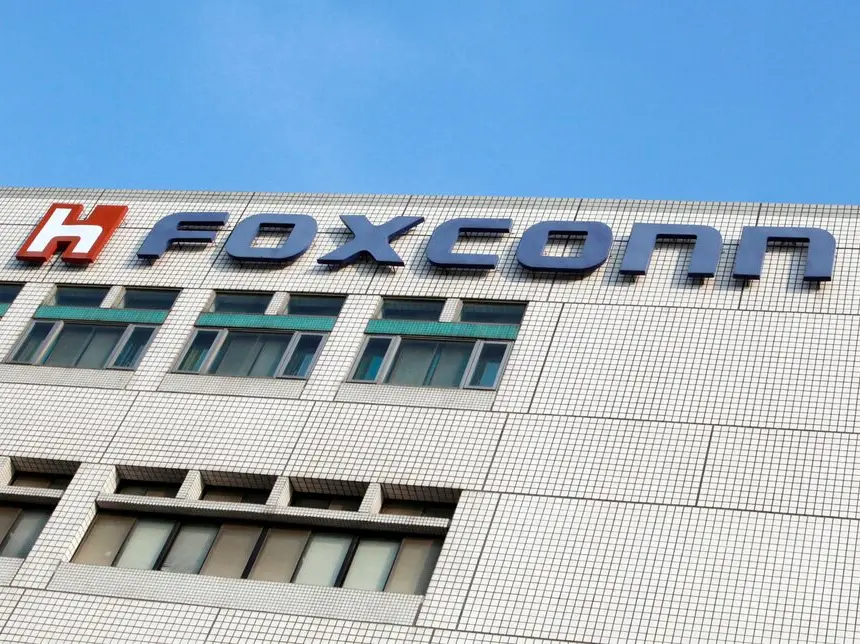
In a significant development that threatens to disrupt Apple’s ambitious plans to ramp up iPhone production in India, Foxconn Technology Group, the Taiwanese company responsible for manufacturing a majority of Apple’s devices, has recalled hundreds of its Chinese engineers and technicians from its factories in India. This move, which began two months ago, has raised concerns regarding the ability of India to meet the growing demand for iPhones, especially with the launch of the iPhone 17 scheduled for later this year. According to media reports, more than 300 Chinese engineers and technicians have been sent back to China from Foxconn’s iPhone manufacturing plants located in Tamil Nadu and Karnataka, two key factories in India.
Foxconn, which has been instrumental in helping Apple scale up its production in India, did not issue an official statement about the move, and Apple has refrained from commenting as well. The decision to repatriate these Chinese workers coincides with broader geopolitical tensions and shifts in the global supply chain. Foxconn, which has been expanding its production capacity in India in recent years, has deployed a significant number of skilled Chinese engineers to fast-track the development of iPhone manufacturing lines in India. These engineers played a pivotal role in training local Indian workers and transferring critical technology for assembling iPhones.
However, as of now, the majority of those who remain in India are Taiwanese technicians, raising concerns that the absence of the Chinese workforce could slow down the pace of training for local employees. While there are no immediate reports indicating that the quality of the final product will be affected, experts suggest that the disruption could impact the efficiency of the assembly line, leading to potential delays in production.

China tightens its grip on talent and technology transfers
The repatriation of Chinese engineers comes at a time when Beijing is reportedly tightening its grip on the movement of skilled labour and technology abroad. As part of an unofficial policy aimed at limiting technology transfers to countries like India and Vietnam, China has taken steps to discourage the outflow of essential manufacturing know-how and equipment. Reports suggest that the Chinese government has been urging local companies to curb exports of critical machinery and skilled labour to these nations, effectively hindering the expansion of foreign manufacturing operations.
This move by China can be seen as a response to growing global efforts, particularly from the United States, to diversify supply chains and reduce dependence on Chinese manufacturing. During the Trump administration, the US imposed tariffs on Chinese exports, prompting many companies, including Apple, to shift some of their production capacity to alternative locations such as India and Vietnam. As global tensions between China and the US escalate, Beijing’s response appears to be aimed at preventing the further erosion of its manufacturing dominance.
Trending Stories
)
‘0% chance’: Nvidia CEO Jensen Huang dismisses AI extinction fears by 2030
)
Trump says he'll build an 'AI Force' and appoint a czar, for 'high IQ' people only
)
BTS' fans question iHeartRadio’s treatment of group after brief festival set
)
AI actress Tilly Norwood glitches mid-interview, switches from English to Chinese | Watch
)
S Jaishankar, former Army chief among high-profile names issued Delhi SIR notices
)
'Were you here to sell chickpeas?': Wasim Akram criticises Babar Azam's captaincy
)
CDU suffers historic defeat in eastern Germany as AfD surges, Merz vows to stay on
)
Iran sets 7 conditions to end war with US: What are Tehran’s demands?
)
Glitch in the matrix caught on camera: Woman vanishes after talking to reporter
)
Fleming's aspirations as England Test coach include WTC, top ranking and Ashes
)
Pilot recreates Mona Lisa in sky over Oklahoma and Arkansas in four-hour flight: VIDEO
)
J&K Assembly Session begins amid chaos: BJP, ruling alliance clash as statehood demand dominates
&im=FitAndFill=(700,400))
Gulshan Grover turns 70: Ram Lakhan, Gangster, Hera Pheri- Must-watch movies of the actor on OTT platforms
)
Noel Tata challenges Chandrasekaran’s reappointment as Tata Sons chairman. What happened at the board meeting
)
US ships in Indian Ocean ‘will be attacked’ if war resumes, warns Iran
)
Punjab man consumes poison outside DC office; Congress, BJP target AAP government
)
Chancellor Friedrich Merz vows to stay on as exit polls signal major poll setback
)
ICE shooting in Texas leaves man seriously injured; officials demand independent investigation and transparency
)
Italy moves to ban face veils in schools as Meloni pushes new integration measures
)
Putin's United Russia party wins 355 seats in Duma election; 4 other parties cross threshold to enter parliament
)
TIFF 2026: Theja Rio’s Angh wins Platform Prize, puts Nagaland story on global stage
)
Bessent meets China’s He Lifeng to prepare for Trump-Xi summit
&im=FitAndFill=(700,400))
Kareena Kapoor birthday special: Inside her net worth, best movies, luxurious lifestyle and love story with Saif Ali Khan
)
Trump-Xi summit: US Treasury Secretary holds meeting with Chinese Vice Premier
)
Delhi: Flagged voters remain on the draft roll but face hearings
)
China now makes advanced memory chips without the machines it was banned from buying
)
'Lot of things to learn from experienced players': Jayasuriya backs Rohit, Virat for 2027 ODI World Cup
)
Operation Sindoor’s hidden naval dimension | MoD reveals Indian Navy Special Forces joined May 7 strikes
)
Delhi Air pollution: Strict crackdown on waste burning
)
Saudi vs Houthis: Houthis claim missiles & drones used in attack on key Saudi sites
)
Saudi Arabia exits China-led mBridge digital currency platform amid Saudi-Houthi conflict
&im=FitAndFill=(700,400))
What TSMC's 2nm technology means for Apple
)
Samsung raises Galaxy S26 prices by Rs 20,000: Here’s what each model now costs
)
Several petrol pumps, other businesses to refuse UPI payments above Rs 2,000 from Oct 16: Is it legal?
)
Mahabharat actor Saurav Gurjar arrested in Hyderabad, sent to 14-day judicial custody in sexual exploitation case
)
Jailer 2: Vidya Balan joins Rajinikanth's upcoming film as Kantha | Watch
)
Arvind Kejriwal, family members, Delhi CM Rekha Gupta get SIR notices
)
SNL UK takes aim at Ed Sheeran with AI Princess Diana sketch
)
Taylor Swift has a 'proud wife' moment as Travis Kelce scores first touchdown of season: 'That’s my husband!'
)
AI kill switch explained: Why shutting down a dangerous AI may not be as simple as pressing a button
&im=FitAndFill=(700,400))
New OTT releases this week (September 21-27, 2026): Shaque: Trust No One, Hunkkaar, Don’t Be Shy- 5 new titles coming to Netflix, Prime Video and more
)
Microsoft executive called AI training the ‘largest theft of labour in human history’
Furthermore, reports indicate that the Chinese government has also delayed the clearance of key machinery exports necessary for retrofitting assembly lines in India to handle the production of the upcoming iPhone 17. These machines, crucial for the manufacture of advanced smartphone models, have been held up by Chinese customs, further complicating Foxconn’s ability to ramp up production in India.
Impact on Apple’s production plans in India
Foxconn’s decision to send back hundreds of Chinese workers couldn’t have come at a worse time for Apple. The company is currently in the process of scaling up its operations in India to meet growing demand for its flagship products. Apple has long sought to diversify its manufacturing beyond China, and India has become a critical part of its strategy. The country’s production-linked incentive (PLI) scheme, designed to encourage local manufacturing, has played a crucial role in attracting companies like Apple to set up assembly plants.
Apple intends to produce most of the iPhones sold in the US in India by the end of 2026. This marks a significant shift in Apple’s global supply chain strategy, as the company aims to reduce its reliance on China for iPhone manufacturing. In fact, Apple is already producing around 40 million iPhones annually in India, accounting for roughly 15 per cent of its global output. However, with the sudden departure of Chinese engineers, India’s ability to meet these production targets could be jeopardised.
As part of its broader expansion plans, Foxconn had been planning to hire an additional 1,000 local employees in India by mid-July, further increasing its workforce to support Apple’s growth ambitions. The absence of Chinese engineers and the potential delay in key equipment shipments could lead to a slowdown in the training process, which may, in turn, result in an increase in the overall production cost of iPhones in India. This would further strain Apple’s margins, especially in comparison to the cost-effective manufacturing processes that have long been in place in China.
India’s growing ambitions and the geopolitical tensions
India has been actively courting foreign companies to set up manufacturing hubs within its borders. This is part of the government’s broader goal to transform India into a global manufacturing powerhouse, reducing its dependence on China for key technologies and goods. In addition to Apple, other major players like Asus, HP, and several toy manufacturers have moved part of their production to India in recent years.
Apple’s $30-32 billion production target for India by 2027 is an ambitious one, but the country’s manufacturing infrastructure and labour force are still in the process of ramping up to meet such demands. While India’s government has expressed confidence that local workforce training and the growing pool of skilled workers will ensure minimal disruption, the recall of skilled Chinese labour presents an immediate challenge.
Furthermore, tensions between India and China continue to simmer. Despite recent diplomatic efforts to ease relations, significant obstacles remain. India continues to ban several Chinese apps, including TikTok, while China has imposed selective export bans on fertilisers and critical materials like rare earth metals. These geopolitical factors add another layer of complexity to the already delicate process of setting up advanced manufacturing operations in India.
Long-term consequences for Apple’s global supply chain
The unfolding situation in India underscores the delicate balancing act Apple faces as it seeks to diversify its production away from China. While India offers significant advantages in terms of cost and access to a large labour force, the ongoing political and logistical challenges are not insignificant.
Apple CEO Tim Cook has consistently praised the skill and expertise of Chinese assembly workers, calling it one of the main reasons Apple continues to rely heavily on China for production. As Foxconn faces delays in training local employees and retrofitting production lines, it’s clear that India’s ability to meet the demands of the iPhone 17 launch could be impacted, potentially affecting the timeline and cost of production.
At the same time, Apple is facing growing pressure from the US government to bring more manufacturing back to American soil. The high labour costs in the US, however, make such a move difficult, and Apple’s push for increased production in India is seen as a necessary step to reduce costs and diversify its supply chain.