
&imwidth=800&imheight=600&format=webp&quality=medium "Dollar plunges as weak US jobs data fuels bets on Fed rate cuts")
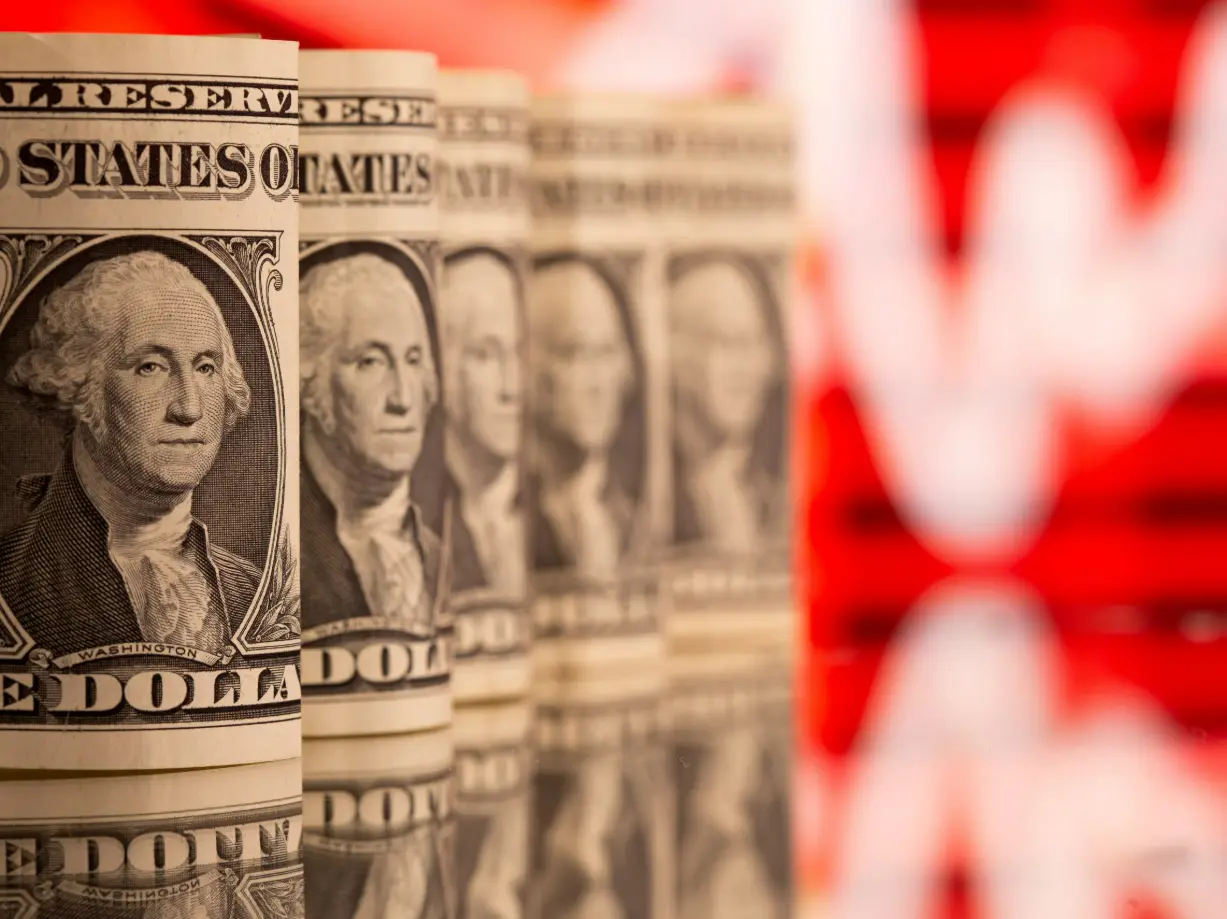
The US dollar suffered its sharpest intraday fall against major currencies in over a year on Friday, after a surprisingly weak jobs report intensified market speculation that the Federal Reserve may soon pivot towards cutting interest rates, despite earlier hawkish guidance from Chair Jerome Powell.
According to Reuters, the US economy added just 73,000 jobs in July, well below economists’ expectations of 110,000, while June’s job gain was revised sharply down, from 147,000 to a mere 14,000. The unemployment rate ticked up to 4.2 per cent, in line with forecasts, but up from 4.1 per cent in June. “It’s worse than anyone expected, and the kicker is that downward revision for the prior month too,” said Helen Given, director of trading at Money USA, as quoted by Reuters. The disappointing labour data triggered a broad-based selloff in the dollar, as traders swiftly re-evaluated the Fed’s rate trajectory.
Dollar sees steepest drop since January 2023

The dollar index, which tracks the greenback against a basket of currencies including the euro and yen, plunged 1.23 per cent to 98.80, its lowest since mid-June. The euro surged 1.37 per cent to $1.1571, on track for its biggest one-day gain since April.
The Japanese yen rallied sharply, with the dollar dropping 2.23 per cent to 147.37 yen, marking its biggest daily fall against the yen since January 2023.
Traders now betting on September Fed cut
Trending Stories
)
'He will always be ahead': India coach Gambhir says Sooryavanshi won't walk into team ahead of Samson
)
'Gangsta' crab shoves knife blade at man and his dog in Florida - Watch
&im=FitAndFill=(700,400))
Which country has the most F-35s outside America?
)
Andhra Pradesh police pose as FBI to get X to remove tweets
)
Godfather of AI Geoffrey Hinton gives US lawmakers a one-year warning on AI
)
UNGA 2026 theme explained: What does ‘Restoring trust, managing transformation: A United Nations that delivers for all’ mean?
)
US F-16 fighter jet crashes in Michigan during training mission, pilot ejects safely
&im=FitAndFill=(700,400))
Meet top 5 Indian batters with fastest T20I centuries
)
Laura Wolvaardt sets new world record for most WT20I runs in a year
)
Ganpati Visarjan: Alia Bhatt and Ranbir Kapoor bid adieu to Bappa, watch viral videos
)
Who is Khalilur Rahman? All you need to know about 81st UN General Assembly President
)
North Korea's last nuclear test in 2017 set off 1,399 earthquakes over 8 years, each stronger than previous
&im=FitAndFill=(700,400))
New Friday OTT releases (September 18, 2026): Lust Stories 3, You+Me, Best of the Best- 8 new titles coming on Netflix, Prime Video and more
)
Xi-Trump summit may boost military links
)
Pentagon revives mandatory testosterone testing for male troops aged 30 and above
)
Asian Games 2026: Shafali stars as India thump Japan by 8 wickets to book semis berth
)
Marathi film Gondhal is India's official entry for Oscars 2027
)
The Verdict | When precision fails: US commits war crime in Minab school strike, UN finds
)
Shivakumar attends 79th Kalyana Karnataka Utsav in Kalaburagi
)
Three labourers killed as DU student loses control of his car, rams into them on Dwarka Expressway
)
US-North Korea tensions explode, Kim Yo Jong warns of 'more offensive' response
&im=FitAndFill=(700,400))
From Abhishek Sharma to Sahil Chauhan, 5 batters with fastest T20I hundreds
)
Ukraine plans record $109 bn defence spending, nearly two thirds of budget amid Russia war
)
Drone strikes cooling tower at Russia's Kursk Nuclear Plant, IAEA confirms
&im=FitAndFill=(700,400))
Suriya and Jyothika say ‘I do’ again after 20 years! See their dreamy wedding pics
)
Cristiano Ronaldo returns to Portugal squad for Nations League under new coach
)
Trump bans CNN, MS NOW and Politico from White House over ‘FAKE NEWS’
)
Spain Floods: Deadly floods hit Spain as torrential rains trigger widespread flooding
)
How did an Australian river with 500 crocodiles pass the Olympic test? Here's how
)
Hong Kong extends newborn cash support scheme by three years
&im=FitAndFill=(700,400))
Meet top 5 bowlers in latest ICC T20I rankings
)
India ‘deeply concerned’ as Houthi strikes hit Saudi civilian & energy sites
)
A first in 100 years: New cat species discovered in Bolivia is incredibly tiny
)
Africa is splitting, and a lot sooner than estimated, giving way to a new ocean
)
Indian activist-lawyer Prashant Bhushan's post brings focus on ‘conflict of interest’ appointments of ex-govt officials at Reliance, Adani groups
&im=FitAndFill=(700,400))
Meet top 5 batters in the latest ICC T20I Rankings
)
‘Will go to any extent’: Pakistan vows to defend Saudi Arabia amid Houthi attacks
)
Former India player Diana Edulji wants Smriti Mandhana to replace Harman as skipper at the earliest
)
India seeks to build a full semiconductor supply chain
Despite Powell’s warning earlier in the week that the Fed was in “no rush” to ease rates amid concerns about President Donald Trump’s inflationary tariff policy, Friday’s jobs data triggered a swift shift in market sentiment. As per Reuters, Fed funds futures traders are now pricing in 63 basis points of rate cuts by year-end, up from 34 basis points just a day earlier. The first cut is now widely expected in September, depending on the next employment report.
“The labour market is clearly, clearly cooling. That’s going to raise the importance of that September figure as well,” Given told Reuters, noting that Powell had already signalled the Fed would wait for two more jobs reports before making its decision. The August employment data is due on September 5, just days before the Fed’s next policy meeting on September 16–17.
Trump sacks statistics chief, imposes more tariffs
In a dramatic response to the dismal jobs print, President Donald Trump on Friday ordered the firing of Erika McEntarfer, commissioner of the Bureau of Labor Statistics, as reported by Reuters. Trump also announced new tariffs on dozens of trade partners, contributing to early gains in the dollar before the jobs report reversed the trend. Notably, Switzerland now faces a 39 per cent tariff, with Trump accusing Swiss pharma firms of overcharging American consumers.
The Swiss franc, initially weaker on tariff concerns, later recovered as the dollar weakened, with the greenback falling 0.9 per cent to 0.805 francs. Earlier in the session, the dollar had hit 0.8171, its highest since June 23.
Currency market turmoil spreads
Other major currencies also saw large swings. The Canadian dollar strengthened 0.43 per cent to C$1.38, even after Canada was hit with a 35 per cent tariff, more than the 25 per cent previously threatened.
The yen, which had been under pressure for most of the week after the Bank of Japan signalled a dovish stance, rebounded sharply after Finance Minister Katsunobu Kato said officials were “alarmed” by rapid currency movements. In the digital asset market, Bitcoin dropped 2.65 per cent to $113,432, as investors pulled back from riskier assets in response to uncertainty over Fed policy and global trade tensions.
All eyes on September Fed rate cut
While some economists had projected dollar strength in the second half of 2025, Friday’s data cast fresh doubt on those forecasts. Jonas Goltermann, deputy chief markets economist at Capital Economics, said in a note that a recessionary scenario could flip the outlook entirely. “Plainly, that now looks less probable; in a recession scenario the dollar is likely to weaken against lower-yielding currencies such as the yen and the euro,” Goltermann wrote, as per Reuters.
With the Fed’s September decision now hanging heavily on the next jobs report, the world’s most traded currency faces a decisive few weeks ahead caught between Trump’s protectionist escalation and a cooling American labour market.
(With inputs from the agencies)