Tesla profit margins worst in five years as price cuts, incentives weigh

Tesla logo (Photo: Unsplash)
Tesla, the prominent electric vehicle manufacturer, reported disappointing financial results for the second quarter of the year, revealing its lowest profit margin in over five years and failing to meet Wall Street's earnings expectations. The company's performance has been impacted by its strategy of reducing prices to stimulate demand, while simultaneously increasing investments in artificial intelligence projects.
Despite these challenges, Tesla remains optimistic about its future product lineup. The company announced that it is on track to introduce new vehicles, including more affordable models, in the first half of 2025. However, it cautioned that these new models may not deliver the level of cost reduction initially anticipated. This news led to an 8 per centdrop in Tesla's stock price during after-hours trading.
The second quarter proved to be turbulent for Tesla, with CEO Elon Musk making significant strategic decisions. He abandoned plans for an entirely new, cheaper car model in favor of developing less ambitious, lower-cost variants. Additionally, Musk has been focusing on the creation of self-driving taxis, a move that has helped boost investor confidence and share prices.

In an effort to reduce costs, Tesla implemented layoffs affecting more than 10% of its workforce. The company also noted that its profits were negatively impacted by restructuring charges and increased operating expenses, largely attributed to its investments in artificial intelligence projects.
Tesla's automotive gross margin, excluding regulatory credits, stood at 14.6 per centfor the second quarter. This figure fell short of analyst expectations, which averaged 16.29 per centaccording to a poll of 20 analysts by Visible Alpha.
Investment analyst Dan Coatsworth from AJ Bell pointed out that Tesla has now missed earnings targets for four consecutive quarters. He expressed concern about the company's focus on future technologies, stating, "There is a lot of talk about robotaxis, humanoid robots and autonomous driving, which provides an exciting narrative for investors but doesn't get over the fact that these are tomorrow's potential riches, not today's."
)
'Lot of things to learn from experienced players': Jayasuriya backs Rohit, Virat for 2027 ODI World Cup
&im=FitAndFill=(700,400))
Kareena Kapoor birthday special: Inside her net worth, best movies, luxurious lifestyle and love story with Saif Ali Khan
)
Trump says he'll build an 'AI Force' and appoint a czar, for 'high IQ' people only
)
Punjab man consumes poison outside DC office; Congress, BJP target AAP government
)
SNL UK takes aim at Ed Sheeran with AI Princess Diana sketch
)
Iran sets 7 conditions to end war with US: What are Tehran’s demands?
)
AI actress Tilly Norwood glitches mid-interview, switches from English to Chinese | Watch
)
Mahabharat actor Saurav Gurjar arrested in Hyderabad, sent to 14-day judicial custody in sexual exploitation case
)
Chancellor Friedrich Merz vows to stay on as exit polls signal major poll setback
)
J&K Assembly Session begins amid chaos: BJP, ruling alliance clash as statehood demand dominates
)
Taylor Swift has a 'proud wife' moment as Travis Kelce scores first touchdown of season: 'That’s my husband!'
)
'Were you here to sell chickpeas?': Wasim Akram criticises Babar Azam's captaincy
&im=FitAndFill=(700,400))
New OTT releases this week (September 21-27, 2026): Shaque: Trust No One, Hunkkaar, Don’t Be Shy- 5 new titles coming to Netflix, Prime Video and more
)
Noel Tata challenges Chandrasekaran’s reappointment as Tata Sons chairman. What happened at the board meeting
)
Italy moves to ban face veils in schools as Meloni pushes new integration measures
)
TIFF 2026: Theja Rio’s Angh wins Platform Prize, puts Nagaland story on global stage
)
Delhi: Flagged voters remain on the draft roll but face hearings
)
Saudi Arabia exits China-led mBridge digital currency platform amid Saudi-Houthi conflict
)
40-foot waves crash into cruise ship in dangerous stretch near Antarctica. Watch
)
Jailer 2: Vidya Balan joins Rajinikanth's upcoming film as Kantha | Watch
)
‘0% chance’: Nvidia CEO Jensen Huang dismisses AI extinction fears by 2030
)
Samsung raises Galaxy S26 prices by Rs 20,000: Here’s what each model now costs
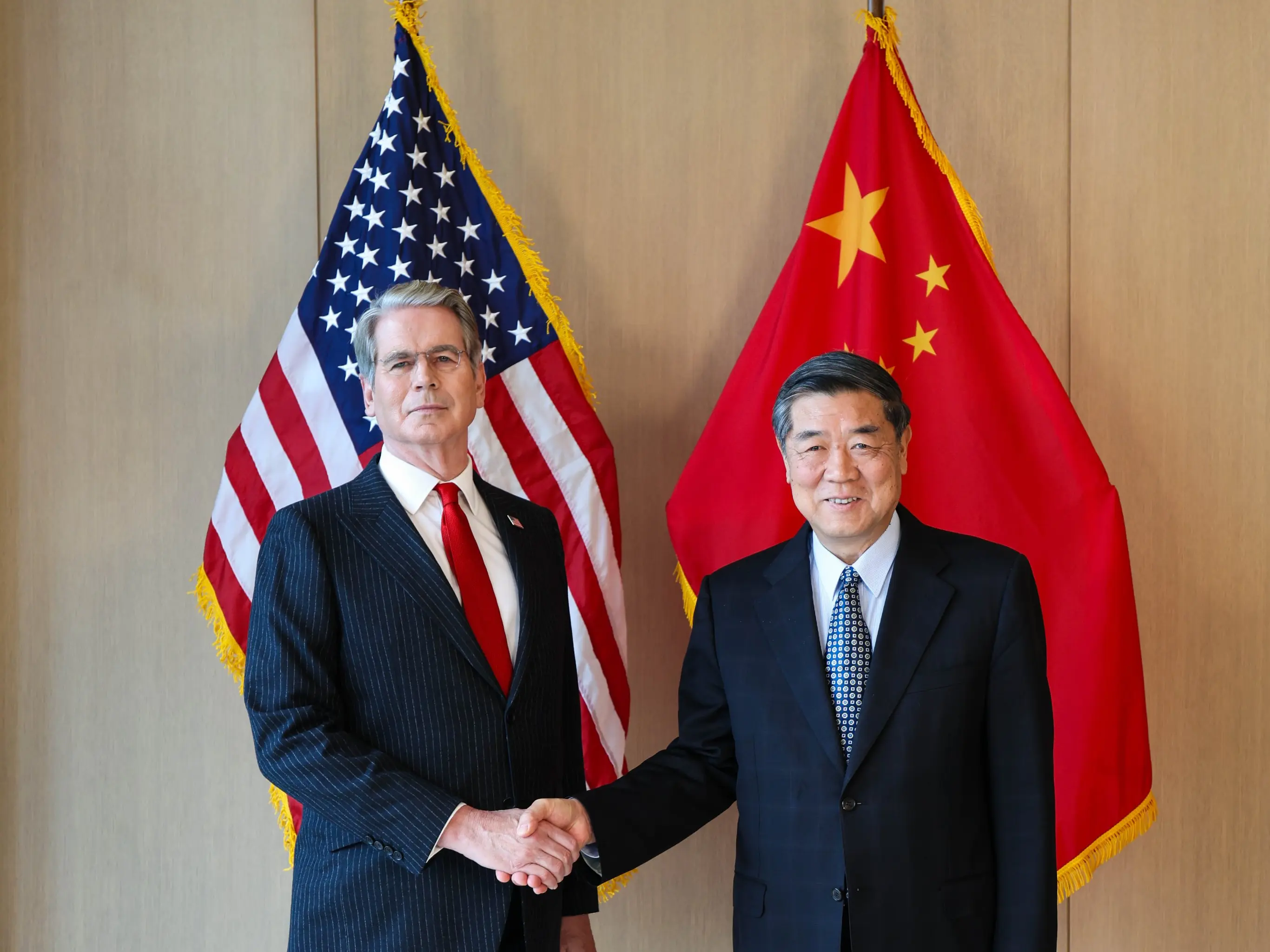)
Bessent meets China’s He Lifeng to prepare for Trump-Xi summit
)
CDU suffers historic defeat in eastern Germany as AfD surges, Merz vows to stay on
)
China now makes advanced memory chips without the machines it was banned from buying
)
Arvind Kejriwal, family members, Delhi CM Rekha Gupta get SIR notices
)
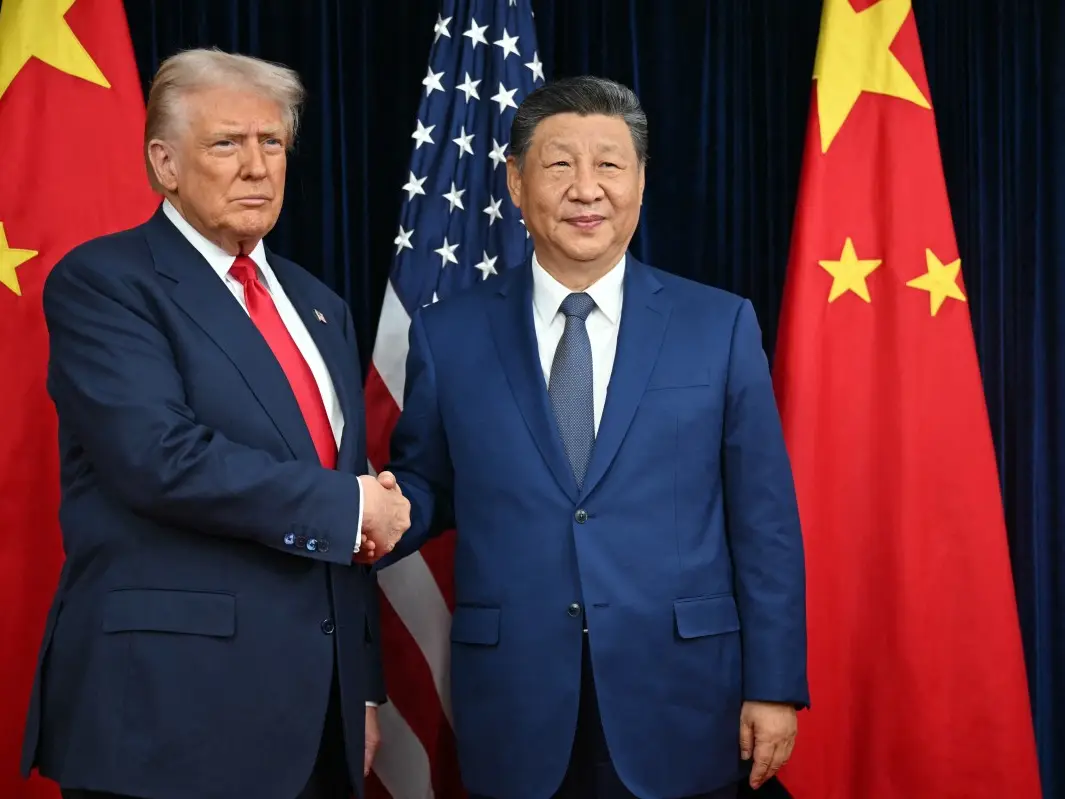
Trump-Xi summit: US Treasury Secretary holds meeting with Chinese Vice Premier
)
Fleming's aspirations as England Test coach include WTC, top ranking and Ashes
)
Saudi vs Houthis: Houthis claim missiles & drones used in attack on key Saudi sites
)
Delhi Air pollution: Strict crackdown on waste burning
)
Apple reportedly building AI server with M8 Ultra chips, may use Nvidia technology
&im=FitAndFill=(700,400))
What TSMC's 2nm technology means for Apple
)
Glitch in the matrix caught on camera: Woman vanishes after talking to reporter
)
Several petrol pumps, other businesses to refuse UPI payments above Rs 2,000 from Oct 16: Is it legal?
)
AI kill switch explained: Why shutting down a dangerous AI may not be as simple as pressing a button
)
Microsoft executive called AI training the ‘largest theft of labour in human history’
)
Pilot recreates Mona Lisa in sky over Oklahoma and Arkansas in four-hour flight: VIDEO
)
US ships in Indian Ocean ‘will be attacked’ if war resumes, warns Iran
)
Samay Raina-Mukesh Chhabra controversy explained: What happened over girlfriend joke on India's Got Latent?
)
Putin's United Russia party wins 355 seats in Duma election; 4 other parties cross threshold to enter parliament
)
S Jaishankar, former Army chief among high-profile names issued Delhi SIR notices
During a conference call with analysts, Musk acknowledged the increasing competition in the electric vehicle market. He noted that other manufacturers have significantly discounted their EVs, making the market more challenging for Tesla.
The company has faced declining electric vehicle deliveries for two consecutive quarters, grappling with intensifying competition and sluggish demand due to a lack of new affordable models. In particular, Tesla's sales of China-made EVs, which are also exported to Europe and other markets, experienced a significant decline in the second quarter compared to the previous year. This contrasts sharply with the strong sales growth reported by Chinese automakers like BYD Co.
Despite these challenges, Tesla remains optimistic about its near-term production outlook, projecting a sequential increase in production for the third quarter.
The company reported revenue of USD 25.50 billion for the quarter, slightly surpassing both last year's figures and analyst expectations, according to data from LSEG. Notably, Tesla's sales of regulatory credits nearly tripled to a record $890 million in the second quarter compared to the same period last year. These credits are purchased by traditional automakers to meet regulatory targets for clean-vehicle production.
However, Tesla's net income for the second quarter was USD 1.48 billion, a significant decrease from USD 2.70 billion in the same quarter of the previous year. The company's adjusted earnings of 52 cents per share fell short of the Wall Street consensus of 62 cents, as calculated by LSEG.
Musk continues to position Tesla as a technology company, emphasizing the importance of self-driving technology. He predicted that Tesla's self-driving software would be capable of operating vehicles without human supervision by next year, expressing confidence in this timeline.
The company stated that the deployment of its Robotaxi service would depend on technological advancements and regulatory approval. However, Musk expressed optimism about obtaining regulatory approval for Tesla's "supervised" Full Self-Driving software in China and Europe by the end of this year.
Tesla has postponed the unveiling of its Robotaxi product from August 8 to October 10, citing the need to make important modifications to the vehicle. This announcement came after Reuters reported that Tesla had shifted its focus to self-driving taxis, shelving plans for a long-promised, more affordable car priced around USD 25,000.
Regarding other projects, Tesla confirmed that Cybertruck production remains on schedule to achieve profitability by the end of the year. The company has also begun validating its first prototype Cybertruck vehicles using a breakthrough battery manufacturing technology called dry coating, which is expected to significantly reduce costs once fully implemented.