Geely unveils long-lasting EV battery technology, promises 50-year lifespan

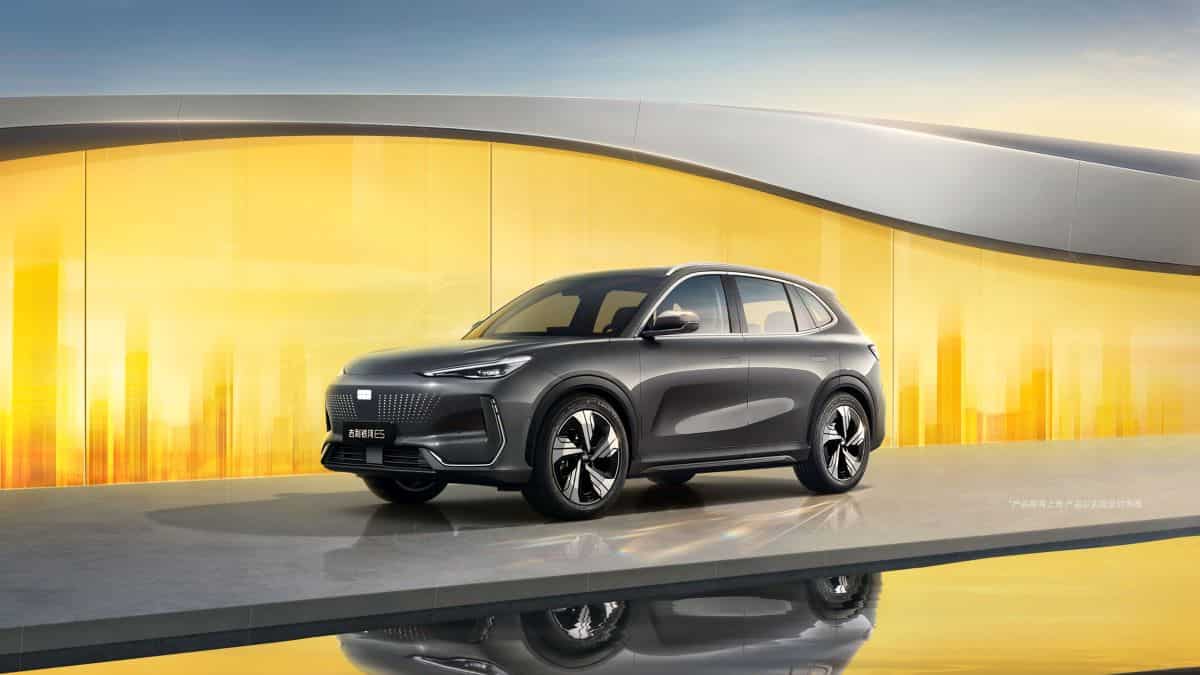
Geely Galaxy E5 SUV
Geely Auto has introduced its next-generation lithium iron phosphate (LFP) battery, promising a lifespan of one million kilometres over 50 years. This breakthrough, dubbed the Aegis Short Blade battery, is designed to alleviate long-standing concerns about battery durability and reliability in electric vehicles (EVs).
The Aegis Short Blade battery represents a significant advancement in battery technology. Traditionally, EV batteries have a lifespan of 10-15 years, deterring potential buyers wary of battery reliability. Geely’s new battery aims to dispel these fears by offering unprecedented longevity and performance.
"The Aegis Short Blade battery sets a new standard in battery technology," a Geely spokesperson said. "With this innovation, we aim to eliminate concerns about battery life and provide our customers with long-lasting, reliable EVs."

Introducing the Geely Galaxy E5 SUV
The first vehicle to feature this cutting-edge battery is the new Geely Galaxy E5 SUV, slated for release in 2025. This model, positioned as a competitor to the Tesla Model Y, will debut in August with the Short Blade battery available in 49.5 kWh and 60.2 kWh versions. These configurations will provide the E5 with ranges of 440 km and 530 km, respectively, under the Chinese CLTC test regime.
The Galaxy E5 is equipped with Geely's 11-in-1 intelligent drive system, achieving ultra-low energy consumption of just 11.9 kWh/100 km. This efficiency, combined with the battery's innovative design, positions the E5 as a formidable player in the EV market.
)
Mushtaq Khan dies at 56: When Welcome actor opened up about his salary for iconic role Ballu
)
US Supreme Court backs Trump administration's use of SAVE database to check voter citizenship
)
Hawaii braces for Hurricane Nolo: NOAA warns of flash flooding and mudslides
)
Bangkok declares flood disaster as heavy rain submerges roads and homes
)
Outrage erupts after 3-year-old is married to 60-year-old man in Pakistan, link to her sister's murder being probed
)
Donald Trump shares image of Xi's arrival in Washington, carries signs of AI
)
Pakistan deploys over 20,000 security personnel as PTI vows march for Imran Khan's release
)
Anthropic says Claude found a new gene-editing enzyme but science isn't confirmed
)
Farhan, who went viral for AK47 celebration vs India in Asia Cup, hopes to lead Pakistan beyond Asian Games
)
Prince Harry offers rare glimpse into Archie and Lilibet’s life after UK move
)
OpenAI AI Agents hacked 4 websites before Hugging Face, researchers reveal
)
Pentagon quietly adds 37 wounded troops to Iran war tally without explaining when or how
&im=FitAndFill=(700,400))
New Friday OTT releases (September 25, 2026): Don’t Be Shy, Hunkkaar: The Roar, Mango Pachcha- 6 movies and TV shows on Netflix, Prime Video and more
)
Asian Games 2026: India face Afghanistan in quarterfinal on Sep 28; Pakistan clash with Hong Kong
)
‘Attack on Mecca a red line for Pakistan’: Shehbaz Sharif warns Houthis at UN
)
‘I rejected it’: Trump confirms turning down Iran’s proposal to reopen Hormuz, claims Tehran is losing ‘badly’
)
Did Hitler kill his niece Geli Raubal? Newly found records reopen a 95-year-old mystery
)
Nigeria Navy moves to boost oil security, tackle crude theft and infrastructure threats
)
Indian diplomat Petal Gahlot raises deteriorating situation in Pakistan-occupied Kashmir in right of reply at UN
)
'Countries far from conflict are penalised': Jaishankar calls for Gulf peace, seafarer safety at UN
)
‘It is all possible’: Putin weighs next steps on Ukraine talks, rules out Europe conflict
)
Global community 'absent' in Gulf crisis: Saudi at UN calls for freedom of navigation, pre war status for Hormuz
)
10,000 gather in support of 87-year-old forcefully evicted from home of 71 years
)
The Paradise: Nani reacts to mixed reviews from critics and audience; ‘I have also learnt from the flaws’
)
Gaza's war turned environmental damage into second crisis
)
Trump-Xi summit wrap: Big pageantry, Iran talks, few major developments and more meetings planned
)
'What kind of confession is this?': Pakistan PM Shehbaz Sharif’s 'terrorists would be roaming New York' remark goes viral, raises alarm online. Watch
)
Myanmar training camp case: US national, 6 Ukrainians allowed to meet their families abroad
)
'FIRST LOOK from inside Noah’s Ark': Researchers share video from inside mysterious mound in Turkey
)
Cindy Crawford’s son Presley Gerber cremated as death probe continues
)
WATCH | As Shehbaz Sharif claims Pakistan’s ‘victory’ during 2025 conflict, Indian diplomat R Srinivas laughs at UN
)
'A terrorist country is asking me that question?': Jaishankar hits back at Pakistani journalist at UN; flags attacks on commercial shipping
)
Russia will achieve Ukraine war aims; Europe doing everything to block peace talks: Lavrov at UN
)
‘Serial practitioner of terrorism’: Jaishankar calls out Pakistan’s ‘state-sponsored’ terror at UNGA
)
US court backs Pentagon's decision to exclude Anthropic over Claude AI restrictions
Advanced battery design and performance
The Aegis Short Blade battery measures just 580 mm in length, 40% shorter than traditional batteries. This compact design reduces internal resistance, generating less heat during operation and charging. The battery can withstand 3,500 charge cycles, equivalent to driving one million kilometres without significant capacity loss. This means an average driver covering 20,000 km per year could potentially use the battery for 50 years before needing a replacement.
Geely believes this extended battery life will enhance the residual values of its vehicles, encouraging owners to keep their EVs longer, thus reducing carbon emissions. The company estimates that this could cut carbon emissions by 80,000 tonnes annually.
Fast charging and cold climate performance
The Short Blade battery also excels in fast charging. It can be charged from 10% to 80% in just 17 minutes and four seconds, a notable improvement over the average 26 minutes for traditional batteries. Additionally, the battery retains 90.54% of its capacity at -30°C, outperforming the average retention rate of 78.96%. This makes it highly suitable for cold climates.
Enhanced safety features
Safety has been a primary focus in the development of the Aegis Short Blade battery. It has undergone rigorous testing, including immersion in seawater, exposure to extreme cold (-35°C), high-frequency scraping, a 26-tonne impact, side collisions, and being subjected to a 1000°C fire for 130 seconds. It passed all these tests, exceeding national standards.
In one particularly extreme test, engineers punctured the battery with eight five-inch nails, and it showed no adverse effects after an hour. It even withstood a shot from a 5.8mm Chinese army rifle without a thermal event.
The battery's enhanced safety is attributed to its high-strength, high-thermal stability diaphragm, a stable separator, and 'safe electrodes' that improve energy density and safety. Additionally, the battery has a self-healing capability, with an aluminium foil layer fusing over puncture holes to provide an insulating layer.
Geely's Aegis Short Blade battery represents a monumental leap in EV technology. With its exceptional lifespan, fast charging, and robust safety features, it addresses many of the concerns that have historically hindered the adoption of electric vehicles. The upcoming Geely Galaxy E5 SUV, equipped with this groundbreaking battery, is poised to set new benchmarks in the EV market.
As Geely continues to innovate and push the boundaries of battery technology, the future of electric vehicles looks increasingly promising. This advancement not only enhances the reliability and performance of EVs but also contributes to a more sustainable and environmentally friendly automotive industry.