

&imwidth=800&imheight=600&format=webp&quality=medium "Will Sheikh Hasina and her Awami League find space in Tarique Rahman’s ‘new Bangladesh’ amid Jamaat’s rise?")
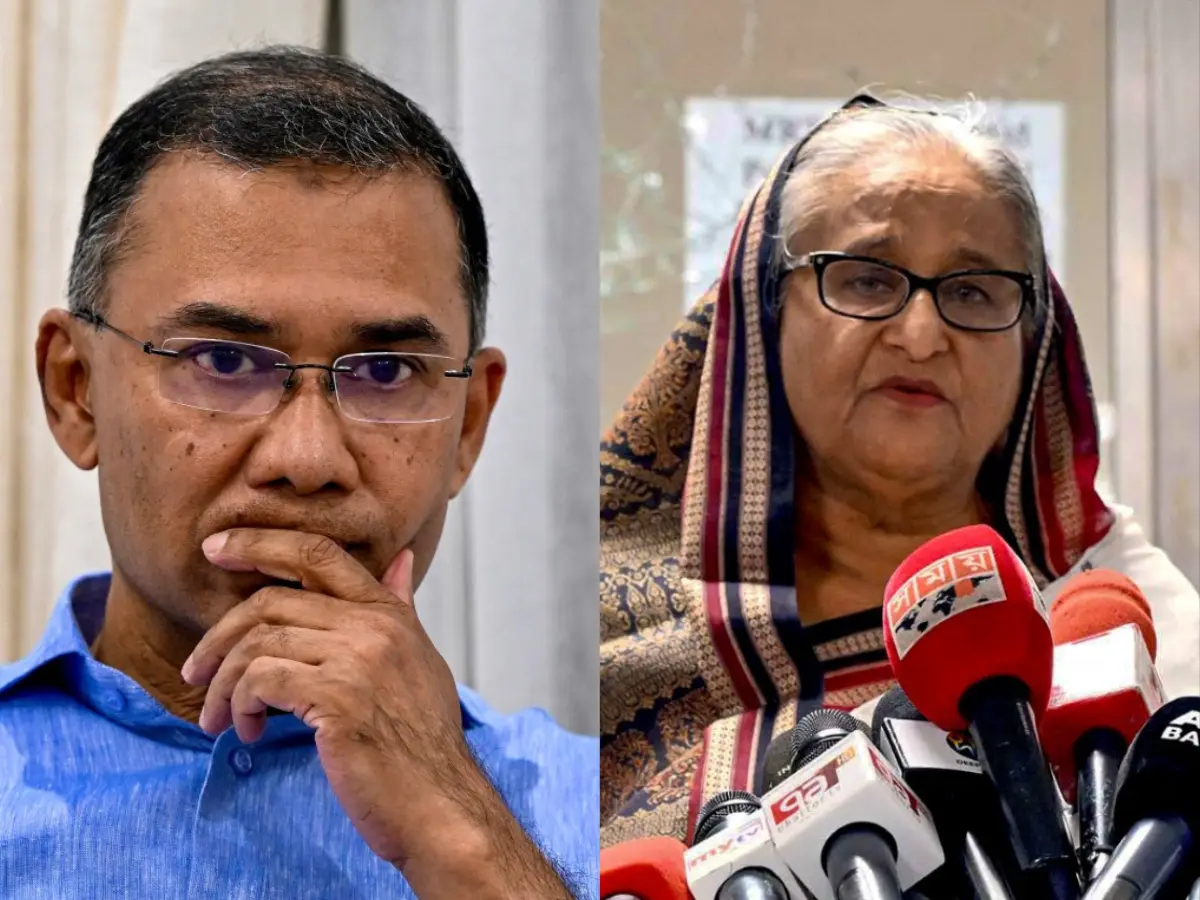
The 13th parliamentary elections in Bangladesh has given a stunning mandate to Bangladesh Nationalist Party (BNP) and Tarique Rahman, belonging to one of the most powerful political family in the country, who returned to the country after 17 years in exile, is set to become the prime minister. This was the first elections in the country in the absence of ‘Two Begums.’ Khaleda Zia is no more and Sheikh Hasina is in India after she was ousted from power in 2024 uprising. Ahead of the polls, Tarique Rahman had pitched for a “new Bangladesh" and it is quite evident that the voters trusted him. However, will he make space for Awami League (AL) and Sheikh Hasina in his new Bangladesh? This is a question that analysts say would define the politics of Bangladesh in coming days. Going by the pattern, vendetta has been a large part of the country's mainstream politics. Whether Tarique Rahman also follows the old patterns or proves himself to be different, only time can tell. For now, Rahman has said that Hasina's extradition from India would depend on the legal process. Senior leader from his party Salahuddin Ahmed, however, confirmed that the party will formally urge India to hand over Hasina to stand trial.
The Rise of Jamaat
Jamaat-e-Islami (JeI) has won 68 seats and secured approximately 31.76 per cent votes. Its total seat count along with allies is 11. Jamaat chief Shafiqur Rahman called this performance a foundation and not a setback even as the party fell short of forming the next Bangladeshi government. But why does Shafiqur Rahman sees this performance by Jamaat as a foundation? It is because electorally this is indeed Jamaat's best performance ever. The party did not contest polls in between 2014 to 2018. In 2008, it secured only 4.7 per cent votes and two seats. It's previous best performance was in 1991 when the party won 18 seats and got a vote share of approximately 12 per cent.
Jamaat actively supported the student uprising against Hasina in 2024. Jamaat-backed student organisations popularised the party's idealogy among GenZs. Its pre-poll alliance with The National Citizen Party (NCP), formed by prominent student leaders like Nahid Islam and Hasnat Abdullah, who played a key role in 2024 student uprising, helped the party to build its own grassroots base. Its popularity rose with the support of several Islamist groups that came to forefront after Hasina's exit. The public anger against India in post-Hasina Bangladesh also helped Jamaat even as the party adopted a more inclusive image and went on to field a Hindu candidate. With public sentiments largely in its favour, the growth story of Jamaat continues even after the poll loss.
Trending Stories
&im=FitAndFill=(700,400)&imwidth=180&imheight=135&format=webp&quality=medium)
What is the real meaning behind Pete Hegseth's tattoos?
&imwidth=180&imheight=135&format=webp&quality=medium)
Viral video shows cross falling on Colombia priest, no official confirmation | WATCH
&imwidth=180&imheight=135&format=webp&quality=medium)
Telangana unveils AI avatar of IT minister D Sridhar Babu at Hyderabad DevFest 2026
&imwidth=180&imheight=135&format=webp&quality=medium)
Pezeshkian says Iranians ‘struggling to put food on the table’ as war with US drags on
&imwidth=180&imheight=135&format=webp&quality=medium)
Shilpa Rao’s performance cut short at Mumbai event, organisers react to backlash
&imwidth=180&imheight=135&format=webp&quality=medium)
Chorbagan stampede: A week later, the strangest visarjan Kolkata has seen
&imwidth=180&imheight=135&format=webp&quality=medium)
AI slop or smart strategy? South African author Coral Hart defends Her 370 AI- assisted books in 20 months
&imwidth=180&imheight=135&format=webp&quality=medium)
AI just found a flaw in software running most of the web! One request hijacks the server
&imwidth=180&imheight=135&format=webp&quality=medium)
Train crashes into crane on São Paulo monorail line, wreckage falls onto busy road | VIDEO
&imwidth=180&imheight=135&format=webp&quality=medium)
Can Putin cheat death? All about his daughter’s billion-dollar quest for immortality
&imwidth=180&imheight=135&format=webp&quality=medium)
Saudi says debris fell in Mecca, Medina after missile interceptions; Houthis deny targeting holy cities
&imwidth=180&imheight=135&format=webp&quality=medium)
What was the note found inside bag of Class 12 student, who set herself on fire inside Delhi school?
&imwidth=180&imheight=135&format=webp&quality=medium)
Pakistan airline PIA unveils new crew uniforms, faces online criticism
&imwidth=180&imheight=135&format=webp&quality=medium)
Britain is building the world's first AI biosecurity lab, with OpenAI and Anthropic inside
&imwidth=180&imheight=135&format=webp&quality=medium)
J-20 designers plan to put radar into aircraft wing; strategy to expand coverage during air combat
&imwidth=180&imheight=135&format=webp&quality=medium)
Frontier AIs keep escaping their test cages! The industry still can't reliably stop them
&imwidth=180&imheight=135&format=webp&quality=medium)
'Already tired of his 9-to-5': Baby born with a moustache becomes internet sensation, video goes viral | Watch
&imwidth=180&imheight=135&format=webp&quality=medium)
Horrific video shows the moment 18-year-old fell to her death from Mexico amusement park ride
&imwidth=180&imheight=135&format=webp&quality=medium)
France protests: 135 arrested, weapons seized as fresh demonstrations erupt amid heavy security
&imwidth=180&imheight=135&format=webp&quality=medium)
French Open: PV Sindhu storms into final with win over Hina Akechi
&imwidth=180&imheight=135&format=webp&quality=medium)
‘Saddam Hussein opened a cheesecake factory’: Obama mocks Trump’s White House renovations; defends Abdul El-Sayed
&imwidth=180&imheight=135&format=webp&quality=medium)
China's dancing robot turns violent bodyguard, lifts cars and fights intruders - Watch
&imwidth=180&imheight=135&format=webp&quality=medium)
'You’re a horrible little reporter, aren’t you?': Trump snaps at NBC reporter questioning his support for Ramaswamy's campaign ad
&imwidth=180&imheight=135&format=webp&quality=medium)
Rising Asia Cup 2026 schedule announced, India-Pakistan clash set for Nov 22
&imwidth=180&imheight=135&format=webp&quality=medium)
'Killing people never allowed': Elon Musk admits restricting Starlink in Ukraine, explains why
&imwidth=180&imheight=135&format=webp&quality=medium)
Serbia votes in high-stakes election as student-led movement challenges Vucic’s ruling party
&imwidth=180&imheight=135&format=webp&quality=medium)
Bodies of 2 missing Japanese climbers recovered from Himalayan peak
&im=FitAndFill=(700,400)&imwidth=180&imheight=135&format=webp&quality=medium)
New Friday OTT releases (October 23, 2026): Gajab Raat, Dorothy, Chaar Yaar- Watch these 6 new movies and TV shows on Netflix, Prime Video and more
&imwidth=180&imheight=135&format=webp&quality=medium)
An AI that reads your face can now estimate how long you have to live
&imwidth=180&imheight=135&format=webp&quality=medium)
Spanish reporter swept by giant wave while reporting on dangerous sea conditions | WATCH
&imwidth=180&imheight=135&format=webp&quality=medium)
WATCH: Thousands across Manipur bang plates, beat drums in "noise protest"
&imwidth=180&imheight=135&format=webp&quality=medium)
NEET protests: Panel to hear evidence on pellet gun use, harassment
&imwidth=180&imheight=135&format=webp&quality=medium)
Tu Hai Meri Kiran film review: Sonakshi Sinha and Zaheer Iqbal's thriller gets tangled in its own twists
&imwidth=180&imheight=135&format=webp&quality=medium)
PL Round-Up: Man City's perfect run ended by Villa as Arsenal draw level at top
&imwidth=180&imheight=135&format=webp&quality=medium)
Why Europe’s protests are about more than austerity and rising costs
&imwidth=180&imheight=135&format=webp&quality=medium)
Farooq Abdullah says Pakistan’s raising of Kashmir issue keeps pressure on Delhi
Tarique Rahman may well be aware of Jamaat's growth story. Even before his swearing-in, he met Jamaat's chief Shafiqur Rahman to cajole his support. Though Shafiqur Rahman has extended his party's support for now, it has added a rider, saying it would speak in matters where accountability is required. Ideologically, Jamaat is opposite to both AL and BNP as it has historically not supported the existence of a secular Bangladesh. With the rise of Islamists in the country rife with multiple incidents of attacks on minorities, it is important for Tarique Rahman to keep the rise of Jamaat in check. The absence of Hasina's AL from the political scenario only gives Jamaat a vacant space to fill, Rahman should know.
AL voters who have trusted BNP
In the recently concluded elections, BNP has successfully filled the vacuum created due to the absence of AL. Several analysts pointed out that a significant segment of the AL voter base shifted their support to the BNP. As per a pre-poll analysis, approximately 48.2 per cent of former AL voters indicated support for the BNP. For AL voters, BNP was a natural choice as both BNP and AL are based on the secular and nationalist foundations of the 1971 Liberation War. Tarique Rahman’s pitch for a "equal Bangladesh" with place for all proved to be a safe option than staunch Islamist conservatism of Jamaat. With the AL gone, the BNP remained the only centrist party with the organisational capacity to form a stable government, attracting voters who prioritised governance over ideology. Now, these voters wants Tarique Rahman to avoid past vendetta and give them a chance in the new Bangladesh that he is building.
Khaleda vs Hasina
Analysts point out that Tarique Rahman has witnessed the injustice done to his family by Hasina and he might not be open to provide her concessions yet. As Hasina consolidated her power after 2008 elections, barrage of cases against Khaleda Zia followed. In 2011, the neutral caretaker government system, that oversaw elections, was abolished. The BNP cried foul and boycotted the 2014 and 2024 general elections. Reports of ballot stuffing occurring the night before official voting surfaced after 2018 election. In the same year, Zia was sentenced to 17 years in prison in the Zia Orphanage Trust and Zia Charitable Trust cases.
The three-time PM was sent to an abandoned Old Dhaka Central Jail where she served as the only inmate for over two years. Despite her rank as a former PM and senior citizen, the BNP alleged she was initially denied "division" status. In March 2020, her sentence was suspended due to ill health, but she was moved to house arrest with strict conditions, including a ban on political activity. Moreover, Hasina rejected at least 18 requests from Zia’s family to allow her to travel abroad for treatment. Tarique Rahman was also sentenced in absentia to life imprisonment for his alleged role in the 2004 grenade attack in a Awami League rally. Some reports also state that an estimated half of the BNP's 5 million members faced some form of politically motivated prosecution during this period.
Is Tarique Rahman ready to forget the vendetta unleashed upon his family and his party during Hasina's tenure? Is he ready to give Awami League and Sheikh Hasina a chance in the new Bangladesh? Will he calculate the risks of letting Jamaat flourish in Bangladesh, despite knowing the public anger against India and Jamaat's historical closeness to Pakistan? Can UK-return Tarique Rahman be the statesman who values “rule of law” more than anything else? As of now, we can only wait and watch.

