WATCH: Chinese Coast Guard hits Philippine Navy personnel in the head; confrontation in South China Sea caught on video

&imwidth=600&imheight=450&format=webp&quality=medium "WATCH: Chinese Coast Guard hits Philippine Navy personnel in the head; confrontation in South China Sea caught on video")
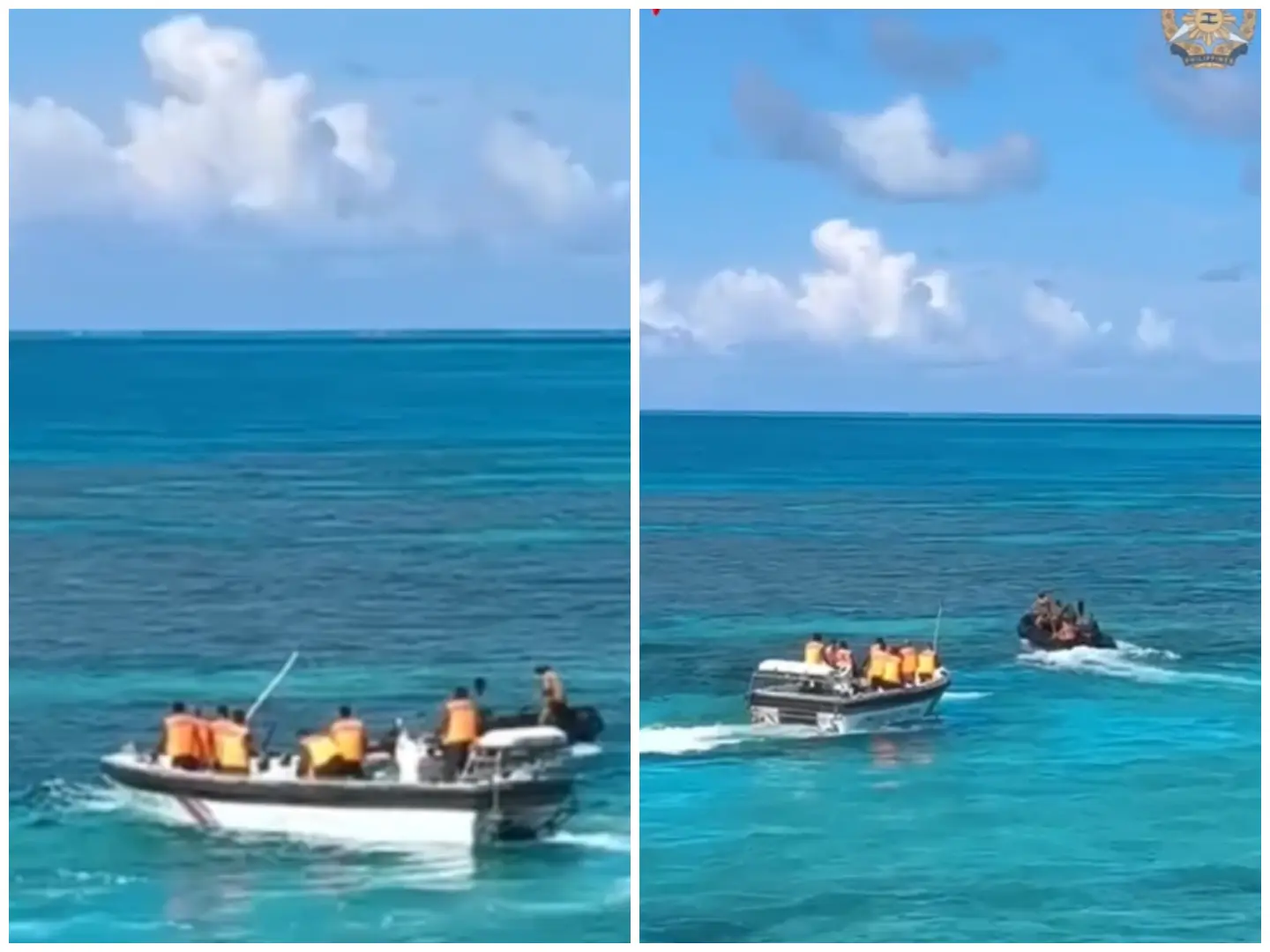
Screeshot of the confrontation from a video shared by Philippine Armed Forces Photograph: (X)
A Philippine Navy sailor sustained a serious head injury after being struck by a member of the China Coast Guard. The altercation was caught on camera. Here is what happened.
China Coast Guard (CCG) personnel allegedly hit a Philippine Navy sailor with a wooden baton, leading to a serious head injury, in an incident in the South China Sea, the Armed Forces of the Philippines (AFP) said on Monday (Jul 20). The confrontation took place near the BRP Sierra Madre at Ayungin Shoal, also known as the Second Thomas Shoal, in the West Philippine Sea. The BRP Sierra Madre is a grounded and decommissioned Philippine Navy vessel, used by the AFP as a military outpost since 1999 to assert its presence in the disputed waters along the South China Sea. Watch the video below.
What happened in the latest Second Thomas Shoal confrontation between China and the Philippines?
According to the AFP and Philippine media reports, a China Coast Guard rigid-hull inflatable boat (RHIB) carrying about eight personnel approached the BRP Sierra Madre, encircled it, and took photographs and videos. During the confrontation with a Filipino boat, CCG personnel allegedly used a wooden baton to strike a Philippine Navy sailor on the head, causing serious injury. The incident reportedly occurred during a Philippine presence-maintenance or rotation mission at the shoal. Medical personnel responded immediately and treated the injured sailor before he was evacuated for further care.
Also read: Philippines slams China's AI monkey video as 'Dehumanising and Racist', demands removal of clip
Ongoing China Coast Guard harassment of the Philippines
The incident is the latest in a series of alleged Chinese actions targeting Philippine resupply and presence-maintenance missions at Second Thomas Shoal. Philippine authorities describe such actions as aggressive and unlawful activities within the country's Exclusive Economic Zone.
Trending Stories
)
&im=FitAndFill=(700,400))
)
)
)
)
&im=FitAndFill=(700,400))
)
)
)
&im=FitAndFill=(700,400))
)
)
&im=FitAndFill=(700,400))
)
&im=FitAndFill=(700,400))
)
)
&im=FitAndFill=(700,400))
)
)
)
)
)
Both China and the Philippines claim the waters in the South China Sea. Beijing says it is enforcing its sovereignty against what it describes as "illegal" intrusions by Philippine vessels, while Manila maintains that the shoal lies within its EEZ under the United Nations Convention on the Law of the Sea (UNCLOS).
Over the past few months, the China Coast Guard has repeatedly boarded, rammed, blocked or used water cannons against Philippine boats and vessels. Several confrontations escalated into physical altercations at or near Ayungin (Second Thomas) Shoal.
Beijing has consistently accused Philippine vessels of carrying out dangerous manoeuvres and provoking incidents.
Significant rise in China-Philippines South China Sea (SCS) confrontations this year
Tensions remained elevated this year even as diplomatic efforts continued. China has been accused of employing so-called "grey-zone" tactics, including blocking Philippine vessels, creating barriers, maintaining an expanded coast guard and maritime militia presence, and asserting control around disputed features such as Scarborough Shoal, Second Thomas Shoal and Sabina Shoal.
From January to May this year, alleged harassment of Philippine resupply missions to Ayungin Shoal were reported, alongside an increase in China Coast Guard patrols and deployments near Scarborough Shoal and Sabina Shoal.
In April, the Philippines said it found traces of cyanide in fish and other marine samples allegedly linked to the activities of Chinese fishing boats near Second Thomas Shoal. China rejected the claim, and accused Manila of fabricating the evidence.
Disputes over Sandy Cay in April also included China Coast Guard vessels turning away Philippine fishing boats near Scarborough Shoal, while the Philippines challenged the activities of Chinese research vessels operating in disputed waters.
In June, the Philippines protested the presence of a Chinese floating structure equipped with personnel and antennae at Scarborough Shoal, claiming it could be a precursor to artificial island construction. The structure was later removed, although stand-offs involving Chinese warships and Philippine vessels continued near the shoal.
China also conducted live-fire military drills in parts of the South China Sea, while the Philippines strengthened security ties with the United States, Japan and ASEAN partners, including through expanded joint military exercises.
China's rejection of the 2016 South China Sea ruling
The latest incident is one of the most serious physical escalations since China rejected the landmark 2016 arbitral ruling issued by the Hague-based Permanent Court of Arbitration, which largely favoured the Philippines in its case against Beijing under UNCLOS. The Philippines continues to assert its rights under UNCLOS and the 2016 arbitral award, while China rejects the ruling and maintains its sweeping claims over most of the South China Sea. Although the disputes have not escalated into a major armed conflict, the risk of miscalculation remains significant.