Want internet in Iran? You'll have to buy your way out of ‘longest nation-scale blackout on record'; Here's how

&imwidth=600&imheight=450&format=webp&quality=medium "Want internet in Iran? You'll have to buy your way out of ‘longest nation-scale blackout on record'; Here's how")
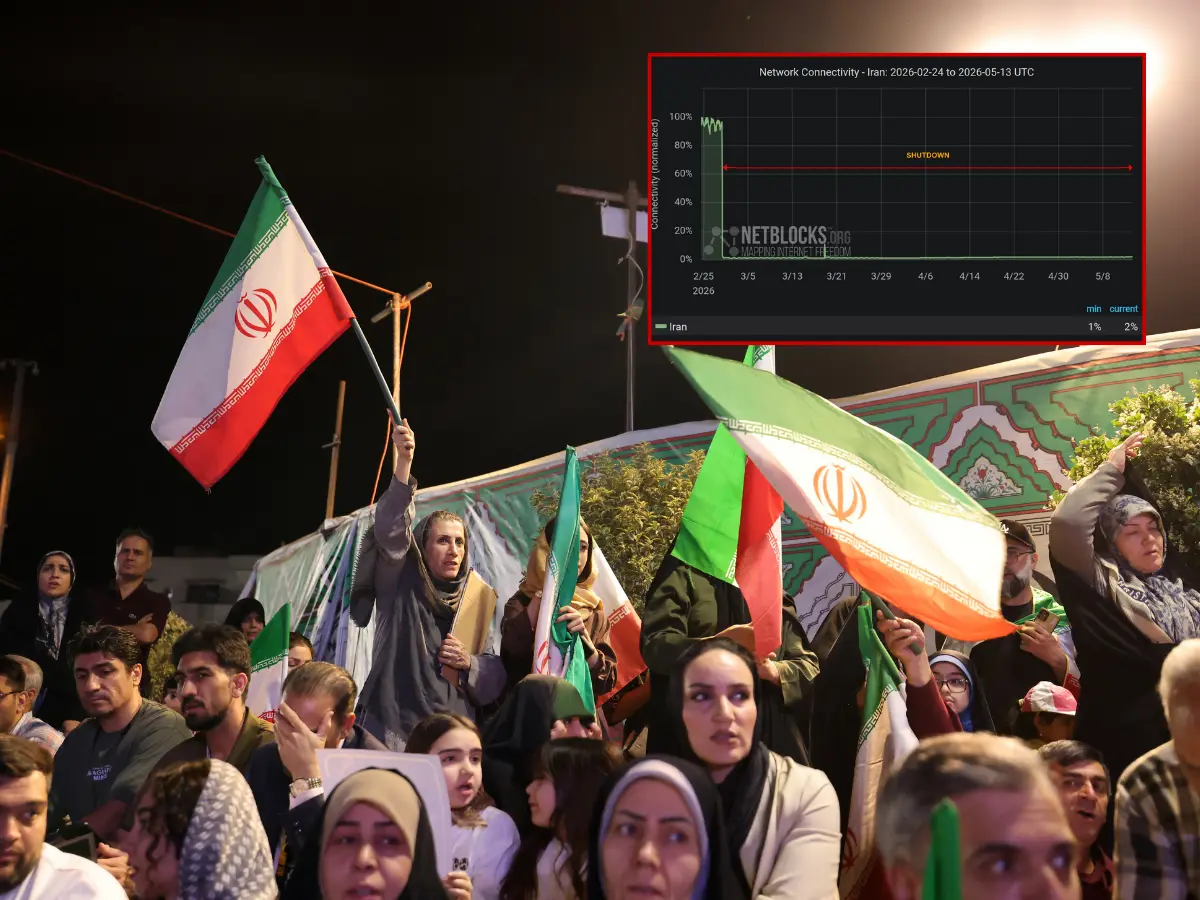
After 75 days offline, Iran offers pricey “pro internet” to select few Photograph: (Combination created using images from AFP and X)
After 75 days of near-total blackout, some Iranians are getting internet back, but only if they can pay steep prices for restricted “Pro Internet.” Critics say connectivity has shifted from public right to premium privilege, creating a tiered digital class system under crisis. Scroll down.
Some Iranians have finally been able to get online, as after months of near-total blackout, Tehran had rolled out a privileged service for a select few. The internet service being offered to a select few at astronomical prices has sparked public criticism, with netizens slamming the new model as "clearly meant to generate money".
Netizens cough up sky-high prices to once again join the digital world
Iran has been in a near-total internet blackout since February 28, the day the United States and Israel launched their campaign against Iran, and the government imposed what has become the longest nation-scale internet shutdown ever recorded.
By May 13, according to internet monitor NetBlocks, it had tracked the blackout for 1,776 hours, or 75 days. “The digital censorship measure has led to profiteering and a decline in digital security as government-backed ”pro" internet schemes and selective whitelisting result in surveillance, corruption and scams," it noted in a post on X.
When a message arrived on Amir-Hassan's phone offering him access to the internet through a special paid service, he didn't think twice. He paid around $11 for an initial 50-gigabyte package. He had no real choice. The 39-year-old tech worker had been without internet access since February 28.
Internet replaced by a tiered system favouring a select few
What has replaced open internet access is something critics are calling a tiered system, one where connectivity has been transformed, in the words of the reformist Shargh newspaper, "from a public and civic right into an allocable privilege."
A government-backed scheme called "Pro Internet" is now offering certain professionals and business owners in Iran limited access at above-normal prices. The scheme has sparked public anger, accusations of profiteering, and concerns about surveillance.
"This model of categorising and classifying the internet in Iran is not a good model," Amir-Hassan told AFP. "It is clearly meant to generate money." Through the Pro Internet service, he can access WhatsApp and Telegram, but not Instagram, X or YouTube without a VPN. The social stigma of subscribing has added another layer of discomfort. "There is judgment, too," Amir-Hassan said. "People say you went and put money into the pocket of a government that unfairly offers this."
Trending Stories
)
)
)
)
)
)
)
)
)
)
)
)
)
)
)
)
)
)
)
)
)
)
)
)
)
)
)
)
)
)
)
)
)
)
)
)
)
)
)
Third-class citizens?
However, according to AFP, not everyone within the designated professional groups has even received the offer. Behrooz Mahmoodi-Bakhtiari, a linguistics professor at the University of Tehran, told the news agency that he did not receive the invitation to subscribe. He said he can access the internet reliably only while on campus. "As soon as you step out of the university, you will again become a third-class citizen, and you have no internet access," he said, noting that other professors at the same institution have received the offer.
The financial burden of the scheme sits atop an economy already under severe strain. Inflation has surged above 50 per cent in recent weeks, the rial has lost much of its value, and basic goods have become sharply more expensive. For many Iranians, paying for limited internet access on top of VPN subscriptions and rising living costs is a stretch that isn't justified by what's on offer.
The government's response has been to blame the war's "enemies" for creating the security conditions that made the blackout necessary. Government spokeswoman Fatemeh Mohajerani said the internet situation would return to normal "once the shadow of war is gone."
Disclaimer: WION takes utmost care to accurately and responsibly report ongoing conflicts in West Asia involving Israel, Iran, US, Gulf nations and non-state actors like Hezbollah, Hamas, Houthis, Islamic State, and others. Claims and counterclaims, disinformation and misinformation are being made online and offline. Given this context, WION cannot independently verify the authenticity of all statements, social media posts, photos and videos.

