'Violating vessels will be dealt with': IRGC warns ships to stick to designated routes in Strait of Hormuz as traffic picks up

&imwidth=600&imheight=450&format=webp&quality=medium "'Violating vessels will be dealt with': IRGC warns ships to stick to designated routes in Strait of Hormuz as traffic picks up")
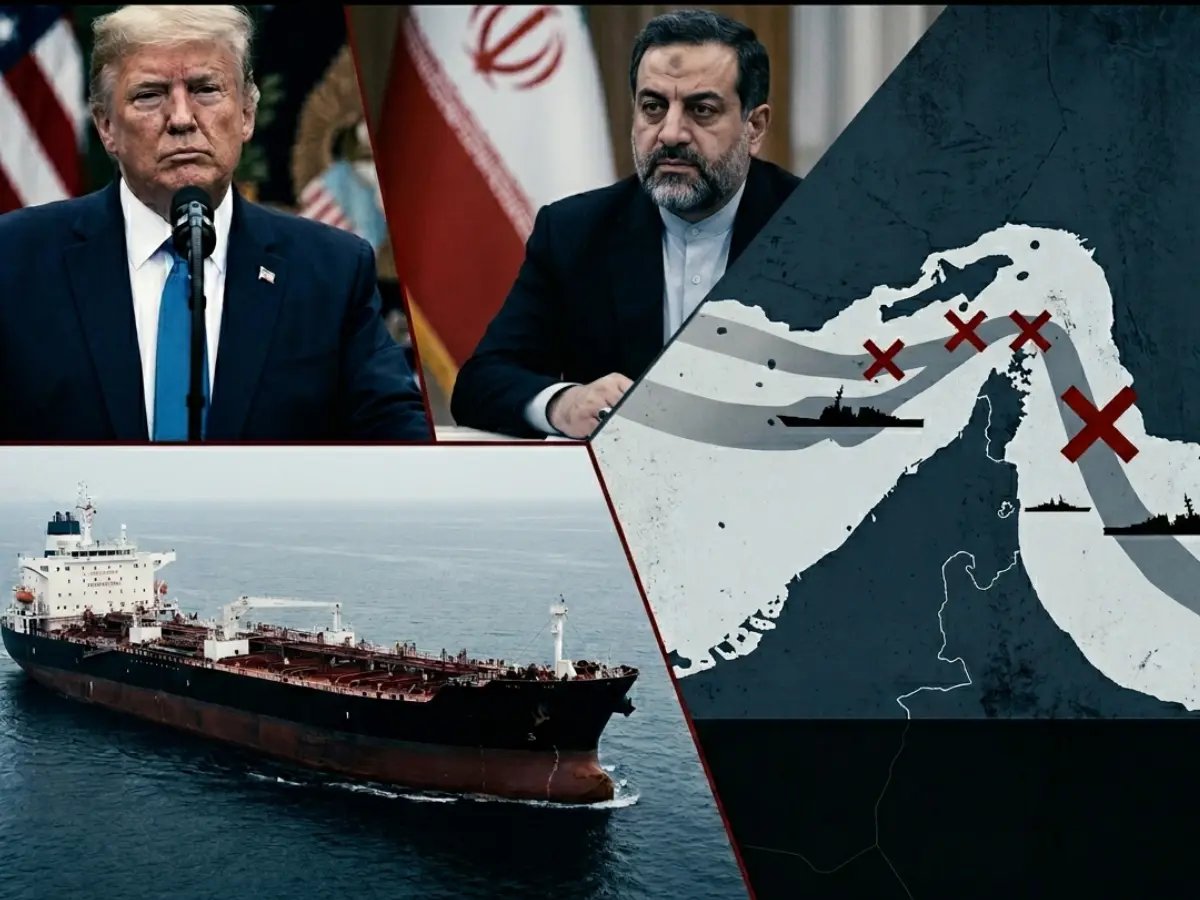
Iran rejects new UN-backed Hormuz shipping routes, says only Tehran-approved lanes are legal Photograph: (AI-generated)
Iran's IRGC Navy has warned vessels to use only Tehran-approved shipping lanes through the Strait of Hormuz, rejecting newly announced evacuation routes and threatening action against ships that violate its instructions, even as traffic through the strategic waterway begins to recover.
Iran's IRGC Navy has warned vessels to strictly follow the routes announced by Tehran for passage through the Strait of Hormuz, saying any movement outside those lanes is "dangerous" and prohibited. In a statement carried by Iranian state media, the force said some authorities had announced a new shipping route without consulting or coordinating with the Islamic Republic. It described that move as unacceptable and warned that ships should not attempt to pass through any route outside the one approved by Iran.
Iran rejects alternative shipping lanes
Tehran says recently announced routes through the Strait of Hormuz were introduced without its approval and are "unacceptable" and "dangerous".
"A few hours ago, without informing or coordinating with the Islamic Republic of Iran, some authorities announced a new route for ships to pass through the Strait of Hormuz, which is unacceptable and completely dangerous," the IRGC statement said, according to Iranian state media. It added that "The only permitted route for passing through the Strait of Hormuz is the routes announced by the Islamic Republic of Iran."
The statement also stated that coordination with the IRGC Navy "through Channel 16" was a requirement "for passing through the Strait of Hormuz", while warning that "violating vessels will be dealt with."
Trending Stories
)
)
)
)
)
)
&im=FitAndFill=(700,400))
)
)
)
)
)
)
)
)
)
)
)
)
)
)
)
)
)
)
)
)
)
)
)
)
)
)
&im=FitAndFill=(700,400))
)
&im=FitAndFill=(700,400))
)
)
)
)
)
)
What new route through the Strait of Hormuz is the IRGC referring to?
The United Nations' International Maritime Organization (IMO) recently introduced new evacuation routes to help move thousands of seafarers still stranded in the Gulf. Those routes include a passage close to the Omani coast for outgoing ships and another through Iranian waters for traffic in both directions.
IMO chief Arsenio Dominguez said the agency hopes to see around 50 vessels evacuated each day through the new lanes.
Hormuz traffic slowly rebounds
The warning comes at a sensitive moment for one of the world's busiest and most strategically important waterways.
According to maritime tracking data, after months of blockades, shipping traffic through the Strait of Hormuz has finally started improving after Iran and the United States agreed to a memorandum of understanding on June 14. On Tuesday, Kpler recorded 25 commodity ship transits through the strait, with 17 more logged by Wednesday afternoon. That was down from 38 transits on Monday, but still above levels seen before the agreement.
Between March 1 and June 14, the same data showed fewer than 10 daily crossings on average. Since June 15, that number has climbed to about 22 ships per day. In normal times, roughly 120 vessels pass through the strait each day, carrying about a fifth of the world's oil and liquefied natural gas exports.
Large crude carriers have also begun moving more freely. Kpler data showed three very large crude carriers crossed on Wednesday, together transporting 4.1 million barrels of crude oil out of the Gulf. On Tuesday, five VLCCs crossed the strait, three of them loaded.
Disclaimer: WION takes utmost care to accurately and responsibly report ongoing conflicts in West Asia involving Israel, Iran, US, Gulf nations and non-state actors like Hezbollah, Hamas, Houthis, Islamic State, and others. Claims and counterclaims, disinformation and misinformation are being made online and offline. Given this context, WION cannot independently verify the authenticity of all statements, social media posts, photos and videos.

