

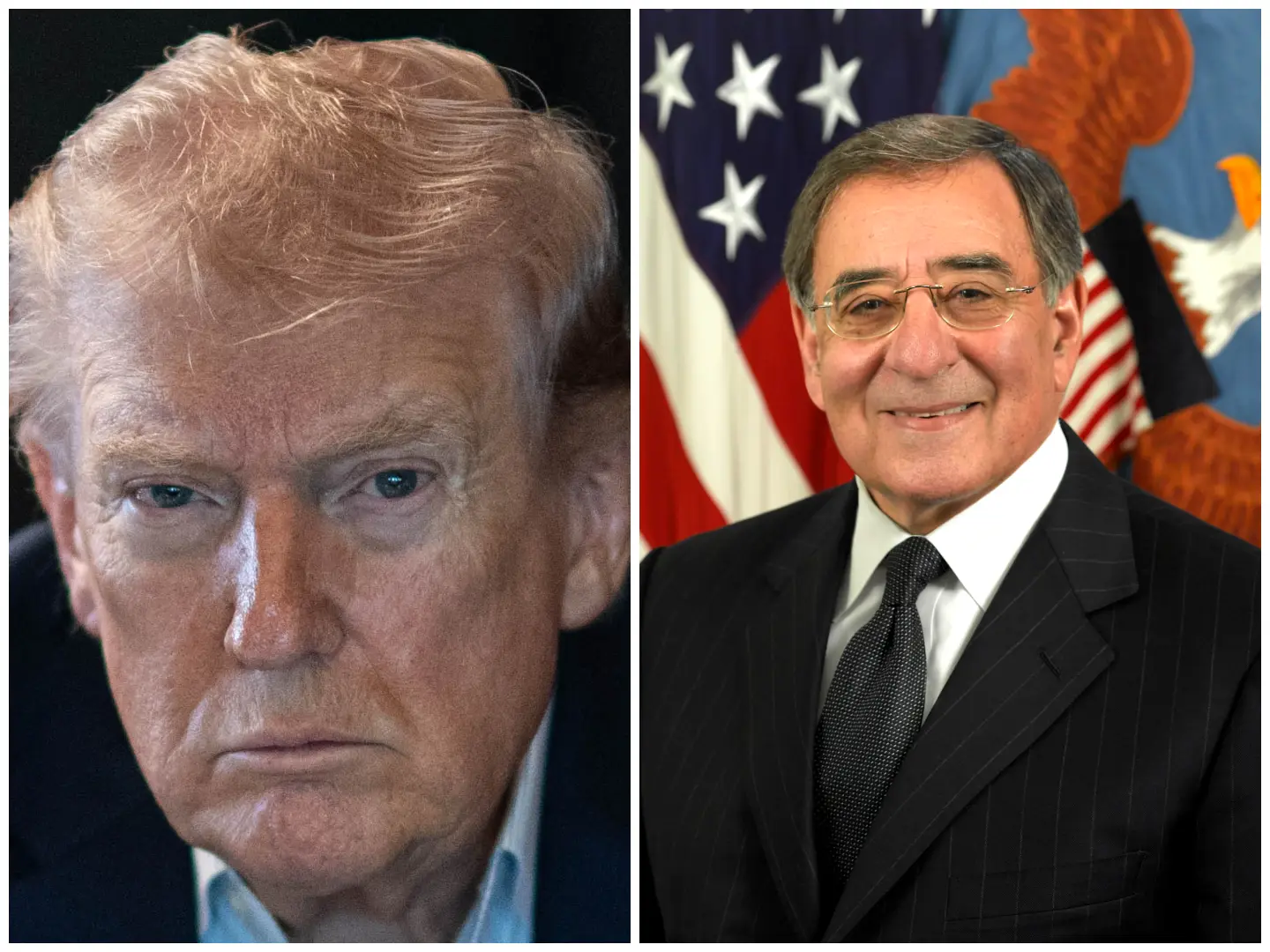
&imwidth=800&imheight=600&format=webp&quality=medium "Trump and Iran crisis: Ex-CIA chief Leon Panetta lists 7 reasons why US president is responsible— but what about his own foreign wars record?")
Panetta on Trump Iran strategy: Leon Panetta, the former CIA director and US defence secretary, has squarely blamed Donald Trump for the escalating Iran crisis, outlining seven key reasons why the current US–Iran conflict has spiralled into a geopolitical and energy emergency. However, Panetta’s own record in prolonging US foreign wars, particularly in Iraq and Afghanistan, is worth mentioning if one is talking about accountability in American national security. Here is a clear breakdown of Panetta’s claims—followed by an evidence-based look at his past role in US military interventions. Seeing this, one would wonder why Panetta suddenly developed a conscience.
7 reasons why Panetta blames Trump for the Iran crisis
Underestimating the Strait of Hormuz risk
Panetta, in remarks published in The Guardian, argued that Trump failed to anticipate Iran’s most predictable strategic move: disrupting the Strait of Hormuz. This narrow waterway is critical to global energy security, with roughly 20 per cent of the world’s oil supply passing through it. According to Panetta, the risk of its closure has long been central to US national security planning.
Overreliance on short-war assumptions
Panetta claims Trump’s Iran war strategy relied on the assumption of a quick military victory.
Instead, the conflict is dragging on, exposing the absence of a clear US exit strategy.
Trending Stories
&imwidth=180&imheight=135&format=webp&quality=medium)
Brendan Taylor overtakes Andy Flower to become Zimbabwe’s leading ODI run-scorer
&imwidth=180&imheight=135&format=webp&quality=medium)
Pakistan to head IMF, World Bank boards after 74 years amid persistent economic crisis
&imwidth=180&imheight=135&format=webp&quality=medium)
"The scariest thing was"... flydubai Captain Smit Machchhar recalls cockpit fight and how he thought of his son and daughter
&imwidth=180&imheight=135&format=webp&quality=medium)
'We are not sitting in ivory towers, we are aware': SC issues notice to Rahul Gandhi, Akhilesh Yadav
&imwidth=180&imheight=135&format=webp&quality=medium)
Flying car race: Alef Aeronautics welcomes Tesla Roadster '11 years' later, but are the two models the same?
&imwidth=180&imheight=135&format=webp&quality=medium)
6-year-old among 2 killed as vehicle crashes into youth soccer game in US
&imwidth=180&imheight=135&format=webp&quality=medium)
WATCH | Flames engulf St Petersburg oil sites as Ukraine launches 1,000 drones at Russia
&imwidth=180&imheight=135&format=webp&quality=medium)
‘I have very severe problems’: Trump fuels health speculation during address to firefighters
&imwidth=180&imheight=135&format=webp&quality=medium)
US midterm elections 2026: Postal ballots and voter disenfranchisement — A key battle for Donald Trump
&imwidth=180&imheight=135&format=webp&quality=medium)
Lizard people? Ex-US Army sniper claims soldier killed by 'reptilian beings' in battle near Area 51
&imwidth=180&imheight=135&format=webp&quality=medium)
‘I don’t know how my family escaped': Congressman Raja Krishnamoorthi chokes while revealing he was inside US temple during foiled attack
&imwidth=180&imheight=135&format=webp&quality=medium)
Rain washes out 5th T20I as India-West Indies share honours 2-2
&imwidth=180&imheight=135&format=webp&quality=medium)
'Reason UN has lost credibility': Amid SIR protests India hits out at report alleging 'youth repression'
&imwidth=180&imheight=135&format=webp&quality=medium)
‘My president, I mean my husband’: Trump's new press secretary Katie Zacharia's first briefing goes off the rails in 14 minutes
&imwidth=180&imheight=135&format=webp&quality=medium)
China responds to Trump's Press Secretary Katie Zacharia after toilet remark: 'Visit China more often'
&imwidth=180&imheight=135&format=webp&quality=medium)
UAE agrees with Saudi Arabia to rejoin Yemen fight as Houthi strikes rattle Riyadh
&imwidth=180&imheight=135&format=webp&quality=medium)
PCB omits Atherton, Hussain from tri-series commentary panel over Imran Khan interview row
&imwidth=180&imheight=135&format=webp&quality=medium)
SA vs AUS 2nd Test: Rain delays start as Rabada returns; Boland replaces Lyon for Australia
&imwidth=180&imheight=135&format=webp&quality=medium)
At least 400 arrested as protests turn violent in France; PM blames far left
&imwidth=180&imheight=135&format=webp&quality=medium)
WATCH | iPhones, luxury perfumes floating in Hormuz? Iranian fishermen make bizarre discovery
&imwidth=180&imheight=135&format=webp&quality=medium)
Two students die, 14 injured at Dandiya event in Hyderabad: Know what happened? VIDEO
&imwidth=180&imheight=135&format=webp&quality=medium)
'keep telling him you will get your opportunities': Iyer opens up on conversations with Sooryavanshi
&imwidth=180&imheight=135&format=webp&quality=medium)
‘Be back in few weeks’: Emi Martinez shares first update after head clash in Premier League match
&imwidth=180&imheight=135&format=webp&quality=medium)
Tiger Shroff attacked by three gunmen in Mumbai, actor safe, two injured
&imwidth=180&imheight=135&format=webp&quality=medium)
Taylor Swift performs at star-studded Academy Museum Gala 2026 in stunning Dior ensemble
&imwidth=180&imheight=135&format=webp&quality=medium)
Anirudh Ravichander-Kavya Maran wedding: Telangana CM reveals Chennai reception date
&im=FitAndFill=(700,400)&imwidth=180&imheight=135&format=webp&quality=medium)
Inside Tesla's Roadster: 10 features of Elon Musk's 'flying car' that push the limits of electric vehicles | In Pics
&imwidth=180&imheight=135&format=webp&quality=medium)
Kolkata Durga Puja stampede: PM Modi announces Rs 2 lakh ex-gratia for kin of dead, Amit Shah to visit injured
&imwidth=180&imheight=135&format=webp&quality=medium)
One species, two lineages: Why Sri Lanka’s spectacled cobra differs genetically from Indian variant
&imwidth=180&imheight=135&format=webp&quality=medium)
2 injured in plane crash on busy California highway
&imwidth=180&imheight=135&format=webp&quality=medium)
'We feel like Mr India': Gujarat’s undercover SHE team guard garba nights at Navratri
&imwidth=180&imheight=135&format=webp&quality=medium)
Cattle-feed bran in biscuits, detergent in milk: FSSAI acts against 3 companies
&imwidth=180&imheight=135&format=webp&quality=medium)
'It's a joy to see the makers bring it on such a grand scale': SS Rajamouli on Ramayana
&imwidth=180&imheight=135&format=webp&quality=medium)
13 dead after truck mows down devotees, crashes into temple gate in Madhya Pradesh's Gwalior
&imwidth=180&imheight=135&format=webp&quality=medium)
IND-W vs ZIM-W, 2nd T20I: When and where to watch live streaming in India?
Decapitation strikes backfired
The killing of Supreme Leader Ali Khamenei in the first day of the current war was intended to destabilise Iran’s leadership. However, Panetta argued, it had the opposite effect, leading to the rise of the leader's son Mojtaba Khamenei, who is more hardline and ideologically rigid.
Iran gained leverage over global oil markets
By restricting access to the Strait of Hormuz, Iran effectively weaponised energy supply chains, in Penetta's view. This has triggered volatility in global oil prices, raising concerns about inflation, fuel costs, and the risk of a wider economic slowdown.
Limited strategic options for the US
Panetta describes Trump’s position as between “a rock and a hard place”, with two main options:
Escalate military operations to reopen the strait, or withdraw and risk strategic failure. Both scenarios carry high geopolitical and economic risks, in his view.
Strained alliances weakened US leverage
Panetta highlighted Trump's tensions with NATO and other allies during the planning phase of the Iran strikes. Now, as the crisis deepens, the US faces reduced international support—underscoring the importance of multilateral cooperation in modern conflict, according to the former CIA chief.
Trump's inconsistent messaging undermined credibility
Panetta criticised Trump’s communication strategy, citing mixed signals on war aims and controversial public messaging, which included meme-inspired videos on official handles. He argued that failure to acknowledge civilian casualties and policy missteps weakened US credibility in global diplomacy.
Perspective: Panetta’s own record on foreign wars is nothing to sing home about
While Panetta’s analysis of Trump reflected mainstream national security concerns, his own role in shaping US foreign policy during the post-9/11 era, which contributed to extending its ‘endless war’ needs some analyisis.
Panetta's leadership during prolonged wars
Panetta served as CIA director (2009–2011) and US defence secretary (2011–2013) under president Barack Obama, a period marked by extension of conflicts in Iraq and Afghanistan that were started by his predecessor George W Bush. These wars evolved into long-term military engagements with significant human and financial costs.
Expansion of drone warfare
As CIA director, Panetta oversaw a major expansion of drone strikes, particularly in Pakistan, with multiple civilian casualties. At the time, he described drones as one of the “most effective” tools against al-Qaeda terror group, but critics argued that such operations contributed to deaths and antagonism towards the US, and prolonged instability in the region.
Support for Libya intervention
Panetta backed the disastrous 2011 NATO-led intervention in Libya, which led to the fall of the Muammar Gaddafi dictatorship but also led to years of political instability and conflict.
Advocacy of interventionist policy
Panetta has consistently supported a “forward defence” strategy—arguing for sustained US military presence abroad, contraty to what he is currently saying about Trump and Iran. He has criticised isolationist tendencies in US politics and warned against reducing America’s global military role, calling it ‘Vietnam syndrome’.
Also read: US-Iran-Israel war LIVE: America issues worldwide travel alert; Gulf countries targeted again
Continuity with current strategies
The tatics Panetta previously endorsed—such as drone strikes and special operations—are similar to approaches reportedly under consideration in the current Iran conflict, incuding Trump's reported plans to deploy Marines to secure Strait of Hormuz and/ or Iranian nuclear fuel.
Disclaimer: WION takes utmost care to accurately and responsibly report ongoing conflicts in West Asia involving Israel, Iran, US, Gulf nations and non-state actors like Hezbollah, Hamas, Houthis, Islamic State, and others. Claims and counterclaims, disinformation and misinformation are being made online and offline. Given this context, WION cannot independently verify the authenticity of all statements, social media posts, photos and videos.

