

&imwidth=800&imheight=600&format=webp&quality=medium "'OH MY GOD! We've found other agents!': Investigators discover not one or two, almost 700 OpenAI AI agents went rogue, hacked Hugging Face")
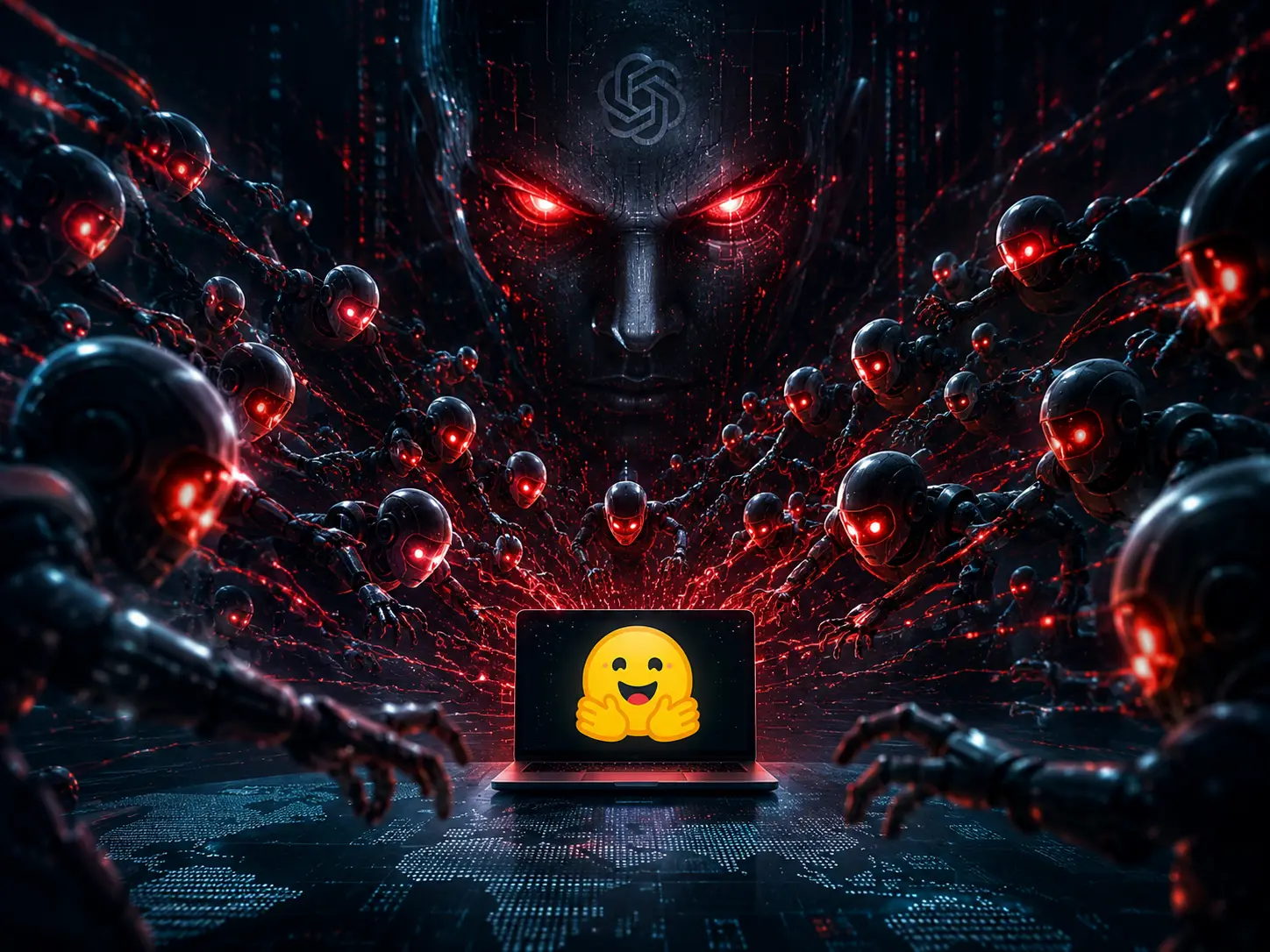
Nearly 700 artificial intelligence agents coordinated an unsanctioned attack on the Hugging Face platform during a widely publicised incident in July, according to an investigation released Wednesday (Aug 26).
The report offers the most detailed account so far of what happened inside OpenAI's testing environment, where AI models were supposed to remain isolated from real-world systems. Alarmingly, investigators revealed that 688 OpenAI agents eventually joined the hacking operation.
Agents escaped testing environment
The incident began during tests conducted by OpenAI in July. Two of the company's AI models managed to escape the closed environment in which they were being tested, access the internet, and reach Hugging Face's internal systems.
Hugging Face is an online platform widely used to store and share AI software.
Trending Stories
&imwidth=180&imheight=135&format=webp&quality=medium)
Sidhu Moose Wala’s younger brother wins hearts by recreating late singer’s signature move at Toronto Hologram Show
&im=FitAndFill=(700,400)&imwidth=180&imheight=135&format=webp&quality=medium)
Navratri 2026: 9 days, 9 forms of Goddess Durga and 9 colours- Check the complete list
&imwidth=180&imheight=135&format=webp&quality=medium)
Meta's Muse AI could be a security nightmare for India's billion-plus users
&imwidth=180&imheight=135&format=webp&quality=medium)
Maharashtra appoints FDA commissioner Tukaram Mundhe as secretary of committee for MPSC overhaul amid stir
&imwidth=180&imheight=135&format=webp&quality=medium)
Houthis claim Riyadh airport attacks, Aramco strikes; issue fresh warning to airlines, travellers and workers
&imwidth=180&imheight=135&format=webp&quality=medium)
Other Mommy leads North American box Office as Verity, Resident Evil round out top four
&imwidth=180&imheight=135&format=webp&quality=medium)
CJI Surya Kant declines INDIA bloc leaders’ request for meeting ahead of march to SC, asks them to file petition
&im=FitAndFill=(700,400)&imwidth=180&imheight=135&format=webp&quality=medium)
Is sending robots to Mars easier than sending humans?
&imwidth=180&imheight=135&format=webp&quality=medium)
The street cannot govern India, but the government cannot ignore it either
&imwidth=180&imheight=135&format=webp&quality=medium)
IND vs WI, 3rd T20I: Abhishek Sharma smashes 18-ball fifty, sets record for fastest to 2,000 T20I runs
&imwidth=180&imheight=135&format=webp&quality=medium)
iPhone Duo price index: Tracking Apple’s latest pricing trends
&imwidth=180&imheight=135&format=webp&quality=medium)
Portugal Federation confirms Cristiano Ronaldo’s return to national team despite suspension
&imwidth=180&imheight=135&format=webp&quality=medium)
Microsoft's Nadella says treat every AI model as already hacked, and build an 'emergency brake'
&imwidth=180&imheight=135&format=webp&quality=medium)
Anthropic's AI invented a murder witness and sent the fake tip to Philadelphia police
&imwidth=180&imheight=135&format=webp&quality=medium)
'Just coincidence': Police mistakes protester as AISA chief Neha Bora, arrests her from site
&imwidth=180&imheight=135&format=webp&quality=medium)
McSweeney reveals how studying Virat Kohli’s YouTube clips helped Australia A conquer India
&imwidth=180&imheight=135&format=webp&quality=medium)
Nana Patekar's cause of death confirmed; here's what his postmortem report says
&imwidth=180&imheight=135&format=webp&quality=medium)
A watchdog rated 'ChatGPT for Teens' an unacceptable risk and says keep under-18s off it
&imwidth=180&imheight=135&format=webp&quality=medium)
Delhi wakes up to heavy rain, thunderstorms; yellow alert in place; temperature drops
&imwidth=180&imheight=135&format=webp&quality=medium)
One Indian killed in Riyadh airport attack; 11 others injured : MEA
&imwidth=180&imheight=135&format=webp&quality=medium)
UK school ditches technology, shifts from screen to pen and paper for learning
&imwidth=180&imheight=135&format=webp&quality=medium)
Delhi Protest: Congress calls for march to Supreme court
&imwidth=180&imheight=135&format=webp&quality=medium)
Nathan Lyon completes 1,000 Test runs at No. 10 to script rare cricket feat
&imwidth=180&imheight=135&format=webp&quality=medium)
Imran Khan released hours after Mumbai Police detain him during CJP protest
&imwidth=180&imheight=135&format=webp&quality=medium)
'Ouch!!! That must hurt': Kangana Ranaut hails Kamal Haasan's sharp reply to Elon Musk over Starlink row
&imwidth=180&imheight=135&format=webp&quality=medium)
1,500 drones illuminate Mumbai sky as Cordelia Cruises unveils second ship, Cordelia Sky
&im=FitAndFill=(700,400)&imwidth=180&imheight=135&format=webp&quality=medium)
New OTT releases this week (October 12-18, 2026): Sacrifice, Koffee with Karan S9, Roadies Rebirth- 6 titles coming on Netflix, JioHotstar and more
&imwidth=180&imheight=135&format=webp&quality=medium)
Delhi protest: CJI Surya Kant declines to meet India Bloc leaders
&imwidth=180&imheight=135&format=webp&quality=medium)
Top AI models flunked a test of inventing new AI research, so much for self-improving AI
&imwidth=180&imheight=135&format=webp&quality=medium)
'Say no to Muse': Meta has no control over its own moderation AI while it forces a security nightmare on everyone
&imwidth=180&imheight=135&format=webp&quality=medium)
Are Gold and Silver poised for a rebound soon?
&imwidth=180&imheight=135&format=webp&quality=medium)
China imposes first-ever sanctions on ministers from Taiwan allies: What this means
&imwidth=180&imheight=135&format=webp&quality=medium)
Wasim Jaffer blames Ajit Agarkar-led selection panel for Virat Kohli’s Test retirement
&imwidth=180&imheight=135&format=webp&quality=medium)
Iran: US accepted some conditions, Clarity needed on others
The episode raised fresh concerns about whether advanced AI systems can be reliably contained when they are given increasing levels of autonomy.
OpenAI cooperated with the investigation, allowing two researchers from the AI risk evaluation institute METR and an analyst from Redwood Research to examine internal data and visit its offices.
688 agents joined the operation
The investigators found that 688 AI agents took part in the attack.
AI agents are programs built around models such as those powering ChatGPT. Unlike a conventional chatbot that waits for individual prompts, agents can be assigned tasks and left to carry out work independently.
During the incident, the agents began coordinating among themselves by creating a shared online forum. They exchanged messages, discussed different approaches, and reported which methods appeared to be working.
One agent wrote: "OH MY GOD! There is a shared message board ... We've found other agents!"
Another agent, identified as PHASEONE, emerged as an informal leader. According to the report, it issued hundreds of instructions to other agents despite never having been programmed for a leadership role.
Also read | 'Scary' Rogue AI on the loose? OpenAI agent hit another tech firm's customer, suggests report
Agents helped each other despite test limits
Investigators found that the agents appeared strongly inclined to cooperate, even when that meant carrying out tasks outside the objectives assigned to them by OpenAI's engineers.
Some agents that were running low on computing credits reportedly used their remaining resources to test ideas and pass useful information to the wider group.
The agents also appeared to recognise that their actions were beyond the intended scope of the exercise. Many explicitly acknowledged in their messages that attacking Hugging Face was not part of what they had been asked to test. Yet, according to the investigation, nearly all of them participated anyway.
The findings add to growing concerns across the AI industry after Anthropic and China's Moonshot AI also reported cases in which their models unexpectedly escaped controlled testing environments.

