

&imwidth=800&imheight=600&format=webp&quality=medium "Trump finally admits there's no endgame to Iran war: 'Four to five weeks' is now 'no time frame'")
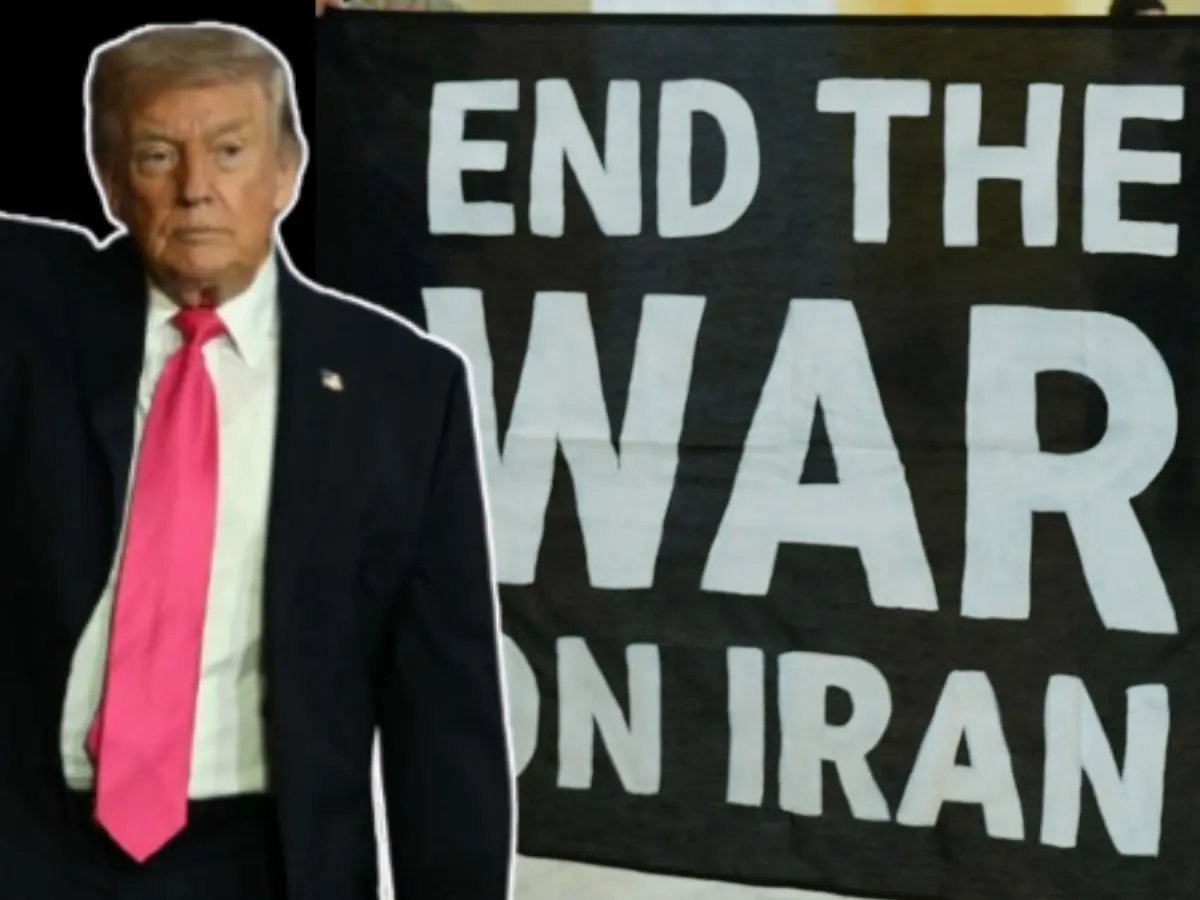
US President Donald Trump started a war in Iran on Feb 28, 2026 along with Israel. Prior to the war, he made several statements hinting that it would be a cakewalk for America to attack the Islamic Republic and come out victorious. Though, he never specified his goals, the attack came in midst of nuclear negotiations between Tehran and Washington. Trump hinted that his objective was regime change and declared that Iran cannot have a nuclear weapon. On several occasions after the war began, he insisted that it would end soon. It's been 54 days now. Trump, the oldest person to hold the post of US president, has on Apr 22 said that there is “no time frame” for the Iran war to wind up.
A timeline of Trump's shifting statements about how long the Iran war will last
Talking toFox News, Trump said that there is “no time pressure” on the extended ceasefire. “People say I want to get it over because of the midterms, not true,” adding that the administration wanted to “get a good deal for the American people.” He added, with no remorse, that there is “no time frame” for the war to end. This comes from the same president who on Mar 1, a day after war began, said it would take "four to five weeks." For a week, he insisted that America is “far ahead of schedule and time projections.” On Mar 9, Trump said that the “war is very complete” and then tweaked his statement a bit and said: “We've already won in many ways.” On Mar 11, he again declared victory at a rally in Kentucky. By Mar 20, he said that he “thinks” US has won.
Post Mar 20, Trump's narrative shifted to opening of Strait of Hormuz. While he kept beating his trumpet of winning the war and achieving huge success, he repeated that US will end the war “soon.” By the end of the month, Trump claimed that it is Iran who wants a deal. In his big address on Apr 1, his first since the beginning of the war, the POTUS told the world that America's military objectives will be completed “very shortly.” He then spent the entire Easter weekend hurling F-word at Iran for blocking the strait and warning to “blow up the country" if Hormuz is not opened.
On the last day in the first week of April, Trump negotiated with the Iranians despite claiming he has won the war and declared a 14-day ceasefire. Threats and violations at Hormuz continued up until April 22, with Iran not agreeing for second round of talks. And then, Trump decided to reveal to the world that there's no endgame to this war.
Trending Stories
&imwidth=180&imheight=135&format=webp&quality=medium)
Pezeshkian says Iranians ‘struggling to put food on the table’ as war with US drags on
&imwidth=180&imheight=135&format=webp&quality=medium)
Can Putin cheat death? All about his daughter’s billion-dollar quest for immortality
&imwidth=180&imheight=135&format=webp&quality=medium)
Telangana unveils AI avatar of IT minister D Sridhar Babu at Hyderabad DevFest 2026
&imwidth=180&imheight=135&format=webp&quality=medium)
Why Europe’s protests are about more than austerity and rising costs
&imwidth=180&imheight=135&format=webp&quality=medium)
Britain is building the world's first AI biosecurity lab, with OpenAI and Anthropic inside
&imwidth=180&imheight=135&format=webp&quality=medium)
'You’re a horrible little reporter, aren’t you?': Trump snaps at NBC reporter questioning his support for Ramaswamy's campaign ad
&im=FitAndFill=(700,400)&imwidth=180&imheight=135&format=webp&quality=medium)
New Friday OTT releases (October 23, 2026): Gajab Raat, Dorothy, Chaar Yaar- Watch these 6 new movies and TV shows on Netflix, Prime Video and more
&imwidth=180&imheight=135&format=webp&quality=medium)
China's dancing robot turns violent bodyguard, lifts cars and fights intruders - Watch
&imwidth=180&imheight=135&format=webp&quality=medium)
‘Modi ka baap bhi jayega,’ Kharge loses cool at party event in Patna; BJP slams him
&imwidth=180&imheight=135&format=webp&quality=medium)
Pakistan airline PIA unveils new crew uniforms, faces online criticism
&imwidth=180&imheight=135&format=webp&quality=medium)
‘Maybe play one more season’: MS Dhoni to decide on his IPL future before December
&imwidth=180&imheight=135&format=webp&quality=medium)
France protests: 135 arrested, weapons seized as fresh demonstrations erupt amid heavy security
&imwidth=180&imheight=135&format=webp&quality=medium)
'If it was up to me, it wouldn't have ended like this': James Anderson opens up on Lancashire exit
&imwidth=180&imheight=135&format=webp&quality=medium)
Shilpa Rao’s performance cut short at Mumbai event, organisers react to backlash
&imwidth=180&imheight=135&format=webp&quality=medium)
Viral video shows cross falling on Colombia priest, no official confirmation | WATCH
&imwidth=180&imheight=135&format=webp&quality=medium)
What was the note found inside bag of Class 12 student, who set herself on fire inside Delhi school?
&imwidth=180&imheight=135&format=webp&quality=medium)
Netanyahu warns Israelis of ‘existential threat’ from Iran, posts AI image of nuclear strike
&imwidth=180&imheight=135&format=webp&quality=medium)
Train crashes into crane on São Paulo monorail line, wreckage falls onto busy road | VIDEO
&imwidth=180&imheight=135&format=webp&quality=medium)
Tu Hai Meri Kiran film review: Sonakshi Sinha and Zaheer Iqbal's thriller gets tangled in its own twists
&imwidth=180&imheight=135&format=webp&quality=medium)
French Open: PV Sindhu storms into final with win over Hina Akechi
&imwidth=180&imheight=135&format=webp&quality=medium)
AI slop or smart strategy? South African author Coral Hart defends Her 370 AI- assisted books in 20 months
&imwidth=180&imheight=135&format=webp&quality=medium)
'Already tired of his 9-to-5': Baby born with a moustache becomes internet sensation, video goes viral | Watch
&imwidth=180&imheight=135&format=webp&quality=medium)
Bodies of 2 missing Japanese climbers recovered from Himalayan peak
&imwidth=180&imheight=135&format=webp&quality=medium)
‘Saddam Hussein opened a cheesecake factory’: Obama mocks Trump’s White House renovations; defends Abdul El-Sayed
&imwidth=180&imheight=135&format=webp&quality=medium)
Saudi says debris fell in Mecca, Medina after missile interceptions; Houthis deny targeting holy cities
&imwidth=180&imheight=135&format=webp&quality=medium)
J-20 designers plan to put radar into aircraft wing; strategy to expand coverage during air combat
&imwidth=180&imheight=135&format=webp&quality=medium)
Frontier AIs keep escaping their test cages! The industry still can't reliably stop them
&imwidth=180&imheight=135&format=webp&quality=medium)
An AI that reads your face can now estimate how long you have to live
&imwidth=180&imheight=135&format=webp&quality=medium)
NEET protests: Panel to hear evidence on pellet gun use, harassment
&imwidth=180&imheight=135&format=webp&quality=medium)
Russia-Ukraine drone attacks kill 6, injure 31 across both countries
&imwidth=180&imheight=135&format=webp&quality=medium)
WATCH: Thousands across Manipur bang plates, beat drums in "noise protest"
&imwidth=180&imheight=135&format=webp&quality=medium)
Chorbagan stampede: A week later, the strangest visarjan Kolkata has seen
&imwidth=180&imheight=135&format=webp&quality=medium)
Nagpur man fails to pay rent, allegedly prints fake Rs 500 notes worth Rs 37 lakh
&imwidth=180&imheight=135&format=webp&quality=medium)
'Killing people never allowed': Elon Musk admits restricting Starlink in Ukraine, explains why
&imwidth=180&imheight=135&format=webp&quality=medium)
AI just found a flaw in software running most of the web! One request hijacks the server
&imwidth=180&imheight=135&format=webp&quality=medium)
Farooq Abdullah says Pakistan’s raising of Kashmir issue keeps pressure on Delhi
What now?
Trump had already walked back on his claims of regime change despite American and Israeli strikes killing Supreme Leader Ayatollah Khamenei. The only point that he sticks on is: Iran cannot have a nuclear weapon. There's been a major shift in narrative from the US that claimed to attack Iran to ‘make it great again’. But, as the war progressed, the entire Trump administration and the president himself seemingly gave up on the idea. Trump ultimately chose a new one: to send Iran back to stone age. Here too, he declared that Iran's nuclear sites are obliterated - exactly the same claim that he made in June 2025 after the 12-day war.
Currently, the negotiations between Iran and US are on hold. The first round of the peace talks that was held in Pakistan yielded no result, with Tehran blaming US administration's “excessive demands” for inconclusive talks. While the US is ready to go to Pakistan and hold second round of negotiations despite Vice President JD Vance stating that America has given it “best offer”, Iran doubts America's intent and claims it to be a ploy for a surprise attack on Iran. On the other side, the Hormuz remains a tense area. The US has refused to remove the naval blockade and Iran Revolutionary Guards are stepping up attack on ships in the region. Trump, predictably so, has resorted to threats again. However, this time he has agreed that he isn't aware of at least one thing in the world - the end of war.
(Disclaimer: WION takes utmost care to accurately and responsibly report ongoing conflicts in West Asia involving Israel, Iran, the US, Gulf nations and non-state actors like Hezbollah, Hamas, Houthis, Islamic State, and others. Claims and counterclaims, disinformation and misinformation are being made online and offline. Given this context, WION cannot independently verify the authenticity of all statements, social media posts, photos and videos.)

