The war on Iran: Epic fury turns into epic miscalculation

&imwidth=600&imheight=450&format=webp&quality=medium "The war on Iran: Epic fury turns into epic miscalculation")
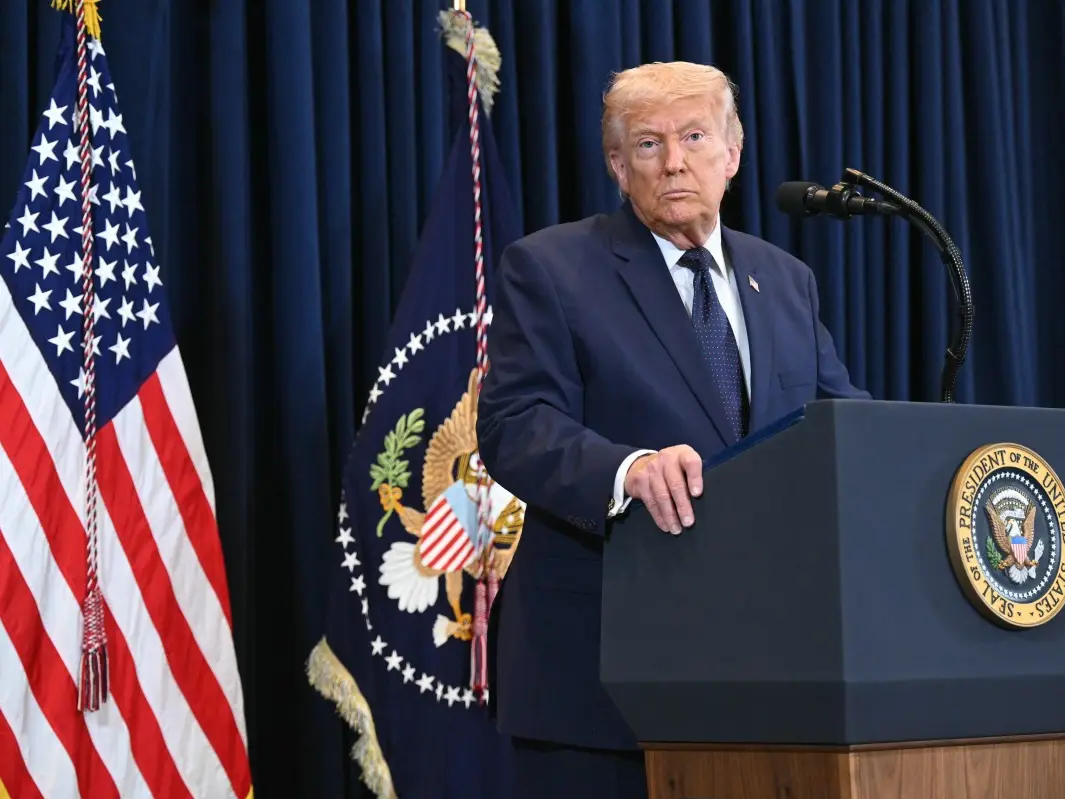
US President Donald Trump Photograph: (AFP)
While the Trump administration’s ideas of what comes next in Iran have zigged and zagged, Trump has ruled out any deal with oil-rich Iran and said there must be 'unconditional surrender'
US President Donald Trump’s war on Iran, code-named Operation Epic Fury, has turned into a demonstration of how badly he misjudged Iran’s response. It deserves the code-name Operation Epic Miscalculation. The war began on February 28 with a social media posting by Trump issued at 0230 on a Saturday morning, and based on a lie. “Our objective is to defend the American people by eliminating imminent threats from the Iranian regime.”
The dictionary definition of “imminent” is “about to happen at any moment.” Twelve days into what military experts from both sides of the American political divide consider a war of choice, Trump and his aides have yet to explain the nature of the “imminent” threat. Instead, the Trump administration has provided multiple shifting and frequently contradictory explanations for the need to go to war at a time when negotiations were still in progress, and there was no sign of any impending attacks by the repressive theocracy running Iran.
The first American air strikes killed Iran’s 86-year-old Supreme Leader, Ali Khamenei, as well as senior officials, including the head of the Islamic Revolutionary Guard Corps, Mohamamed Pakpour. Also killed: close members of Khamenei’s family, including a daughter, son-in-law, daughter-in-law, and a grandchild. Khomein’s son Mojtaba Khomenei was named Supreme Leader to succeed his father. Aged 56 and as hard-line anti-American as his father, the son was injured in the attack and has not been seen in public but Iranian state television on Thursday read a statement it said was from him declaring that Iran would keep closed the Strait of Hormuz, the vital waterway which carries around a fifth of the world’s oil, by firing on tankers using it.
That Iran, after days of devastating air strikes, the Defence Department said more than 5,000 targets had been hit, would be able to stop traffic through the Straits, looks like a major miscalculation by Trump aides. But it was not the only one. Iran retaliated to the American attacks, carried out in parallel with Israeli strikes, by launching drone and missile strikes on its Gulf neighbours. Although Iranian spokesmen insisted the targets were US military installations, drones, and missiles also hit hotels and airports.
That created massive disruptions of global air traffic, stranding millions of passengers because of at least 37,000 flight cancellations. Dubai International Airport, the world’s busiest airport for international passengers, cancelled more than 4,000 flights shortly after the conflict began. A key miscalculation of the effect of devastating strikes and the killing of the Supreme Leader was that “decapitation”, the killing of many of the top leaders, would result in swift government surrender. Trump has repeatedly cited what happened in Venezuela as the perfect way to bend a country to his will. In a stunning display of military skill, US special operations forces captured Venezuelan dictator Nicolas Maduro and his wife Celia from their heavily fortified compound in Caracas.
After the pre-dawn raid on January 3, the two were flown to New York to face criminal charges of drug trafficking. The spectacular abduction did not change the government. His Vice President, Delcy Rodriguez, was named interim president. Under her leadership, the Venezuelan government is just as repressive as it was under Maduro, but Rodriguez has made clear she is willing to accede to Washington's demands to open access to Venezuelan oil to US companies. There is no equally compliant Iranian leader in sight.
Trending Stories
)
)
)
)
)
)
)
)
)
)
)
)
)
)
)
)
)
)
)
)
)
)
)
)
)
)
)
&im=FitAndFill=(700,400))
)
)
)
)
)
)
)
)
&im=FitAndFill=(700,400))
)
)
While the Trump administration’s ideas of what comes next in Iran have zigged and zagged, Trump has ruled out any deal with oil-rich Iran and said there must be “unconditional surrender.” That is an odd demand because the phrase implies that officials of the warring sides sign documents to end hostilities. The last time that happened was on September 2, 1945, when Japanese officials signed an “instrument of surrender” which ended the war in the Pacific.
The Trump administration sees the US as the sole arbiter of victory. Press spokesman Karoline Leavitt explained that surrender is achieved when Trump determines that Iran is no longer a threat, whether Tehran admits it or not. Domestically, Trump’s war brings him into conflict with millions of Americans who voted for him because he campaigned against his predecessors’ “endless wars” in Iraq and Afghanistan and their military interference elsewhere.
Polls show that the majority of Americans disapprove of the war with Iran and are disappointed that Trump’s promise of a Golden Age of lower costs of living has not been fulfilled. It remains to be seen what effect that will have on November’s mid-term elections for the House of Representatives, now controlled by a slim majority of Republicans. It partly depends on whether Trump comes up with a more convincing explanation of the “imminent threat.”
It also depends on how resilient the Iranian regime proves to be despite the loss of most of its navy, air defences, missile launchers, and drone factories. An exclusive report by Reuters on Thursday quotes US intelligence reports saying that Iran’s leadership is not at risk of collapse any time soon and retains control of the Iranian public. That contrasts with Trump’s assertion that he will end the biggest military operation since 2003 “soon.” Like “imminent”, “soon” awaits an explanation.
